
Alumawood paint colors are factory-applied finishes produced by Amerimax using the Aluma-Shield coating system, available in eight standard options ranging from White to Black. Each color carries a specific paint code that enables precise matching with exterior paints from brands like Behr and Sherwin-Williams.
This guide covers the full standard color palette and corresponding codes, exterior matching strategies for different home materials, climate performance considerations, finish texture differences, and long-term maintenance.
Alumawood’s standard lineup spans ten shades, from crisp White and soft Almond through mid-range earth tones like Desert Sand and Latte to deep finishes like Dark Bronze and Black. Each color receives the same Teflon-integrated Aluma-Shield coating, so durability stays consistent across the palette.
Every standard color maps to closest-equivalent codes from Behr and Sherwin-Williams, giving homeowners a reliable starting point for coordinating fascia, trim, and surrounding exterior paint. Factory touch-up paint is also available in small containers for repairing chips or scratches without a full repaint.
Matching an Alumawood cover to stucco, brick, stone, or wood-trimmed exteriors requires different approaches. The article breaks down each material type with specific color pairing recommendations and practical steps like side-by-side chip comparisons under natural daylight.
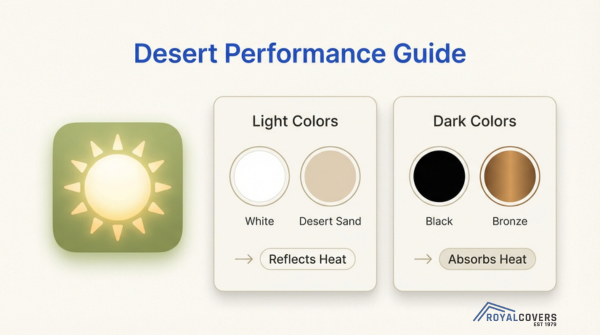
Lighter Alumawood tones reflect more solar radiation and resist visible fading longer in intense desert sun, while darker finishes absorb more heat and may show subtle chalking over time. Coating standards like AAMA 2604 and AAMA 2605 define measurable benchmarks for color and gloss retention.
Custom colors are not available from Amerimax, but two-tone design combinations using different standard colors for posts and rafters offer meaningful personalization without sacrificing the factory warranty.
What Standard Paint Colors Does Alumawood Offer?
Alumawood offers a curated palette of standard paint colors ranging from crisp whites to deep darks. The following H3s detail each individual color option.
White
White is Alumawood’s brightest standard color. This clean, neutral finish pairs well with virtually any home exterior and reflects significant solar heat, making it a practical choice in sun-intensive climates.
Almond
Almond is a soft, warm off-white in the Alumawood lineup. Slightly creamier than standard white, it complements light stucco, beige trim, and neutral-toned exteriors without appearing stark.
Sand
Sand is a light tan shade offered by Alumawood. This earthy mid-tone blends naturally with desert landscapes and pairs effectively with warm-colored stone or concrete patios.
Desert Sand
Desert Sand is a warm, golden-beige option in the Alumawood palette. According to Alumawood Products, Amerimax Alumawood patio covers are available in eight standard colors including Desert Sand, which remains one of the most popular selections for Southwestern homes.
Beverly Brown
Beverly Brown is a medium-warm brown shade from Alumawood. It sits in the mid-range of the palette’s brown tones, working well with earth-toned siding, natural stone accents, and clay tile roofing.
Latte
Latte is a rich, warm brown color in the Alumawood collection. Deeper than Beverly Brown yet lighter than the darkest options, Latte bridges the gap between neutral earth tones and bolder brown finishes.
Sierra
Sierra is a warm, reddish-brown tone offered by Alumawood. This color evokes the look of natural cedar and works especially well with rustic or Southwestern architectural styles.
Autumn Brown
Autumn Brown is a deep, warm brown in the Alumawood range. Darker than Sierra, it provides strong contrast against lighter stucco or stone exteriors while maintaining an organic, wood-like appearance.
Dark Bronze
Dark Bronze is a deep, near-black metallic-toned finish from Alumawood. This dramatic color suits contemporary and modern home designs, offering bold contrast and a sleek profile against most exterior palettes.
Black
Black is the darkest standard color Alumawood offers. It delivers a striking, modern aesthetic ideal for contemporary facades. Because darker finishes absorb more heat, homeowners in extreme climates should weigh visual appeal against thermal performance when considering this option.
With each color finished using Alumawood’s factory-applied coating system, the next step is identifying the specific paint codes for precise color matching.
What Are the Alumawood Paint Color Codes for Each Finish?
The Alumawood paint color codes for each finish are proprietary identifiers assigned by Amerimax to its factory-applied Aluma-Shield coating system. Below, each standard color is broken down with its closest matching paint codes and key characteristics.
What Is the Paint Code for Alumawood White?
The paint code for Alumawood White corresponds to a clean, bright white with no warm or cool undertone shift. For touch-up or exterior matching, the closest Behr equivalent is Ultra Pure White (PPU18-06), and the closest Sherwin-Williams match is Extra White (SW 7006). Alumawood’s Aluma-Shield coating is an anti-corrosive, weather-resistant paint system that integrates Teflon to withstand extreme temperatures, sun, rain, and wind, according to Patiocovered.com. This durability means the factory white holds its brightness far longer than conventional latex paints, making precise code matching less urgent for most homeowners.
What Is the Paint Code for Alumawood Almond?
The paint code for Alumawood Almond falls within the warm off-white family. The closest Behr equivalent is Navajo White (PPU5-12), and the closest Sherwin-Williams match is Navajo White (SW 6126). Almond sits between White and Sand on the Alumawood spectrum, offering a subtle cream tone that blends well with light stucco exteriors. When ordering touch-up paint, request the Alumawood Almond designation directly from an authorized dealer to ensure an exact factory match.
What Is the Paint Code for Alumawood Sand?
The paint code for Alumawood Sand aligns with a mid-range warm beige. The closest Behr equivalent is Sandy Shore (PPU4-08), and the closest Sherwin-Williams match is Sand Dollar (SW 6099). Sand provides a slightly deeper warmth than Almond, making it a versatile neutral for homes with tan, cream, or sandstone elements. For best results, always compare a physical Alumawood color chip against the paint swatch under natural daylight before committing to a match.
What Is the Paint Code for Alumawood Desert Sand?
The paint code for Alumawood Desert Sand corresponds to a warm, golden beige. The closest Behr equivalent uses Base 5850 with colorants BL (68), CL (228), and RL (40) per gallon in the Premium Plus Ultra Exterior Semi-Gloss formula. The closest Sherwin-Williams match is Whole Wheat (SW 6121). Desert Sand is one of Alumawood’s most popular selections in sun-heavy climates because its warm undertone complements the natural desert landscape effectively.
What Is the Paint Code for Alumawood Beverly Brown?
The paint code for Alumawood Beverly Brown falls within the medium chocolate-brown range. The closest Behr equivalent is Mocha Latte (PPU5-03), and the closest Sherwin-Williams match is Grounded (SW 6089). Specialized touch-up paint for Alumawood pergolas is available in 4.5 oz containers from authorized retailers like A&S Aluminum, specifically designed to repair small chips or scratches on factory-applied surfaces. Beverly Brown pairs well with brick, natural stone, and darker wood-trimmed exteriors.
What Is the Paint Code for Alumawood Latte?
The paint code for Alumawood Latte aligns with a soft, milky brown with warm gray undertones. The closest Behr equivalent is Dapper Tan (PPU5-07), and the closest Sherwin-Williams match is Latte (SW 6108). Latte occupies the middle ground between Sand and Beverly Brown, offering enough warmth to feel inviting without the visual weight of darker finishes. This makes it especially popular for homeowners seeking a neutral that complements both light and medium-toned exteriors.
What Is the Paint Code for Alumawood Sierra?
The paint code for Alumawood Sierra corresponds to a rich, earthy tan with reddish-brown undertones. The closest Behr equivalent is Cinnamon Brandy (PPU3-15), and the closest Sherwin-Williams match is Toasty (SW 6095). Sierra adds visual warmth and depth that works particularly well against Southwestern-style stucco or terracotta accents. Because of its distinctive red undertone, matching Sierra requires careful side-by-side chip comparison rather than relying on digital color swatches alone.
What Is the Paint Code for Alumawood Autumn Brown?
The paint code for Alumawood Autumn Brown falls within the deep, warm brown spectrum. The closest Behr equivalent is Dark Truffle (PPU5-01), and the closest Sherwin-Williams match is Van Dyke Brown (SW 7041). Autumn Brown is one of the darkest warm-toned Alumawood options, providing strong contrast against lighter home exteriors. Its deep pigmentation means minor surface scratches can be more visible, so keeping factory touch-up paint on hand is a practical recommendation.
What Is the Paint Code for Alumawood Dark Bronze?
The paint code for Alumawood Dark Bronze corresponds to a deep, cool-toned metallic brown. The closest Behr equivalent is Dark Bronze (PPU18-18), and the closest Sherwin-Williams match is Black Bean (SW 6006). Dark Bronze carries a cooler undertone than Autumn Brown, leaning toward charcoal rather than warm chocolate. This cool depth pairs effectively with modern architectural styles, gray stone facades, and contemporary metal accents.
What Is the Paint Code for Alumawood Black?
The paint code for Alumawood Black aligns with a true, saturated black with minimal undertone. The closest Behr equivalent is Black (PPU18-20), and the closest Sherwin-Williams match is Tricorn Black (SW 6258). Amerimax warrants that the finish on Alumawood products will not chip, peel, flake, or blister under normal wear for the life of the original purchaser, with a 10-year transferable period for subsequent owners. This warranty confidence makes Black a viable choice despite its tendency to absorb more heat than lighter finishes. With color codes identified, the next step is matching these finishes to your home exterior.
How Do You Match Alumawood Colors to Your Home Exterior?
You match Alumawood colors to your home exterior by comparing the patio cover finish against your existing siding material, trim, and fascia. The approach varies by exterior type, as stucco, brick, stone, and wood each present different coordination challenges.
How Do You Match Alumawood to a Stucco Exterior?
You match Alumawood to a stucco exterior by selecting a cover color that either closely mirrors or gently complements the stucco’s base tone. Stucco surfaces in the Southwest commonly appear in warm earth tones, making neutral Alumawood shades like Desert Sand, Latte, or Adobe natural companions.
For precise coordination, paint stores can cross-reference Alumawood color codes to exterior paint formulas. According to Classic Alumawood Covers, Home Depot’s Behr Premium Plus Ultra Exterior Semi-Gloss formula for “Desert Sand” uses Base 5850 with colorants BL (68), CL (228), and RL (40) per gallon. Requesting a sample swatch before installation prevents costly mismatches against textured stucco surfaces.
How Do You Match Alumawood to a Brick or Stone Exterior?
You match Alumawood to a brick or stone exterior by identifying the dominant undertone in the masonry rather than trying to match individual stones or bricks. Brick and stone contain multiple color variations within a single surface, so the goal is complementary contrast rather than an exact match.
- Pull from the mortar line color for a subtle, blended look.
- Match to the most prominent stone or brick hue for a cohesive appearance.
- Choose a darker Alumawood shade like Dark Bronze or Autumn Brown to anchor lighter masonry.
Warm-toned masonry pairs well with mid-range browns, while cool gray stone benefits from Graphite or darker neutrals.
How Do You Match Alumawood to a Wood-Trimmed Exterior?
You match Alumawood to a wood-trimmed exterior by coordinating the patio cover color with the existing wood stain tone or painted trim color. Alumawood’s woodgrain texture options make this pairing particularly effective, since the embossed surface mimics real wood grain while offering aluminum’s durability.
- Match lighter wood stains with Desert Sand or Latte.
- Pair medium-toned stains with Sierra or Beverly Brown.
- Coordinate dark-stained trim with Autumn Brown or Dark Bronze.
Holding an Alumawood color sample directly against the wood trim in natural daylight gives the most accurate read, since indoor lighting shifts warm and cool undertones.
How Do You Match Alumawood to an Already-Painted Fascia?
You match Alumawood to an already-painted fascia by bringing a paint chip or color code from the existing fascia to your installer for side-by-side comparison against Alumawood’s standard palette. An exact match is rarely necessary; a close tonal complement creates a seamless transition between the fascia board and the new patio cover.
If the fascia paint has faded, consider the original color code rather than the weathered appearance. Repainting the fascia to align with the chosen Alumawood color is often the simplest solution when no standard shade coordinates well. This deliberate color planning ensures a unified roofline that ties the patio cover cleanly to the rest of the home.
With exterior matching strategies established, climate performance becomes the next consideration for long-term color satisfaction.
Which Alumawood Colors Work Best in Arizona’s Desert Climate?
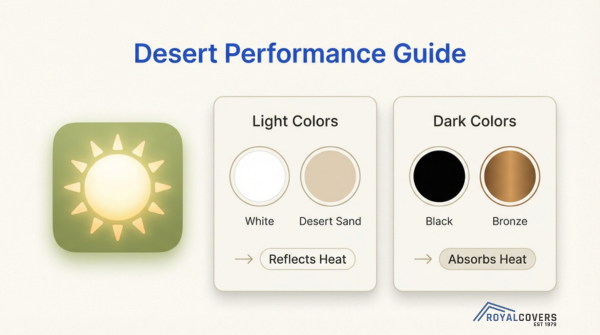
The Alumawood colors that work best in Arizona’s desert climate are lighter tones like White, Desert Sand, and Latte for heat reflection, and mid-range earth tones like Adobe for fade resistance. Below, we cover fading performance and thermal behavior by color.
Which Alumawood Colors Resist Fading in Intense Sun?
The Alumawood colors that resist fading in intense sun most effectively are mid-range earth tones, such as Desert Sand, Latte, and Adobe. These colors show less visible change over time compared to very dark or very light extremes because moderate pigment concentrations hold up well under prolonged UV exposure.
Alumawood’s Aluma-Shield coating integrates Teflon surface protector technology, which adds a critical layer of UV and weather resistance across all color options. According to the Association of Materials Protection and Performance (AMPP), AAMA 2604 powder coatings maintain color and gloss for a minimum of five years, while the more rigorous AAMA 2605 specification requires 10-year color and gloss retention regardless of the specific color chosen.
Darker shades like Graphite and Black, while striking, tend to reveal UV-induced chalking sooner. For Arizona homeowners prioritizing long-term appearance with minimal maintenance, earth-toned Alumawood finishes offer the most forgiving fade performance.
Which Alumawood Colors Stay Coolest in Extreme Heat?
The Alumawood colors that stay coolest in extreme heat are lighter finishes, specifically White, Desert Sand, and Latte. Light-colored surfaces reflect a greater percentage of solar radiation, reducing heat absorption and keeping the patio structure noticeably cooler to the touch during Arizona’s peak summer months.
Darker options like Black or Graphite absorb significantly more thermal energy, which radiates heat downward into the shaded space beneath. According to Linetec, high-performance architectural coatings meeting AAMA 2605 standards utilize 70% fluoropolymer resin-based technology to achieve maximum resistance to UV radiation and moisture, a factor that supports long-term thermal stability across all Alumawood colors.
For homeowners seeking both comfort and energy efficiency, lighter Alumawood tones are the practical choice. Pairing a cool-toned color with a solid insulated roof panel maximizes shade comfort in the desert. With color performance covered, the next question is whether custom Alumawood colors are available.
Can You Get Custom or Special-Order Alumawood Colors?
No, you cannot get custom or special-order Alumawood colors. Amerimax manufactures Alumawood patio covers in a fixed set of standard factory colors, and the company does not offer custom color matching or special-order finishes. The Aluma-Shield coating is applied during production using a controlled process that integrates Teflon surface protector, making on-demand color formulation impractical.
Homeowners who want a color outside the standard palette do have options, though they require extra steps. A professional contractor can paint over Alumawood with proper surface preparation, although this approach is not recommended by the manufacturer and may affect the lifetime finish warranty. For most projects, selecting from the existing range and using a two-tone design approach, combining different standard colors for posts and rafters, provides enough flexibility to complement most home exteriors without sacrificing factory warranty protection.
What Is the Difference Between Alumawood Smooth and Woodgrain Finishes?
The difference between Alumawood smooth and woodgrain finishes is the surface texture applied to the aluminum extrusion. Smooth finishes have a flat, uniform surface that suits modern and contemporary home styles. Woodgrain finishes feature an embossed texture that replicates the look of natural wood, offering a traditional aesthetic without the maintenance demands of real lumber.
Both finishes receive the same factory-applied Aluma-Shield coating, so durability and color retention remain consistent regardless of texture choice. The selection comes down to visual preference, patio cover color combinations, and how the patio cover integrates with existing exterior materials. Woodgrain tends to complement stucco and stone facades common in desert homes, while smooth pairs well with painted trim and sleek architectural lines. For most homeowners, requesting physical samples of both textures in the chosen color before committing leads to the most confident decision.
How Do Alumawood Colors Compare to Real Wood Stain Tones?
Alumawood colors closely replicate popular real wood stain tones while eliminating the maintenance demands of natural timber. The comparison spans appearance, texture, durability, and long-term color stability.
Alumawood’s brown and tan palette mirrors the most common wood stain categories. Latte resembles a light honey-oak stain, while Spanish Brown approximates a medium walnut or cedar tone. Desert Sand and Mojave Tan sit in the warm, golden range typically achieved with pine or cypress stains. These factory-applied finishes capture the visual warmth homeowners associate with stained wood, yet the aluminum substrate never absorbs moisture, swells, or develops grain-raise.
The critical difference lies in longevity. Real wood stains require reapplication every one to three years, depending on UV exposure and moisture contact. According to Amerimax, the factory finish on Alumawood products is warranted not to chip, peel, flake, or blister under normal wear for the life of the original purchaser, with a 10-year transferable period for subsequent owners. That level of color permanence is something no penetrating or film-forming wood stain can match without regular upkeep.
Texture also separates the two materials. Alumawood’s woodgrain finish uses embossed patterns that simulate natural wood grain visually, though the surface feels smoother and more uniform than hand-stained lumber. For homeowners who prioritize consistent color across every rafter and beam, this uniformity is an advantage; real wood stain absorbs unevenly based on grain density, knots, and moisture content.
From a practical standpoint, Alumawood’s color consistency makes it the stronger long-term investment for outdoor structures exposed to harsh sun. Homeowners exploring Alumawood patio cover ideas can see how different color and finish options come together in real backyard installations. Real wood stain delivers authentic tactile character, but that character comes at the cost of seasonal maintenance and inevitable fading. For most patio cover applications, Alumawood delivers the aesthetic of stained wood with none of the upkeep burden, making it the more practical choice overall.
With color comparison clarified, understanding how Alumawood finishes hold up over years of sun exposure matters next.
Do Alumawood Paint Colors Fade or Change Over Time?
Alumawood paint colors resist fading significantly better than conventional coatings, thanks to the factory-applied Aluma-Shield coating system. The degree of color change depends on UV exposure, coating grade, and routine maintenance.
Alumawood’s Aluma-Shield® coating integrates Teflon® surface protector into an anti-corrosive, weather-resistant paint system engineered to withstand extreme temperatures, sun, rain, and wind. This formulation repels dust, dirt, oil, and stains while maintaining its original appearance far longer than standard exterior paints. According to an AMPP (Association of Materials Protection and Performance) report, high-performance architectural powder coatings meeting AAMA 2605 specifications are required to maintain color and gloss retention for a minimum of 10 years, regardless of the specific color chosen.
Darker Alumawood colors, such as Black and Dark Bronze, may show subtle lightening over decades of intense desert sun exposure, while lighter tones like White and Desert Sand tend to hold their original appearance longer. Even so, the difference is gradual and far less dramatic than what homeowners experience with wood stain or standard painted surfaces. Although repainting an Alumawood patio cover is not recommended by the manufacturer, a professional contractor can perform it with proper preparation if a homeowner chooses to change the color. For most installations, though, the factory finish outlasts any aftermarket alternative. Understanding Alumawood’s durability sets the stage for knowing how to handle minor surface damage when it occurs.
How Do You Touch Up or Repaint an Alumawood Patio Cover?
You touch up an Alumawood patio cover using color-matched touch-up paint for minor damage, or by hiring a professional contractor for a full repaint. The approach depends on whether you are repairing small blemishes or changing the color entirely.
For minor chips, scratches, or nicks, specialized Alumawood touch-up paint is available in 4.5 oz containers designed to match factory-applied finishes. Clean the damaged area, apply the paint carefully, and allow it to cure fully before exposing it to weather.
Full repainting requires more consideration. According to Patio Covered, repainting an Alumawood patio cover is not recommended by the manufacturer, though it can be performed with proper preparation by a professional contractor if the homeowner chooses to change the color. Proper preparation typically involves:
- Cleaning the surface thoroughly to remove dust, oil, and debris.
- Lightly scuffing the existing Aluma-Shield coating to promote adhesion.
- Applying a bonding primer formulated for aluminum surfaces.
- Using a high-quality exterior paint that matches the desired finish.
Color matching between different brands or aging structures is often the biggest challenge in aluminum patio cover repair projects. Even within the same color name, factory batches can shift slightly over time, so requesting a physical sample before committing to a full repaint is always worthwhile. For homeowners weighing a touch-up against a full color change, starting with the manufacturer’s touch-up paint preserves the original warranty-backed finish and avoids the risk of adhesion issues down the road.
How Should You Choose Alumawood Colors for a New Patio Cover?
You should choose Alumawood patio colors for a new patio cover by evaluating your home’s exterior palette, existing hardscape, and desired design style. Amerimax Alumawood patio covers are available in eight standard colors, including White, Desert Sand, Mojave Tan, Adobe, Latte, Spanish Brown, Graphite, and Black.
Can Royal Covers Help You Select the Right Alumawood Color for Your Home?
Yes, Royal Covers can help you select the right Alumawood color for your home through a free design consultation that evaluates your existing exterior features. Matching a patio cover to concrete slabs, house siding, and outdoor fixtures requires hands-on assessment that color swatches alone cannot provide.
Many homeowners use a two-tone design approach, choosing different colors for posts and beams versus lattice and rafters to add visual depth. Royal Covers specializes in these custom configurations, drawing on over 45 years of Phoenix patio cover installation experience to recommend combinations that complement your specific backyard. This level of personalized guidance makes the difference between a cover that blends seamlessly and one that feels mismatched.
What Are the Key Takeaways About Alumawood Paint Colors and Matching Codes?
The key takeaways about Alumawood paint colors and matching codes are:
- Alumawood offers eight standard factory colors with corresponding paint codes, making precise color matching straightforward for touch-ups and exterior coordination.
- The Aluma-Shield coating system protects every color from fading, chipping, and weather damage, so your chosen shade maintains its appearance long-term.
- Lighter tones like Desert Sand and White reflect more heat in desert climates, while darker options like Graphite and Black create bolder contrast.
- Two-tone combinations between structural and lattice components allow full customization without special-order colors.
- Matching codes from manufacturers like Behr enable homeowners to coordinate surrounding trim and fascia paint with their Alumawood finish.
For homeowners ready to explore these options firsthand, Royal Covers provides on-site consultations with physical color samples tailored to your home’s unique exterior.