
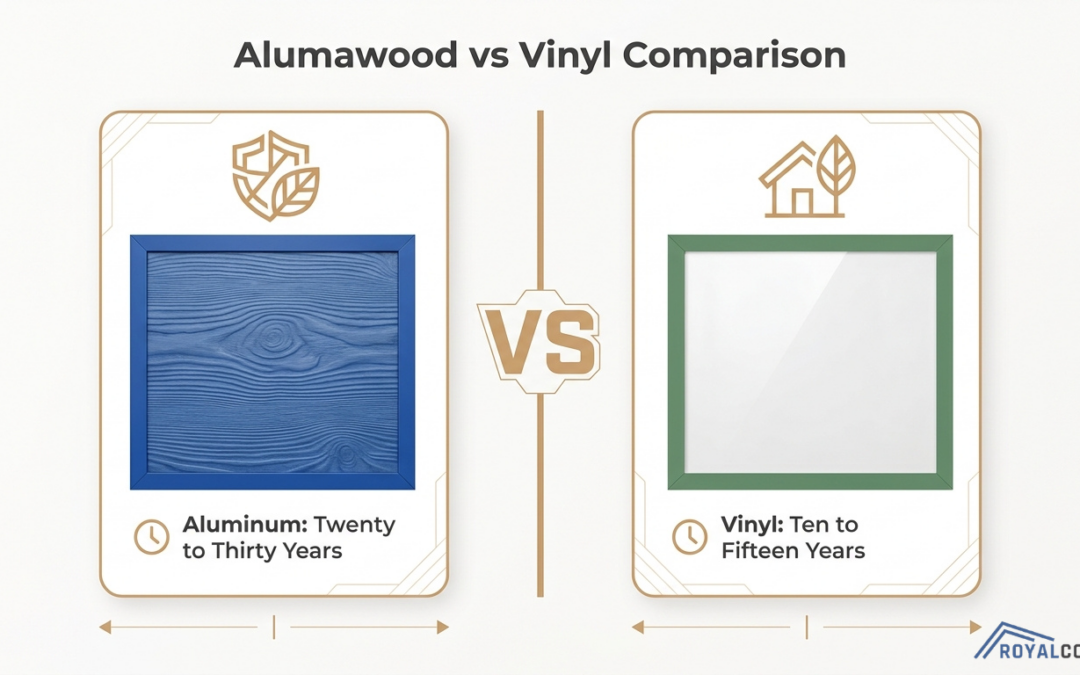
An Alumawood vs vinyl deck cover comparison evaluates two distinct patio cover systems: structural aluminum with a baked-on wood-grain finish against polyvinyl chloride (PVC) reinforced with internal metal inserts. Each material serves the same function but differs substantially in performance, cost, and longevity.
This guide covers material composition and durability under extreme conditions, installed pricing and long-term ownership costs, maintenance demands and design flexibility, structural limitations and span capacities, and resale value impact.
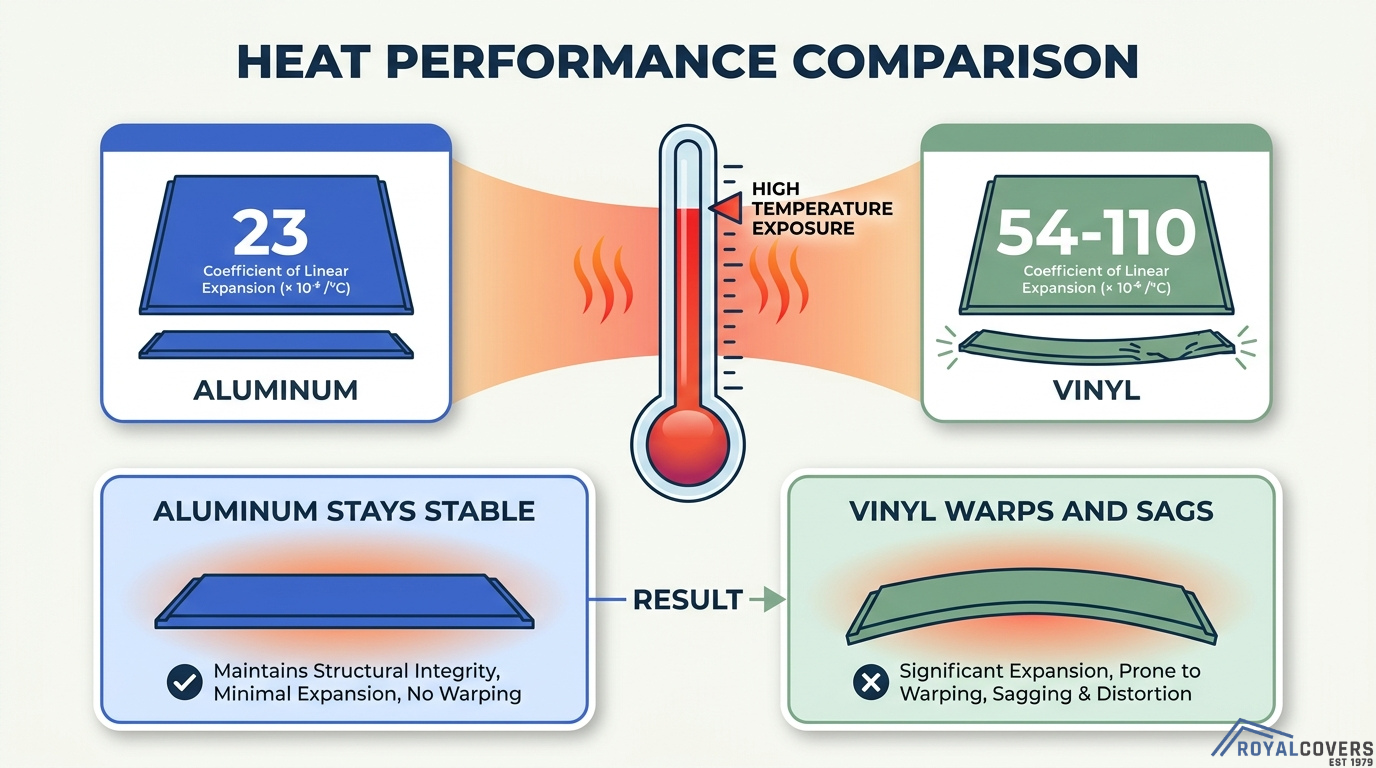
Durability separates these materials most sharply in hot climates. Aluminum’s thermal expansion coefficient sits at roughly 23 x 10⁻⁶ m/(m °C), while PVC ranges from 54 to 110 x 10⁻⁶ m/(m °C); this difference causes vinyl to warp, sag, and crack years before aluminum shows any stress. Alumawood’s baked-on color resists fading and peeling, while vinyl becomes brittle and discolored under sustained UV exposure.
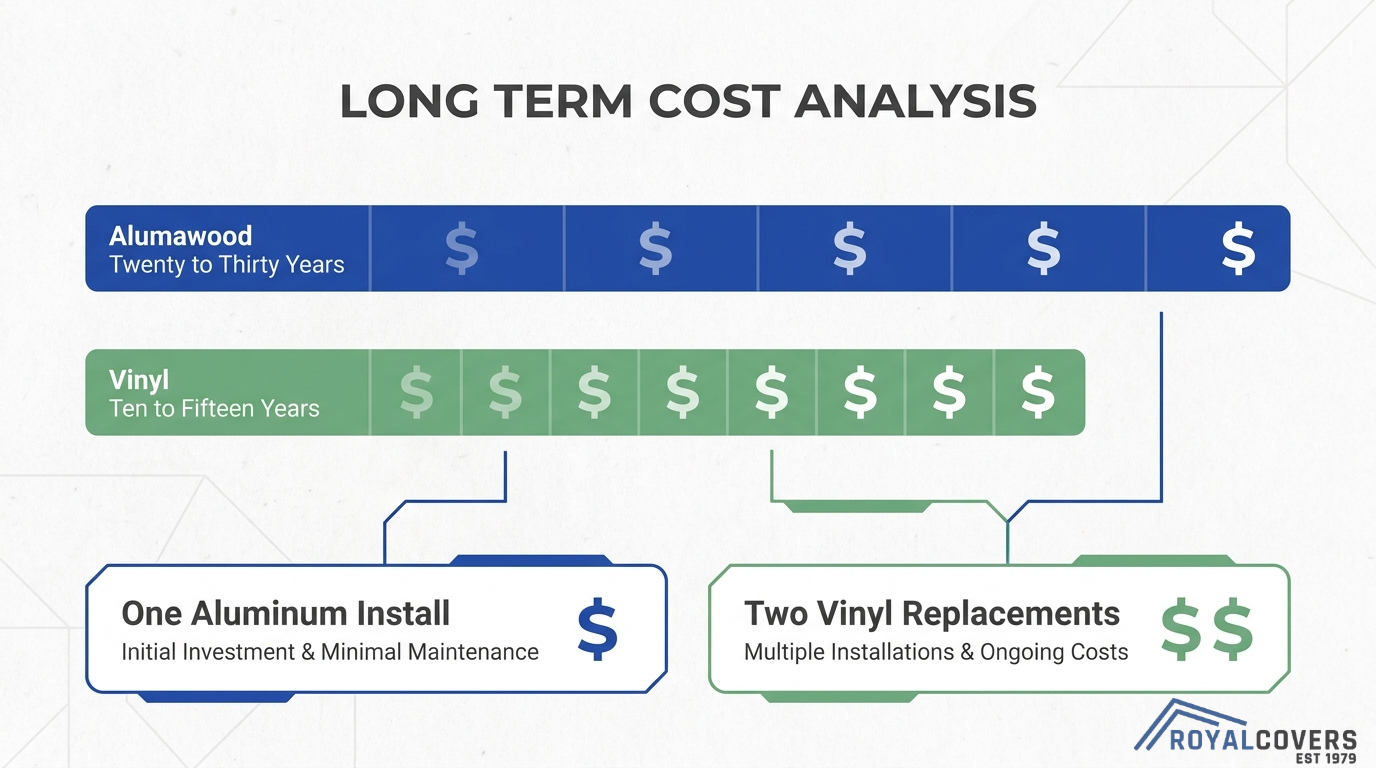
Cost profiles overlap initially (Alumawood runs $20 to $50 per square foot installed; vinyl averages around $22) but diverge over time. Alumawood lasts 20 to 30 years while vinyl typically shows significant wear within 10 to 15 years, meaning one aluminum installation outlasts two vinyl lifecycles.
Both materials require only occasional soap-and-water cleaning. However, Alumawood offers broader design options including embossed wood-grain textures, multiple color choices, and solid, lattice, or insulated panel configurations. Vinyl is limited to smooth profiles in light colors because darker pigments accelerate heat degradation.
Structurally, Alumawood’s rigid aluminum construction achieves longer unsupported spans without supplemental posts, while vinyl relies on internal reinforcements to prevent deflection across wider openings. For resale, aluminum’s longer remaining service life and noncombustible classification give it a measurable advantage in buyer perception.
What Is an Alumawood Deck Cover?
An Alumawood deck cover is a patio cover system composed of structural aluminum that is embossed with a wood-grain texture and finished with a baked-on paint system to mimic the appearance of real wood. According to Newport Industries (Amerimax), the manufacturer, this system combines the aesthetic warmth of timber with aluminum’s resistance to rot, insects, and weather damage.
Unlike traditional wood covers that warp and split over time, Alumawood panels maintain their shape because aluminum does not absorb moisture. The baked-on finish eliminates the need for annual staining or sealing, making the material virtually maintenance-free. Homeowners gain the look of a natural wood structure without the upkeep burden that wood demands in harsh climates.
Understanding this material’s composition is essential when comparing it to vinyl alternatives.
What Is a Vinyl Deck Cover?
A vinyl deck cover is a patio cover structure manufactured from polyvinyl chloride (PVC) that provides overhead shade and weather protection for outdoor living spaces. According to Angi, vinyl patio covers are often reinforced with internal aluminum or steel inserts to provide the necessary structural rigidity for longer spans. This reinforcement compensates for PVC’s inherent flexibility, allowing the material to serve as a functional overhead structure rather than just a decorative element.
Vinyl covers typically feature a smooth, white or light-colored finish that resists rot, insects, and corrosion. Because PVC does not require painting or staining, these covers appeal to homeowners seeking minimal upkeep. However, the material’s thermal expansion rate and UV sensitivity become important considerations in hot climates, factors explored in later sections of this guide.
How Do Alumawood and Vinyl Deck Covers Compare in Durability?
Alumawood and vinyl deck covers compare in durability across three key performance areas: extreme heat resistance, moisture tolerance, and wind/impact strength. The following subsections break down each material’s performance in these conditions.
How Does Alumawood Hold Up in Extreme Heat?
Alumawood holds up exceptionally well in extreme heat. The baked-on paint system bonds color directly into the aluminum substrate, making panels resistant to fading and peeling even in intense desert environments. According to Shade In A Day, in extreme heat environments like Las Vegas, Alumawood panels maintain their finish because colors are baked into the aluminum, while vinyl becomes brittle and prone to sagging under intense UV exposure.
Aluminum’s low thermal expansion coefficient means the material remains dimensionally stable as temperatures climb. For homeowners in prolonged heat zones, this structural consistency makes Alumawood one of the most reliable overhead cover materials available.
How Does Vinyl Hold Up in Extreme Heat?
Vinyl holds up poorly in extreme heat compared to aluminum alternatives. PVC has a thermal expansion coefficient ranging from 54 to 110 x 10⁻⁶ m/(m °C), which is significantly higher than aluminum’s 23 x 10⁻⁶ m/(m °C). This means vinyl panels expand and contract far more dramatically with temperature swings, leading to warping, sagging, and joint separation over time.
Prolonged UV exposure accelerates PVC degradation, causing the material to become brittle and discolored. In desert climates where surface temperatures regularly exceed 140°F, vinyl’s performance limitations become apparent within just a few years of installation.
How Does Alumawood Resist Moisture and Humidity?
Alumawood resists moisture and humidity effectively because aluminum does not absorb water. Unlike wood, which swells and rots when exposed to prolonged dampness, aluminum’s non-porous surface sheds water without structural compromise. The baked-on finish acts as an additional barrier, preventing oxidation and corrosion even in humid coastal or monsoon-prone environments.
Mold and mildew cannot penetrate the surface, which eliminates the need for sealants or waterproofing treatments. This moisture immunity contributes directly to Alumawood’s longer service life compared to organic or polymer-based alternatives.
How Does Vinyl Resist Moisture and Humidity?
Vinyl resists moisture and humidity well at the surface level since PVC is inherently waterproof. Water does not penetrate or rot the material, which gives vinyl an advantage over wood in wet climates.
However, moisture can become trapped within the hollow chambers of vinyl panels, particularly at joints and connection points. Over time, this trapped moisture may encourage mold growth on interior surfaces or degrade any internal steel reinforcements through rust. While the outer shell remains intact, long-term humidity exposure can compromise structural inserts hidden inside the vinyl profile.
How Does Alumawood Handle Wind and Impact?
Alumawood handles wind and impact with superior strength due to its solid aluminum construction. Structural rafters are engineered to support defined live loads, and the material’s inherent rigidity prevents flexing or buckling during high-wind events. Aluminum does not crack or shatter on impact the way brittle materials do; instead, it may dent slightly while maintaining overall structural integrity.
This resilience makes Alumawood particularly well-suited for regions prone to monsoon storms, where wind-driven debris poses a real threat to overhead structures.
How Does Vinyl Handle Wind and Impact?
Vinyl handles wind and impact less effectively than aluminum. PVC panels are lightweight and hollow, which makes them susceptible to uplift during strong gusts. Without robust internal reinforcement, longer vinyl spans can flex excessively or detach at fastening points under sustained wind pressure.
Impact resistance is also a concern. Cold or UV-degraded vinyl becomes brittle, meaning hail or falling branches can crack panels rather than simply denting them. Replacement of individual damaged sections is possible, but repeated impacts accelerate the need for full panel replacement well before the material reaches its expected service life.
Understanding how each material performs under stress helps clarify why long-term cost calculations often favor aluminum systems.
How Do Alumawood and Vinyl Deck Covers Compare in Cost?
Alumawood and vinyl deck covers compare in cost with overlapping per-square-foot ranges but different long-term financial profiles. The subsections below break down installed pricing for each material and total ownership costs over time.
What Does an Alumawood Deck Cover Cost Per Square Foot?
An Alumawood deck cover costs between $20 and $50 per square foot installed. This system uses structural aluminum embossed with a wood-grain texture and finished with baked-on paint, which contributes to its mid-to-upper pricing tier.
According to a 2025 report from Cobex Construction Group, a 200-square-foot covered patio installation in California ranges from $10,000 to $22,500 depending on material choice and design complexity. For most homeowners, a standard Alumawood project falls within the national average of $4,500 to $12,000 total. The premium reflects both the material’s durability engineering and the aesthetic finish that eliminates future painting costs.
What Does a Vinyl Deck Cover Cost Per Square Foot?
A vinyl deck cover costs approximately $22 per square foot installed, with total project costs ranging from $2,200 to $12,000 for standard residential installations. This positions vinyl at the lower end of the patio cover pricing spectrum.
According to Shade In A Day, vinyl’s lower material cost makes it attractive for budget-conscious projects. Both aluminum and vinyl covers require only occasional cleaning with mild soap and water, unlike wood covers that demand $200 to $500 annually in sealing or staining. However, vinyl’s initial savings must be weighed against its shorter service life before replacement becomes necessary.
Which Material Has Lower Long-Term Ownership Costs?
Alumawood has lower long-term ownership costs despite higher upfront pricing. Because aluminum patio covers last 20 to 30 years while vinyl covers typically show significant wear within 10 to 15 years, homeowners often face a full vinyl replacement before an Alumawood system needs attention.
Neither material requires costly annual maintenance. When amortized over a 25-year period, Alumawood’s per-year cost frequently drops below vinyl’s because one installation outlasts two vinyl lifecycles. For homeowners planning to stay in their home long-term, the higher initial investment in Alumawood consistently delivers better cost-per-year value.
With pricing context established, understanding what each material demands in routine upkeep clarifies the full ownership picture.
What Maintenance Does Each Deck Cover Material Require?
Each deck cover material requires different levels of upkeep. Alumawood needs minimal cleaning, while vinyl demands more attention to prevent weather-related degradation.
What Maintenance Does an Alumawood Deck Cover Need?
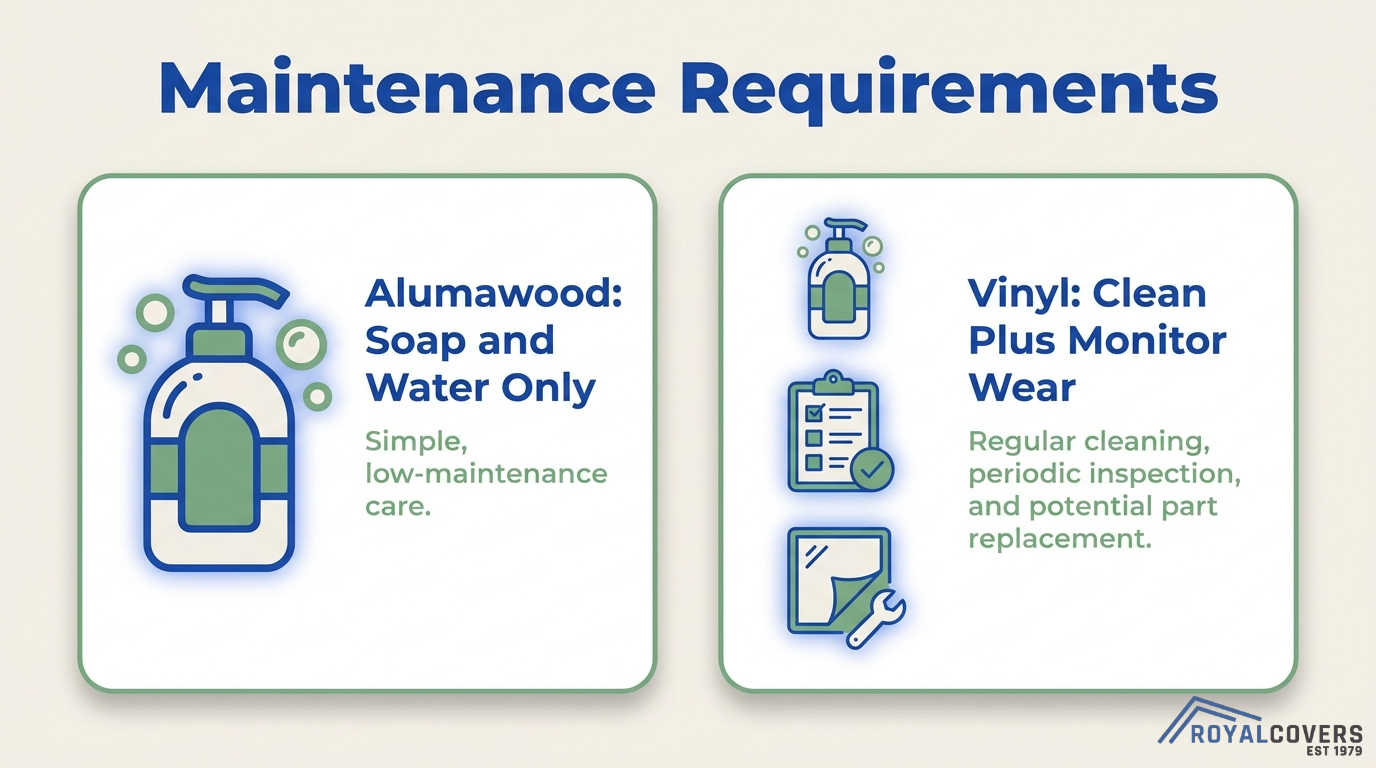
An Alumawood deck cover needs only occasional cleaning with mild soap and water to maintain its appearance. The baked-on paint system resists fading and peeling, eliminating the need for repainting or staining. Unlike wood covers, which require $200 to $500 in annual sealing costs according to Angi’s maintenance guide, Alumawood has no recurring finish maintenance. Periodic inspection of fasteners and joints keeps the structure secure, but no specialized products or professional services are typically required between cleanings.
For homeowners who value low effort over time, this near-zero maintenance profile makes Alumawood one of the most practical long-term choices.
What Maintenance Does a Vinyl Deck Cover Need?
A vinyl deck cover needs regular cleaning with mild soap and water, similar to Alumawood, but requires additional monitoring for UV-related wear. Over time, vinyl can yellow, become brittle, or develop surface cracks from prolonged sun exposure, particularly in hot climates. Homeowners should inspect vinyl panels seasonally for signs of warping or sagging, as thermal expansion can stress joints and connections.
While vinyl never needs painting or staining, replacement of damaged panels may become necessary sooner than with aluminum alternatives. Keeping debris off the surface and ensuring proper drainage reduces moisture-related issues.
With maintenance needs established, the next comparison focuses on visual appeal and design flexibility.
How Do Alumawood and Vinyl Deck Covers Compare in Appearance?
Alumawood and vinyl deck covers compare in appearance primarily through their texture realism, color variety, and design flexibility. The following sections cover available design options for each material and which achieves a more authentic wood look.
What Design Options Are Available With Alumawood?
The design options available with Alumawood include multiple profile styles, color selections, and configuration types. Alumawood panels feature an embossed wood-grain texture combined with a baked-on paint system, offering colors that resist fading over time. Homeowners can choose between solid roof panels for full shade, open-lattice designs for filtered light, and insulated panels for enhanced comfort. Custom configurations accommodate curved rooflines, attached or freestanding structures, and integrated lighting or fan mounts. Because the color is baked into the aluminum rather than applied as a surface coating, the finish maintains consistency without requiring repainting. This manufacturing approach gives Alumawood one of the broadest aesthetic ranges among non-wood patio cover materials.
What Design Options Are Available With Vinyl?
The design options available with vinyl include smooth or lightly textured profiles in a limited color palette, typically white, tan, and light gray. Vinyl’s PVC composition restricts darker color offerings because darker pigments absorb more heat, which accelerates material degradation. Most vinyl covers come in standard post-and-beam configurations with flat or slightly pitched roof panels. Customization is more constrained compared to aluminum-based systems; complex angles, extended spans, and non-standard dimensions often require internal reinforcement that adds cost and limits design freedom. For homeowners seeking a clean, uniform appearance with minimal visual texture, vinyl delivers a consistent look, though it sacrifices the dimensional character that wood-alternative buyers typically want.
Which Material Looks More Like Real Wood?
Alumawood looks more like real wood than vinyl. According to Newport Industries, Alumawood is composed of structural aluminum embossed with a wood-grain texture and finished with a baked-on paint system specifically engineered to mimic real wood’s appearance. The embossing process creates visible grain lines, knot patterns, and subtle surface variation that replicate natural timber. Vinyl, by contrast, presents a smooth or lightly ridged surface that reads as synthetic from close range. The color depth and tactile grain of Alumawood panels make them nearly indistinguishable from painted wood at conversational distance, while vinyl’s uniform sheen and limited texture lack the dimensional warmth most homeowners associate with traditional wood construction.
With appearance preferences established, understanding each material’s expected lifespan helps determine long-term value.
How Long Does Each Deck Cover Material Last?
Each deck cover material lasts a different length of time depending on its composition. Alumawood outlasts vinyl by a significant margin, as the sections below detail.
What Is the Expected Lifespan of an Alumawood Deck Cover?
The expected lifespan of an Alumawood deck cover is 20 to 30 years. Structural aluminum resists rust, rot, and insect damage, which eliminates the primary failure modes that shorten the life of wood or vinyl alternatives. The baked-on paint finish also prevents peeling and fading over decades of sun exposure, reducing the need for refinishing. According to Pacific Pavers, aluminum patio covers typically last between 20 and 30 years while maintaining structural integrity. For homeowners planning a long-term outdoor investment, this durability makes Alumawood one of the most cost-effective choices per year of service life.
What Is the Expected Lifespan of a Vinyl Deck Cover?
The expected lifespan of a vinyl deck cover is 10 to 15 years before showing significant wear. PVC degrades under prolonged ultraviolet exposure, which causes brittleness, discoloration, and eventual cracking. According to Pacific Pavers, most vinyl patio covers reach the 10-to-15-year mark before requiring replacement, roughly half the service life of aluminum alternatives. This shorter lifespan means homeowners may face a full replacement cycle within the same period that an Alumawood cover remains fully functional.
Understanding material longevity helps frame the next consideration: installation complexity.

Which Deck Cover Material Is Easier to Install?
Alumawood is generally easier to install than vinyl for deck covers. Both materials use interlocking panel systems, but key differences in weight, tooling, and regulatory requirements affect overall installation complexity.
Alumawood panels are lightweight aluminum components that connect using a tongue-and-groove system designed for straightforward assembly. Standard woodworking tools, such as circular saws and drills, cut and fasten the material without specialized equipment. The pre-finished, baked-on paint eliminates any post-installation sealing or coating steps.
Vinyl deck covers require more careful handling during installation. PVC expands and contracts at a higher rate than aluminum, so installers must account for thermal movement by leaving expansion gaps at joints. In hot climates, this thermal sensitivity demands precise spacing to prevent warping or buckling after assembly. Internal steel or aluminum reinforcement inserts add structural rigidity but increase the number of components and steps involved.
Permitting and HOA approval also influence installation timelines. According to a study published in the Journal of the American Planning Association, HOAs increasingly regulate residential landscapes by shifting rules from publicly recorded CCRs to private architectural guidelines, which often include specific material restrictions for patio covers. Checking these requirements before purchasing materials prevents costly delays regardless of which product you choose.
For most homeowners, Alumawood’s combination of lighter weight, simpler tooling needs, and dimensional stability in heat makes it the more installer-friendly option between the two materials.
How Do Alumawood and Vinyl Perform in Hot Desert Climates?
Alumawood and vinyl perform very differently in hot desert climates. Alumawood resists heat-related degradation due to its baked-on finish and low thermal expansion, while vinyl is susceptible to warping, sagging, and brittleness under sustained UV exposure and extreme temperatures.
The thermal expansion coefficient of each material reveals why performance diverges so sharply in desert conditions. According to the Engineering ToolBox, aluminum has a linear thermal expansion coefficient of approximately 23 x 10⁻⁶ m/(m °C), while PVC (vinyl) ranges significantly higher from 54 to 110 x 10⁻⁶ m/(m °C). This means vinyl expands and contracts at roughly two to five times the rate of aluminum during daily temperature swings that can exceed 40°F between dawn and midday in desert regions.
Alumawood panels resist fading and peeling because colors are baked into the aluminum during manufacturing. This integrated finish eliminates the surface-level coatings that peel under intense solar radiation. Vinyl, by contrast, becomes brittle and prone to sagging under sustained UV exposure, particularly in environments like Las Vegas and Phoenix where surfaces regularly exceed 150°F during summer months.
For homeowners in desert climates, this performance gap compounds over time. Vinyl covers that initially appear comparable begin showing stress cracks, discoloration, and structural flex within a few years of installation. Alumawood maintains dimensional stability and color integrity across decades of desert exposure, making it the more reliable long-term choice for extreme heat environments.
With climate performance established, understanding each material’s structural span limits helps determine which cover suits your specific project dimensions.
What Are the Structural Limitations of Each Material?
The structural limitations of Alumawood and vinyl deck covers relate primarily to maximum unsupported span distances and load-bearing capacity. The sub-sections below detail span limits for each material.
What Span Limits Apply to Alumawood Deck Covers?
The span limits that apply to Alumawood deck covers depend on rafter size and load requirements. Alumawood’s structural aluminum construction allows longer unsupported spans without supplemental reinforcement. Because the material is inherently rigid, it maintains dimensional stability across wider openings without sagging or deflection over time. This makes Alumawood particularly well-suited to larger patio areas where fewer support posts are desirable for an open, unobstructed layout.
What Span Limits Apply to Vinyl Deck Covers?
The span limits that apply to vinyl deck covers are generally shorter than aluminum alternatives due to PVC’s lower inherent rigidity. According to Angi, vinyl patio covers are manufactured from polyvinyl chloride (PVC), often reinforced with internal aluminum or steel inserts to provide the necessary structural rigidity for longer spans. Without these internal reinforcements, vinyl members cannot achieve the same unsupported distances. For homeowners planning wider coverage areas, this often means additional support columns or closer rafter spacing, which can affect the open feel of the finished structure.
Understanding each material’s structural capabilities helps determine which cover design best fits your outdoor space.
Which Deck Cover Material Offers Better Resale Value?
Alumawood offers better resale value than vinyl due to its longer lifespan, wood-grain aesthetics, and growing market demand. Both materials add value, but their ROI differs based on durability and buyer perception.
Homeowners can typically expect a return on investment between 30% and 60% for a new patio addition, according to 2025 real estate market data from Kenna Real Estate. Alumawood’s 20-to-30-year lifespan means buyers inherit a structure with decades of remaining service life, while vinyl’s 10-to-15-year expectancy often signals near-term replacement costs during resale inspections. The global aluminum patio covers market, valued at $380 million in 2024 and projected to reach $479 million by 2032, reflects sustained buyer confidence in aluminum-based products.
Several factors give Alumawood a resale advantage over vinyl:
- Baked-on finishes resist fading, so covers look newer at listing time.
- Wood-grain texture appeals to buyers seeking natural aesthetics without wood maintenance.
- Noncombustible classification per ASTM E136 satisfies stricter HOA and insurance requirements.
- Near-zero annual maintenance eliminates deferred-upkeep concerns for prospective buyers.
Vinyl covers still contribute positively to home value, particularly in mild climates where UV degradation is minimal. However, in hot markets like Arizona and Nevada, visible sagging or discoloration at resale can reduce perceived value. For homeowners planning to sell within 10 years, Alumawood’s durability positions it as the stronger long-term investment in buyer appeal.
Understanding resale impact helps narrow your final material decision based on your home’s specific needs.
How Should You Choose a Deck Cover Material for Your Home?
You should choose a deck cover material by evaluating your climate demands, structural requirements, budget, and long-term maintenance preferences. The following sections cover how custom Alumawood solutions address these factors and summarize the key decision points.
Can Custom-Designed Alumawood Patio Covers Solve Your Needs?
Yes, custom-designed Alumawood patio covers can solve most residential shade needs by combining structural performance with design flexibility. Alumawood structural rafters (2.5″ x 6″ Super Six) support a minimum live load of 10 psf for residential units and up to 20 psf for commercial applications, according to the ICC Evaluation Service report on Amerimax products. Aluminum is classified as noncombustible per ASTM E136, adding a fire safety advantage over vinyl alternatives.
Because each cover is engineered to fit specific dimensions, homeowners with irregular rooflines or unique lot configurations benefit most from this approach. Royal Covers specializes in custom-designed Alumawood patio covers, leveraging over 45 years of Phoenix installation experience to tailor each structure to Arizona’s desert climate demands.
What Are the Key Takeaways About Alumawood Vs Vinyl Deck Covers?
The key takeaways about Alumawood vs vinyl deck covers center on durability, cost efficiency, and climate suitability:
- Alumawood lasts 20 to 30 years, while vinyl typically lasts 10 to 15 years before showing significant wear.
- Aluminum’s thermal expansion coefficient (23 x 10⁻⁶ m/m°C) is far lower than PVC’s (54 to 110 x 10⁻⁶ m/m°C), making it more dimensionally stable in heat.
- Both materials require only occasional cleaning with mild soap and water, unlike wood covers that need $200 to $500 in annual sealing.
- Alumawood costs $20 to $50 per square foot installed; vinyl averages approximately $22 per square foot.
- Alumawood resists fading and peeling in extreme heat because colors are baked into the aluminum, while vinyl can become brittle and sag under intense UV.
For homeowners in hot desert climates, Alumawood delivers the strongest combination of longevity, structural integrity, and aesthetic versatility. Royal Covers can help you evaluate these factors during a free design consultation tailored to your specific outdoor space.