
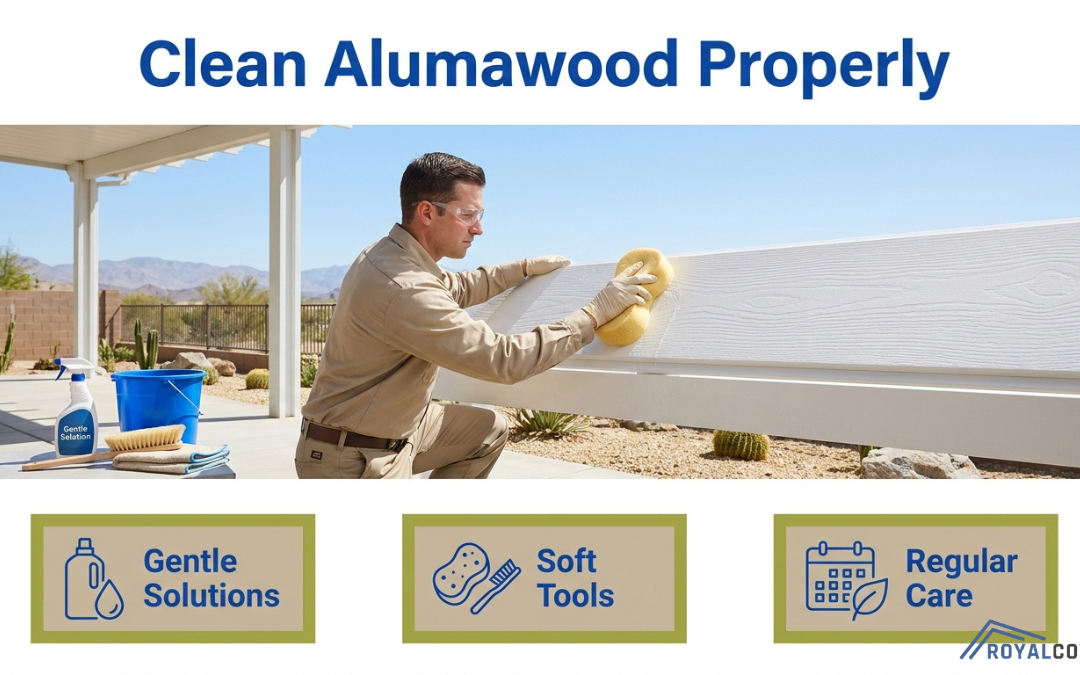
The best way to clean and maintain an Alumawood pergola is to wash it regularly with a mild detergent and trisodium phosphate solution, use only soft-bristle tools, and perform annual inspections to preserve the factory-applied finish.
This guide covers cleaning fundamentals and supplies, step-by-step washing techniques, stain-specific removal methods, cleaning frequency by climate, ongoing maintenance practices, and installation factors that reduce long-term upkeep.
Alumawood’s powder-coated finish requires a specific cleaning formula (detergent, TSP, and water at manufacturer-specified ratios) applied with soft sponges or brushes; abrasive tools like steel wool or wire brushes cause permanent coating damage that exposes the aluminum substrate to oxidation.
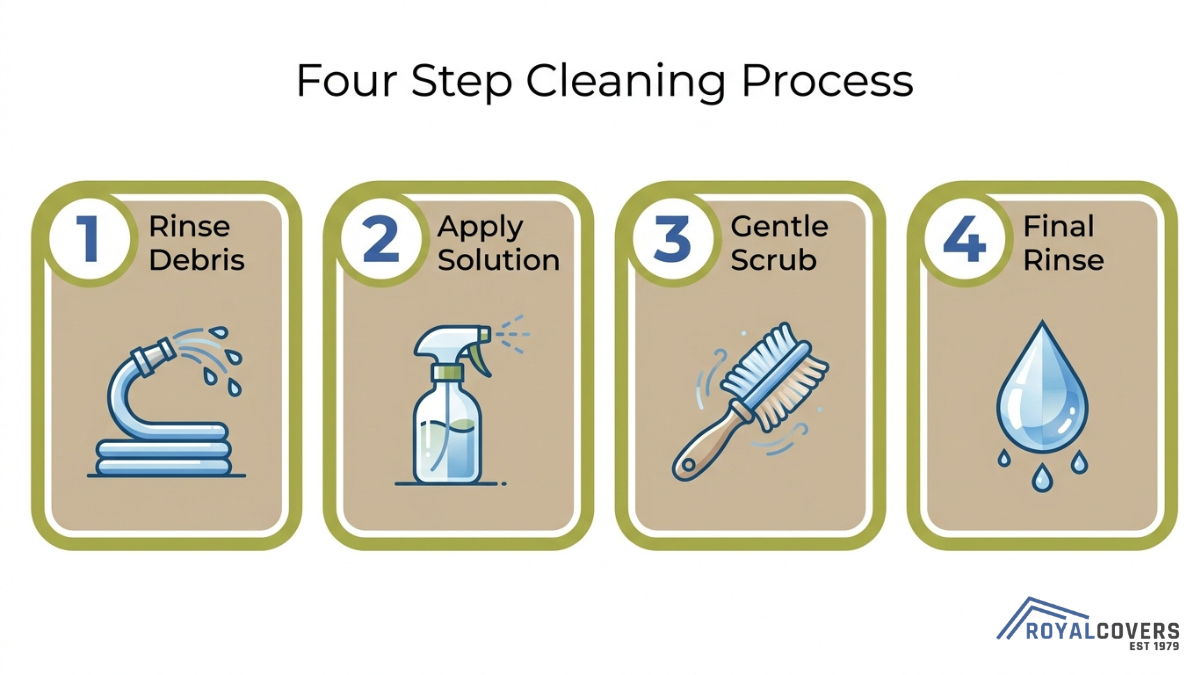
The step-by-step process follows a protective sequence: rinse loose debris first to prevent scratching, apply the cleaning solution in shaded sections so it doesn’t dry prematurely, scrub gently with circular motions, then flush thoroughly from top to bottom.
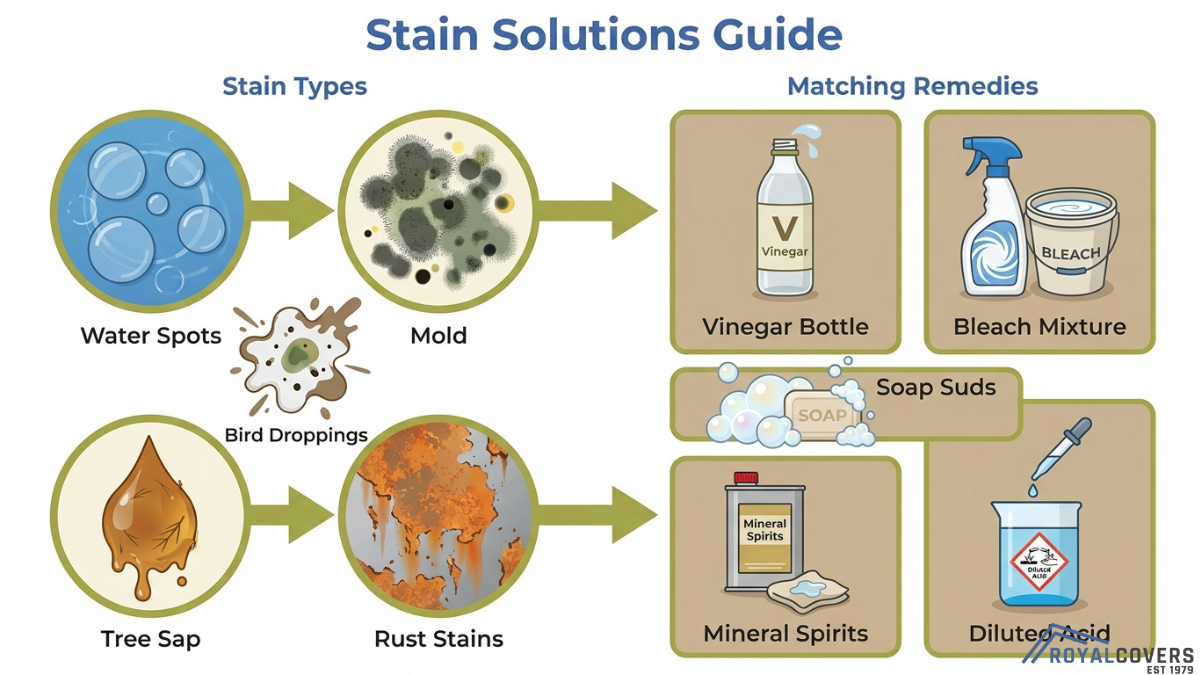
Different stain types demand matched solutions. Hard water spots respond to diluted vinegar, mold requires a bleach-based TSP mixture, tree sap dissolves with mineral spirits, and rust stains need carefully timed muriatic acid application at strict dilution ratios.
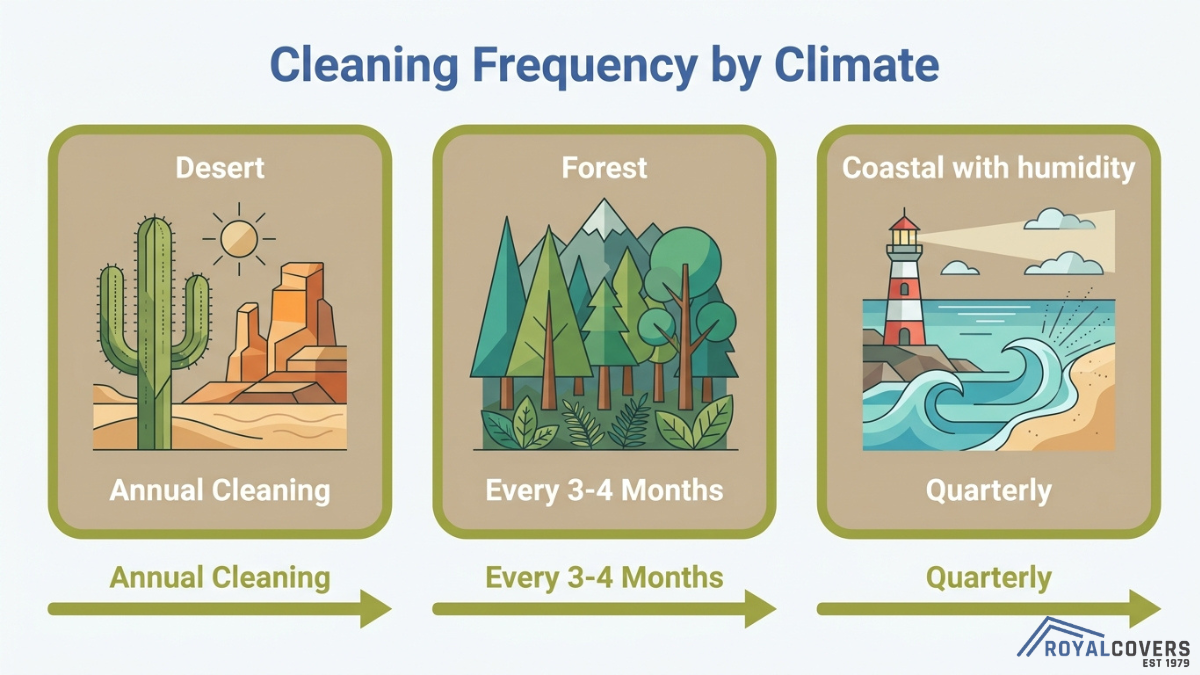
Cleaning frequency depends on environment. Desert settings call for semi-annual to annual washes, areas near trees need attention every three to four months, and humid climates require quarterly cleaning to prevent mildew from bonding to the textured finish.
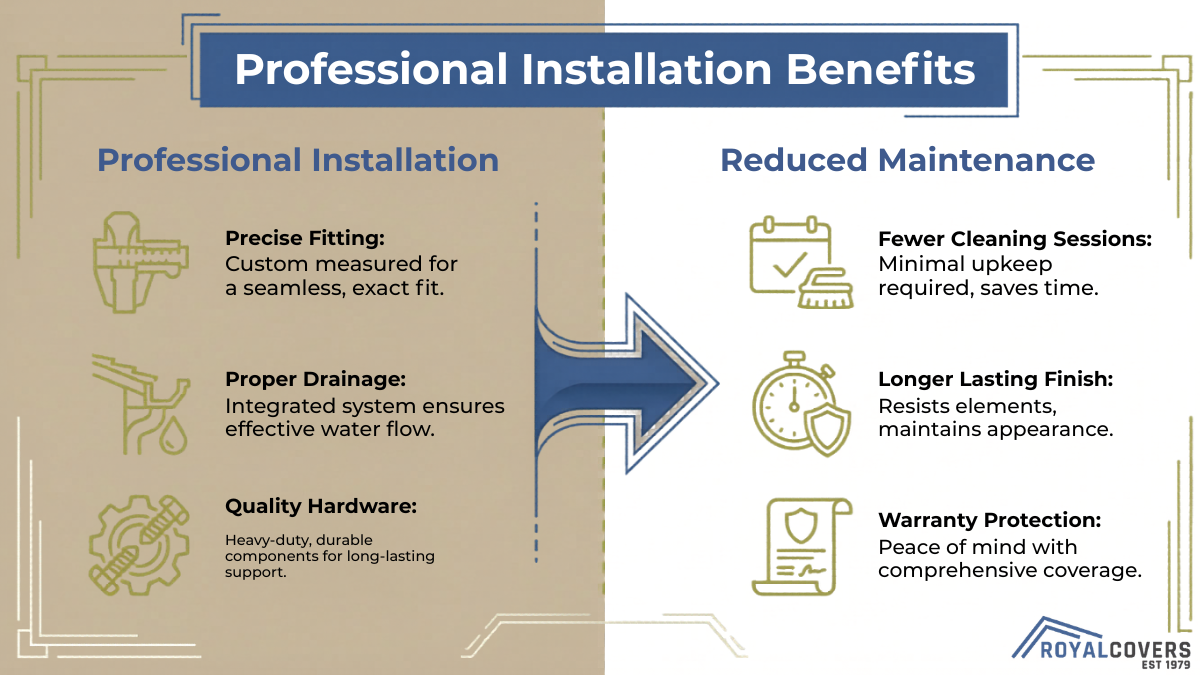
Routine maintenance beyond cleaning includes tightening hardware loosened by thermal expansion, inspecting panels for coating wear, and protecting the finish from UV degradation through consistent surface care. Professional installation with precise panel fitting and proper drainage angles further reduces debris accumulation and simplifies every future cleaning session.
Why Does an Alumawood Pergola Need Regular Cleaning?
An Alumawood pergola needs regular cleaning because environmental contaminants degrade its protective finish over time, potentially voiding the manufacturer’s warranty and shortening the structure’s lifespan. Dust, pollen, bird droppings, and atmospheric pollutants accumulate on the painted aluminum surface, where moisture cycles cause them to bond tenaciously to the coating. Left unaddressed, this buildup traps moisture against the finish, promoting mildew growth and accelerating surface deterioration.
According to Linetec, routine maintenance of architecturally finished aluminum products, including painted and anodized finishes, should be performed at least once a year to ensure the metal fulfills its warranty requirements and maintains its lifespan. In areas with high salt concentration or heavy atmospheric exposure, more frequent cleaning becomes necessary.
The AAMA 609 & 610-15 guide confirms this risk: in foggy coastal regions, frequent cycles of condensation and drying create heavy buildup of atmospheric salts and dirt that adhere tenaciously, requiring more aggressive maintenance schedules than structures in rural environments. While Alumawood pergolas in desert climates face different challenges, such as fine dust and intense UV exposure, the underlying principle remains the same. Contaminants that sit on the surface compromise the finish’s ability to protect the aluminum substrate.
Regular cleaning preserves more than appearance. It maintains the structural integrity of the powder-coated finish that prevents oxidation, keeps the wood-grain texture looking authentic, and ensures your investment continues to perform as designed. For homeowners who want their pergola to last decades without costly repairs, consistent cleaning is the single most effective preventive measure.
Understanding why cleaning matters sets the foundation for knowing exactly which supplies to use and which to avoid.
What Supplies Do You Need to Clean an Alumawood Pergola?
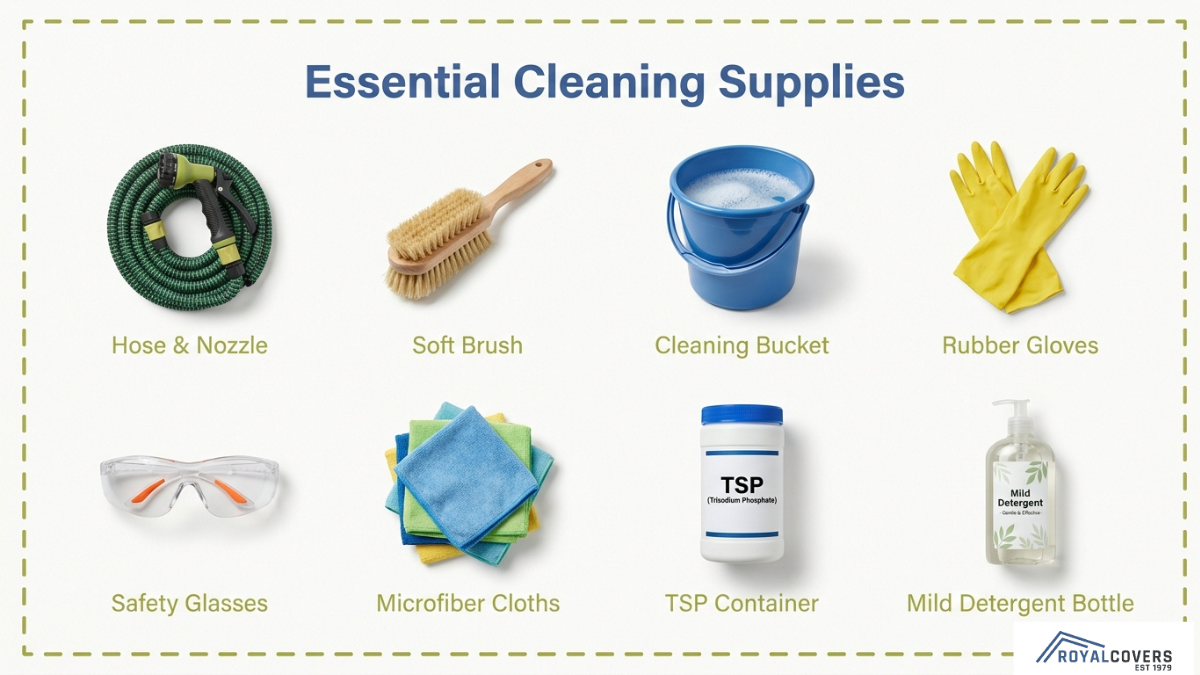
The supplies you need to clean an Alumawood pergola include a gentle cleaning solution, soft scrubbing tools, a garden hose, and a few protective items.
Essential cleaning supplies include:
- Garden hose with spray nozzle for rinsing loose debris and final rinse-down.
- Soft-bristle brush or non-abrasive sponge for scrubbing without damaging the finish.
- Bucket for mixing your cleaning solution.
- Mild detergent (such as Tide) combined with trisodium phosphate (TSP) at the manufacturer-recommended ratio of 1/3 cup detergent, 2/3 cup TSP, and 1 gallon of water, as specified by Amerimax Exterior Home Products in the Alumawood warranty documentation.
- Rubber gloves and safety glasses to protect skin and eyes from TSP or bleach solutions.
- Ladder or step stool for reaching overhead panels safely.
- Clean microfiber cloths or chamois for drying and preventing water spots.
For mildew-affected areas, keep a quart of 5% sodium hypochlorite solution (household bleach) on hand to add to your detergent mix. A specialty product like AlumaShine, a non-toxic biodegradable cleaner, offers a convenient pre-mixed alternative that removes dirt, mildew, and oxidation stains without requiring any measuring.
Avoid stocking abrasive materials such as steel wool, wire brushes, or razor blades, which wear away Alumawood’s protective powder-coated finish and cause permanent surface damage. Sticking to soft tools preserves the coating’s integrity and keeps your pergola looking factory-fresh for years.
With the right supplies gathered, the next step is applying them in the correct sequence.
How Do You Clean an Alumawood Pergola Step by Step?
You clean an Alumawood pergola step by step by rinsing loose debris, applying a cleaning solution, scrubbing stubborn stains, then rinsing and drying. Each step protects the factory finish while restoring the structure’s appearance.
How Do You Rinse Loose Debris Off an Alumawood Pergola?
You rinse loose debris off an Alumawood pergola by using a forceful water spray from a standard garden hose. According to Kawneer Company’s general cleaning guidelines, a forceful water rinse should be used initially to dislodge surface soil from organic and anodic coatings before any scrubbing begins. Direct the stream along the top panels, rafters, and posts to sweep away leaves, dust, and cobwebs. Starting with this rinse prevents loose particles from scratching the painted finish during later scrubbing steps.
How Do You Apply a Cleaning Solution to Alumawood?
You apply a cleaning solution to Alumawood by mixing the manufacturer-recommended formula and working it onto surfaces with a soft sponge or cloth. The standard Alumawood cleaning solution, as specified by Amerimax Exterior Home Products, consists of 1/3 cup detergent (such as Tide), 2/3 cup trisodium phosphate (TSP), and 1 gallon of water. Apply the mixture in manageable sections so it does not dry on the panels. Working in the shade or during cooler hours helps the solution remain active longer, giving it time to loosen grime without leaving residue on the finish.
How Do You Scrub Stubborn Stains on Alumawood Panels?
You scrub stubborn stains on Alumawood panels by using a soft-bristle brush or sponge with gentle, circular pressure. Abrasive materials such as steel wool, hard brushes, razor blades, or wire brushes should never be used on finished aluminum because they wear away the protective coating and cause permanent surface damage. For mildew spots that resist standard detergent, a targeted solution with bleach can be applied to the affected area before scrubbing. Always work in small sections and reapply solution as needed rather than increasing pressure, which risks scratching.
How Do You Rinse and Dry an Alumawood Pergola After Washing?
You rinse and dry an Alumawood pergola after washing by flushing all panels thoroughly with clean water from top to bottom, then allowing natural air circulation to complete the drying process. Thorough rinsing is essential because any cleaning residue left on the surface can attract new dirt or leave streaks on the factory paint. If water spots are a concern in hard-water areas, wiping accessible surfaces with a clean microfiber cloth immediately after rinsing prevents mineral deposits from forming.
With the basic cleaning process complete, addressing specific stain types requires targeted solutions and techniques.
How Do You Remove Specific Stains from an Alumawood Pergola?
You remove specific stains from an Alumawood pergola by matching the cleaning method to the stain type. The sections below cover hard water spots, mold, bird droppings, tree sap, and rust.
How Do You Remove Hard Water Spots from Alumawood?
You remove hard water spots from Alumawood by applying a solution of equal parts white vinegar and water directly to the mineral deposits. Let the mixture sit for two to three minutes, then gently scrub with a soft-bristle brush or sponge. Rinse thoroughly with clean water to prevent the acidic solution from lingering on the painted finish. For stubborn calcium buildup, repeat the process rather than increasing scrub pressure. Avoiding abrasive tools is essential here; as noted by Royal Covers, steel wool, hard brushes, razor blades, or wire brushes should never be used on finished aluminum because they wear away the protective coating and cause permanent surface damage.
How Do You Remove Mold or Mildew from Alumawood?
You remove mold or mildew from Alumawood using a bleach-based cleaning solution designed for painted aluminum finishes. According to Alumawood Outdoor Living’s care guidelines, an effective mildew removal solution contains 1/3 cup detergent, 2/3 cup trisodium phosphate (TSP), 1 quart of 5% sodium hypochlorite solution (bleach), and 3 quarts of water. Apply the mixture with a soft sponge, allow it to dwell for several minutes without drying, then scrub gently and rinse completely. Always work in shaded conditions so the solution does not evaporate before it can break down mildew growth. Proper ventilation and gloves are recommended when handling TSP and bleach together.
How Do You Remove Bird Droppings from Alumawood?
You remove bird droppings from Alumawood by soaking the affected area with warm water and a mild detergent to soften the deposit before wiping. Dried droppings are mildly acidic and can etch the painted finish if left in place, so prompt removal matters. Saturate a soft cloth with the soapy solution, lay it over the stain for a few minutes, then wipe away without scraping. Follow with a clean water rinse. For homeowners dealing with frequent droppings, installing deterrents such as bird spikes on nearby beams reduces the cleaning burden considerably.
How Do You Remove Tree Sap or Pollen from Alumawood?
You remove tree sap or pollen from Alumawood by treating these non-water-soluble deposits with an appropriate solvent. According to the FGIA (Fenestration and Glazing Industry Alliance), MEK (Methyl Ethyl Ketone), mineral spirits, or an equivalent solvent effectively removes tar, grease, sap, and similar residues from aluminum finishes, provided you rinse thoroughly with water immediately after cleaning. Apply a small amount of solvent to a soft cloth, dab the sap until it dissolves, then flush the entire area with water. For pollen, a simple forceful water rinse often works before resorting to solvents. Always test solvents on an inconspicuous spot first.
How Do You Remove Rust Stains from Alumawood?
You remove rust stains from Alumawood using a diluted muriatic acid solution applied with strict time limits. A 2023 Kawneer Architectural Manual guide specifies that a 10 percent solution of muriatic acid diluted with 10 volumes of water may be used on high-performance painted surfaces, limited to a maximum contact time of 5 minutes. Apply only to the stained area with a soft cloth, monitor the time carefully, and rinse immediately with plenty of water. Rust stains on Alumawood typically originate from adjacent metal furniture or hardware rather than the aluminum itself, so identifying and addressing the rust source prevents recurring discoloration.
With stain-specific solutions established, knowing which products to avoid protects your Alumawood finish from accidental damage.
What Cleaning Products Should You Avoid on Alumawood?
The cleaning products you should avoid on Alumawood include harsh abrasives, strong alkaline substances, and undiluted solvents that strip or corrode the factory-applied finish. The following categories pose the greatest risk to your pergola’s protective coating:
- Abrasive cleaners and tools: Steel wool, hard-bristle brushes, razor blades, and scouring powders wear away the painted or anodized surface, causing permanent scratches and exposing bare aluminum to oxidation.
- Alkaline compounds: Mortar, cement, and highly alkaline cleaning solutions quickly corrode anodic coatings if allowed to dry on the metal surface, according to W.A. Wilson Glass Plus’s guide on anodized aluminum maintenance.
- Undiluted acids: Concentrated muriatic acid or other strong acids eat through protective finishes when used at full strength or left on longer than manufacturer-specified contact times.
- Industrial solvents without rinsing: While MEK or mineral spirits can address tar and grease on anodized finishes, failing to rinse immediately after application traps chemicals against the coating and causes discoloration.
- Generic all-purpose degreasers: Many household degreasers contain ammonia or high-pH formulas that dull Alumawood’s wood-grain texture over time.
For most homeowners, the safest approach is sticking with the manufacturer-recommended mix of mild detergent, trisodium phosphate, and water. This combination handles routine dirt without risking finish damage, while specialty products like AlumaShine offer a pre-mixed alternative for tougher stains. When in doubt, test any unfamiliar product on a small, hidden section first.
Understanding which cleaners to avoid sets the stage for determining how often your pergola actually needs attention.
How Often Should You Clean an Alumawood Pergola?
You should clean an Alumawood pergola at least once a year, with more frequent cleaning depending on your environment. Desert dust, nearby vegetation, and humidity each affect the ideal schedule.
How Often Should You Clean Alumawood in a Desert Climate?
You should clean Alumawood in a desert climate every six to twelve months. Arizona’s dry conditions produce less mold growth, but fine dust and mineral deposits accumulate steadily on painted aluminum surfaces. According to Linetec, routine maintenance of architecturally finished aluminum products should be performed at least once a year to ensure the metal fulfills its warranty requirements and maintains its lifespan. Desert homeowners benefit from a quick rinse between deep cleanings, especially after dust storms that leave gritty residue capable of dulling the finish over time.
How Often Should You Clean Alumawood Near Trees or Plants?
You should clean Alumawood near trees or plants every three to four months. Pollen, sap, and fallen leaves create organic debris that traps moisture against the finish, accelerating stain formation. Bird droppings, common beneath overhanging branches, contain acids that can etch painted coatings if left in place. Seasonal shedding cycles in spring and fall typically produce the heaviest accumulation, so scheduling a thorough wash at the start and end of these periods keeps buildup manageable. For pergolas surrounded by dense landscaping, this proactive approach prevents staining that becomes progressively harder to remove.
How Often Should You Clean Alumawood in a Humid Climate?
You should clean Alumawood in a humid climate every two to three months. Moisture-rich environments promote mold and mildew growth on aluminum surfaces, particularly in shaded areas with limited airflow. The AAMA 609 & 610-15 guide notes that in foggy coastal regions, frequent cycles of condensation and drying create heavy buildup of atmospheric salts and dirt that adheres tenaciously, requiring more frequent cleaning than in rural areas. Humid conditions make quarterly cleaning essential for preventing organic growth from penetrating the textured finish.
Understanding the right cleaning frequency sets the foundation for broader maintenance habits that preserve your pergola’s structural integrity.
What Maintenance Tasks Keep an Alumawood Pergola in Top Shape?
The maintenance tasks that keep an Alumawood pergola in top shape include regular damage inspections, hardware upkeep, and finish protection against UV fading.
How Do You Inspect an Alumawood Pergola for Damage?
You inspect an Alumawood pergola for damage by performing a visual walkthrough at least once per year, checking panels, joints, and connection points for signs of wear. Look for peeling or bubbling in the painted finish, cracks at stress points, and any gaps where panels meet posts. According to Linetec, routine maintenance of architecturally finished aluminum products should occur at least annually to ensure the metal fulfills its warranty requirements and maintains its lifespan. Pay special attention to areas where water pools or debris collects, since trapped moisture accelerates coating deterioration. Catching minor issues early prevents costly structural repairs later.
How Do You Maintain the Hardware on an Alumawood Pergola?
You maintain the hardware on an Alumawood pergola by tightening all fasteners, brackets, and screws during your annual inspection. Thermal expansion from heat cycles can gradually loosen connections over time. Check each lag bolt, post bracket, and beam connector for stability. If fasteners show surface corrosion, replace them with matching stainless steel or powder-coated hardware to prevent rust stains from bleeding onto aluminum panels. Lubricate any moving components, such as fan mounts or shade attachments, with a silicone-based spray. Well-maintained hardware preserves the pergola’s structural integrity and prevents rattling or shifting during wind events.
How Do You Protect Alumawood Finish from Sun Fading?
You protect Alumawood finish from sun fading by keeping the surface clean and addressing any coating wear promptly. Accumulated dirt and pollutants act as abrasives under UV exposure, accelerating discoloration. Specialized products like AlumaShine, a non-toxic biodegradable cleaner, remove oxidation buildup while restoring the cover’s original shine without mixing. For ongoing protection, avoid abrasive materials such as steel wool or wire brushes, which wear away the protective coating and cause permanent surface damage. Alumawood’s baked-on enamel finish resists fading far better than wood stain, but periodic cleaning remains the most effective defense against gradual UV degradation.
With routine inspections and finish care addressed, understanding pressure washing safety ensures you avoid accidental damage during deeper cleans.
Can You Pressure Wash an Alumawood Pergola Safely?
Yes, you can pressure wash an Alumawood pergola safely, but only at low pressure settings. High-pressure washing strips the protective powder-coated finish, causing permanent surface damage. The safer approach relies on a gentle rinse combined with proper cleaning solutions.
According to the Kawneer Company’s architectural cleaning guidelines, a forceful water rinse should be used initially to dislodge soil from organic and anodic coatings, followed by scrubbing with a soft brush or sponge and a 5 percent solution of industrial detergent and water if soil remains. This principle applies directly to Alumawood’s painted aluminum finish.
If you choose to use a pressure washer, follow these precautions:
- Keep the PSI below 1,500 and use a wide-angle (40-degree) nozzle tip.
- Maintain at least 12 inches of distance between the nozzle and the Alumawood surface.
- Never concentrate the stream on one spot, as this can chip or peel the coating.
- Avoid directing water upward into panel seams where moisture can become trapped.
A standard garden hose with moderate pressure handles most routine cleaning effectively. For stubborn buildup, the manufacturer-recommended solution of 1/3 cup detergent, 2/3 cup trisodium phosphate, and one gallon of water paired with a soft-bristle brush delivers better results than aggressive water pressure alone. In most cases, homeowners who skip the pressure washer entirely and rely on this gentler method preserve their pergola’s finish far longer.
Knowing what pressure levels to avoid is just one part of protecting your investment from accidental damage.
What Common Cleaning Mistakes Can Damage an Alumawood Pergola?
Common cleaning mistakes that can damage an Alumawood pergola include using abrasive tools, applying harsh chemicals, pressure washing at high settings, and letting construction materials dry on the surface. Each error compromises the protective finish.
The most frequent mistakes fall into these categories:
- Using abrasive scrubbing tools. Steel wool, wire brushes, razor blades, and hard-bristle brushes wear away the protective coating, causing permanent surface damage. According to Royal Covers, abrasive materials should never be used on finished aluminum as they can scratch through the factory-applied finish irreversibly.
- Allowing alkaline materials to dry on panels. Mortar, cement, and stucco splatter will quickly corrode anodic coatings if left to dry, particularly during nearby construction projects.
- Using undiluted or unapproved chemicals. Concentrated bleach, ammonia-based cleaners, and acidic products strip the painted finish when applied without proper dilution ratios.
- Skipping the initial rinse. Scrubbing dry panels grinds loose grit into the coating, creating micro-scratches that accumulate over time.
- Pressure washing too aggressively. Excessive water pressure forces moisture behind panel seams and peels the finish at edges.
- Cleaning in direct midday sun. Solutions evaporate too quickly on hot surfaces, leaving chemical residue that etches the finish before it can be rinsed.
For most homeowners, the simplest prevention strategy is to always start with a gentle water rinse, use only manufacturer-approved solutions at correct dilutions, and scrub exclusively with soft brushes or sponges. These habits protect the finish far more effectively than any restorative product applied after damage occurs.
Proper installation choices also influence how easily these mistakes are avoided over time.
How Does Professional Alumawood Installation Affect Long-Term Maintenance?
Professional Alumawood installation affects long-term maintenance by ensuring proper drainage, secure fastening, and correct panel alignment that prevent premature dirt buildup and coating damage.
Can a Custom-Engineered Alumawood Pergola from Royal Covers Reduce Your Maintenance Needs?
Yes, a custom-engineered Alumawood pergola from Royal Covers can reduce your maintenance needs. When panels are precisely fitted and hardware is correctly torqued during installation, water drains properly and debris has fewer places to accumulate. This means routine upkeep stays minimal. According to Linetec, routine maintenance of architecturally finished aluminum products should be performed at least once a year to maintain warranty coverage and lifespan. Royal Covers designs each structure specifically for desert conditions, using full-time installation teams rather than subcontractors to ensure tight tolerances that protect the factory-applied finish from day one. Proper initial construction also eliminates the risk of alkaline materials like mortar drying on the anodic coating, which would otherwise cause corrosion requiring costly restorative cleaning.
What Are the Key Takeaways About Alumawood Pergola Cleaning and Maintenance?
The key takeaways about Alumawood pergola cleaning and maintenance are:
- Clean your Alumawood pergola at least once per year using the manufacturer-recommended solution of 1/3 cup detergent, 2/3 cup TSP, and one gallon of water.
- Never use abrasive tools such as steel wool, wire brushes, or razor blades on finished aluminum surfaces.
- Address mildew promptly with a bleach-based solution, and remove construction residue like mortar before it dries.
- Use specialty cleaners like AlumaShine for oxidation and algae stains without mixing chemicals.
- Professional installation from Royal Covers minimizes long-term maintenance by ensuring proper fit, drainage, and finish protection from the start.