
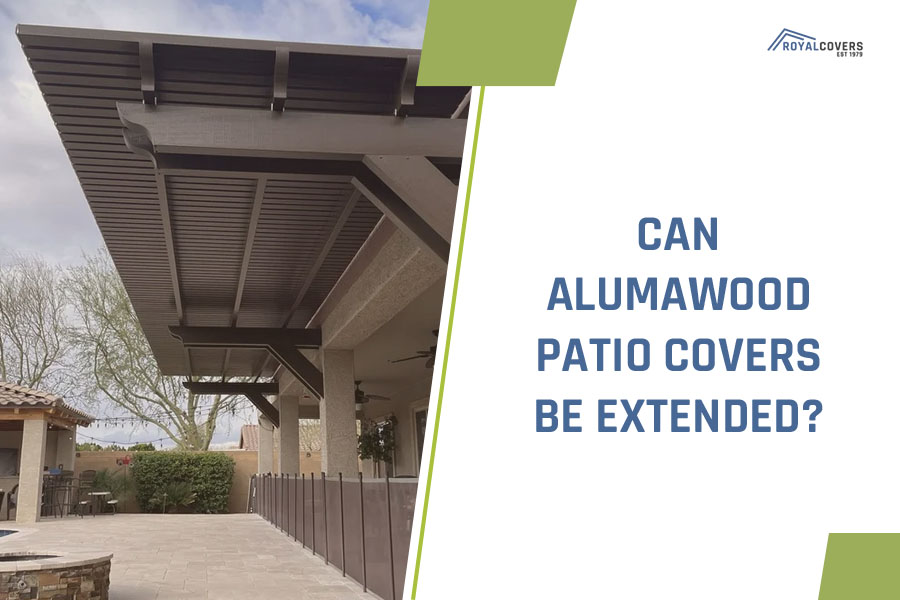
If you’re considering extending your existing Alumawood patio cover to create more shade and outdoor living space, we understand you want to know if it’s even possible before investing time and money. The good news is that Alumawood patio covers can indeed be extended, but success depends on your existing structure’s engineering, local building codes, and proper material compatibility – factors we’ll help you navigate to make an informed decision.
An Alumawood patio cover extension is the process of expanding an existing aluminum patio structure by adding new sections that integrate seamlessly with the original installation while maintaining structural integrity and aesthetic consistency.
TL;DR Summary:
- Extension feasibility depends on your existing structure’s gauge thickness, support system, and current condition – thicker aluminum (like structures with steel inserts) allows longer spans between posts
- Your current footings, house attachment points, and local building codes determine what modifications are possible – most extensions require permits and must meet IBC/IRC standards
- Professional planning involves site assessment, proper footing placement below frost lines, and using identical Alumawood materials to ensure compatibility and maintain warranties
- Design options include matching existing styles or upgrading to features like steel-reinforced beams for more open designs – both solid and lattice options are available
- Professional installation costs range from $25-75 per square foot with typical 10×20 extensions costing $5,000-$15,000 – outdoor living spaces can provide up to 80% ROI
- Royal Covers, with over 40 years of experience since 1979, specializes in Alumawood installations and extensions in the Phoenix area with consistently positive customer reviews
Quick Tip: Before planning your extension, take photos of your existing patio cover’s attachment points to the house and support post locations – this visual reference will save time during professional consultations and help identify potential engineering constraints early.
This comprehensive guide walks you through every aspect of extending your Alumawood patio cover, from understanding structural requirements to working with qualified contractors who can ensure your extension meets all safety standards while enhancing your outdoor living space.
What Factors Determine Whether an Alumawood Patio Cover Can Be Extended?
Whether an Alumawood patio cover can be extended depends on four critical factors: the type and structural capacity of your existing cover, the condition of your foundation and attachment points, material compatibility requirements, and local building code compliance.
What Types of Alumawood Patio Covers Are Most Suitable for Extensions?
Alumawood covers with thicker gauge aluminum provide the greatest extension potential. These heavy-duty systems offer superior strength and allow longer spans between support posts, creating more flexibility for extension designs. Structures featuring steel inserts within the Alumawood components deliver significantly increased span capabilities, enabling more open layouts with fewer support posts required.
Standard Alumawood patio covers are engineered to meet specific regional load requirements. The structural capacity varies based on local climate conditions, with systems designed for different snow and wind loads depending on your geographic location.
How Does the Existing Structure Affect the Extension Possibility?
The existing structure’s condition determines extension feasibility through three key engineering factors: foundation integrity, support spacing, and house attachment quality. Footings must be appropriately sized and strategically spaced to handle the entire structure’s weight, including additional loads from the proposed extension.
Regional frost considerations create additional constraints. In areas with established frost lines, footings must extend below the frost depth to prevent heaving and structural damage during freeze-thaw cycles. The house attachment requires bolts penetrating solid wood framing to maintain a stable, load-bearing connection.
Are There Any Material Limitations When Extending Alumawood Patio Covers?
Material consistency ensures structural integrity and aesthetic uniformity. Extensions require the same Alumawood components as the original installation to maintain consistent performance and appearance. Mixing different materials creates problems with galvanic corrosion, thermal expansion rates, and overall structural stability.
Standard Alumawood systems feature specific load ratings: snow loads range from 10-20 PSF for typical snowfall regions to 50-70 PSF for high-mountain areas. Wind load ratings typically withstand minimum 90 MPH winds, with coastal and high-wind regions requiring enhanced ratings for safety compliance.
What Local Building Codes or Permits Might Impact an Extension?
Building permits are required for most patio cover extensions across jurisdictions. Alumawood installations must comply with International Building Code (IBC) and International Residential Code (IRC) standards, which establish safety and structural requirements.
Appendix H of the IRC and Appendix I of the IBC specifically address patio covers, outlining detailed requirements for height restrictions, property setbacks, and structural design calculations. Heavy snowfall regions impose stricter roof strength and support requirements, while coastal areas mandate more stringent wind resistance specifications.
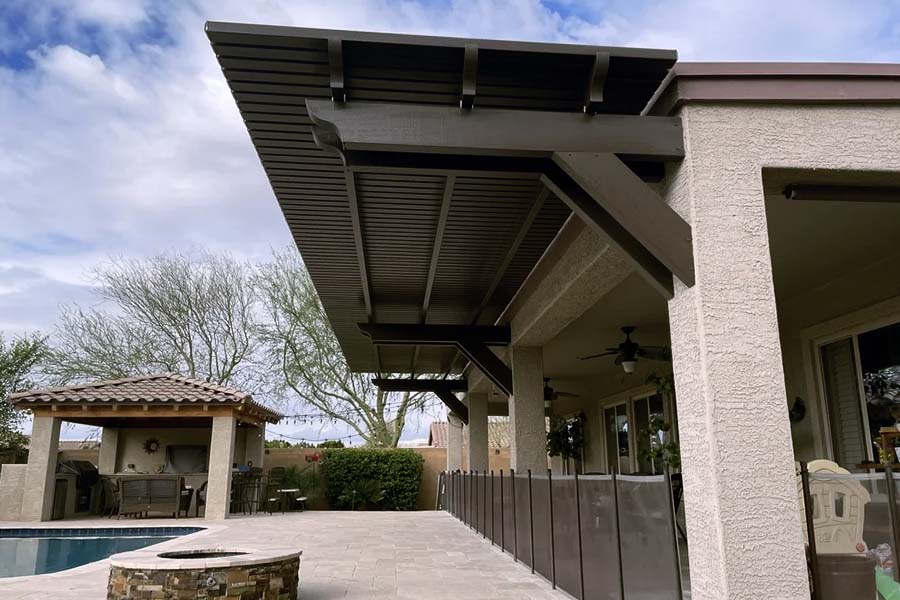
The combination of these factors—structural compatibility, foundation adequacy, material consistency, and code compliance—ultimately determines your extension’s feasibility and guides the planning process for successful implementation.
Source: royalcovers.com
How Is an Alumawood Patio Cover Extension Planned and Built?
Alumawood patio cover extensions follow a systematic construction process that requires professional planning, proper permits, and careful execution. The extension planning involves structural assessment, permit acquisition, and detailed preparation before construction begins.
What Are the Typical Steps to Extend an Alumawood Patio Cover?
The typical steps to extend an Alumawood patio cover include site preparation, foundation work, structural installation, roofing, and finishing touches. The construction process follows these sequential phases:
- Site preparation – Clear the extension area and mark precise locations for support posts and footings using stakes and spray paint
- Foundation installation – Excavate footings to code-required depths and pour concrete foundations sized for local building requirements
- Structural assembly – Install support posts and beams, securing them to both the new footings and existing house attachment points
- Roof installation – Attach rafters and roof panels (solid or lattice options) to the beam framework
- Finishing work – Install trim pieces, gutters, and drainage components as final touches
Each step requires proper tools and adherence to manufacturer specifications for fasteners and connection methods.
Who Should Design and Approve the Extension Plans?
A professional assessment is necessary to determine if the existing structure can support the additional load of an extension. Licensed contractors or structural engineers should evaluate the current patio cover’s capacity, foundation adequacy, and house attachment points before designing the extension.
Permit applications generally require submitting detailed plans with structural calculations and drawings to local building departments. These plans must demonstrate compliance with International Building Code (IBC) and International Residential Code (IRC) requirements, particularly Appendix H and Appendix I provisions for patio covers.
It is the homeowner’s responsibility to ensure compliance with local regulations, though professional contractors typically handle permit applications and inspections as part of their service.
What Preparation Is Needed Before Construction Begins?
The installation requires tools including a power drill, measuring tape, level, ladder, and rubber mallet for proper assembly. Professional contractors bring specialized equipment for excavation, concrete work, and precision alignment of structural components.
Proper connection methods using correct fasteners like bolts and screws must be installed according to manufacturer specifications to ensure structural integrity. Pre-construction preparation also includes utility location marking, material delivery coordination, and site access planning for equipment and crews.
The upcoming design and style considerations will help you create an extension that seamlessly integrates with your existing outdoor space while maximizing functionality and aesthetic appeal.
What Are the Design and Style Options for Extending Alumawood Patio Covers?
Alumawood patio cover extensions offer diverse design and style options that allow homeowners to expand their outdoor living spaces while maintaining aesthetic consistency and functionality. The key to successful extension design lies in proper material matching, customization flexibility, and seamless integration with existing outdoor environments.
Can You Match the New Extension to the Existing Patio Cover?
Matching new extensions to existing patio covers is achievable through careful component selection and finish coordination. Extensions should use the same Alumawood components to ensure consistent appearance and performance across the entire structure. The factory-applied finish on Alumawood resists chipping, peeling, and cracking, maintaining color consistency over time.
Material compatibility extends beyond visual matching to structural performance. According to manufacturer specifications, Alumawood’s proprietary coating system provides uniform weathering characteristics that ensure new extensions age at the same rate as existing covers. This consistency prevents the patchwork appearance common with mixed materials or aftermarket finishes.
What Customization Options Are Available for Extensions?
Extension customization options include both structural and aesthetic elements that enhance functionality and visual appeal. Alumawood products include both solid and lattice patio cover options, allowing homeowners to match existing designs or create complementary contrasts. Steel inserts can be incorporated to allow for more open designs with fewer posts, expanding usable space beneath the cover.
Structural customization opportunities include varying post spacing, beam configurations, and roof panel arrangements. A 2021 industry analysis found that homeowners increasingly prefer open-concept extensions that maximize sight lines while providing adequate shade coverage. Custom color matching services ensure perfect coordination with existing structures, while integrated lighting and electrical conduit options support modern outdoor living requirements.
How Can You Blend the Extension Seamlessly With Your Outdoor Space?
Seamless integration requires considering both architectural harmony and functional flow between indoor and outdoor areas. Current trends include incorporating features like outdoor kitchens, fire pits, and entertainment systems within extended patio spaces. The ability to seamlessly blend indoor and outdoor living spaces drives modern patio design decisions.
Design integration strategies include matching roofline angles, coordinating support post placement with landscape features, and ensuring proper scale relationships with existing structures. According to a 2023 outdoor living survey, 68% of homeowners prioritize extensions that create natural traffic flow between covered and uncovered outdoor areas. Professional designers recommend extending covers to create defined activity zones while maintaining visual connections across the entire outdoor space.
Contextual bridges between extension zones help create cohesive outdoor environments that support diverse activities from quiet relaxation to active entertainment, setting the foundation for understanding extension costs and implementation timelines.
What Are the Costs and Timelines Involved in Extending an Alumawood Patio Cover?
Extending an Alumawood patio cover involves specific cost considerations and timeline factors that homeowners should understand before beginning their project. Professional installation costs typically range from $25 to $75 per square foot, with project timelines varying based on complexity and permitting requirements. The following sections examine the cost factors, timeline expectations, and money-saving strategies for Alumawood patio cover extensions.
What Factors Influence the Total Cost of Extending a Patio Cover?
The total cost of extending a patio cover depends on several key variables that affect both materials and labor expenses. Homeowners can expect to pay between $25 and $75 per square foot for professionally installed Alumawood patio covers, with a typical 10×20-foot extension ranging from $5,000 to $15,000.
Primary Cost Factors:
- Size and square footage – Larger extensions require more materials and labor hours
- Design complexity – Intricate patterns, multiple angles, or custom features increase costs
- Site preparation requirements – Existing landscaping, utilities, or structural modifications
- Foundation work – New footings, concrete work, and proper depth requirements
- Permit and inspection fees – Required municipal approvals and building department costs
Material quality also impacts pricing significantly. Extensions using thicker gauge aluminum with steel inserts cost more upfront but provide greater structural strength and longer spans between support posts. The condition of the existing structure affects total costs, as older covers may require reinforcement or repairs before extension work begins.
How Long Does It Typically Take to Complete an Extension?
Extension timelines vary from 3-10 business days depending on project scope, weather conditions, and permitting requirements. Simple extensions to existing structures typically complete faster than complex multi-level additions requiring extensive foundation work.
Timeline Breakdown:
- Permit approval – 1-3 weeks for municipal review and approval
- Site preparation – 1-2 days for clearing, marking, and excavation
- Foundation work – 2-3 days for footing excavation, concrete pouring, and curing
- Installation – 2-4 days for post installation, beam placement, and roof panel attachment
- Finishing touches – 1 day for trim, gutters, and final inspections
Weather conditions significantly impact schedules, as concrete work requires dry conditions and proper curing time. Areas with heavy snowfall or coastal regions may require additional structural reinforcement, extending project timelines. Professional contractors typically provide realistic timelines based on local conditions and permit processing speeds.
Are There Ways to Save Money When Extending a Patio Cover?
Several strategies help homeowners reduce extension costs while maintaining quality and structural integrity. The most effective approach combines smart planning, material selection, and timing considerations to maximize value.
Cost-Saving Strategies:
- Plan extensions during initial installation – Simultaneous construction eliminates duplicate site preparation and mobilization costs
- Choose standard designs over custom configurations – Pre-engineered options reduce engineering and fabrication expenses
- Schedule during off-peak seasons – Fall and winter installations often feature reduced labor rates
- Combine with other home improvements – Coordinate with landscaping or outdoor kitchen projects for shared contractor efficiencies
- Maintain existing footings when possible – Utilize properly-sized existing foundations to reduce excavation costs
Homeowners should avoid compromising on structural requirements or professional installation to save money, as improper installation can void warranties and create safety hazards. Working with experienced contractors like Royal Covers ensures proper engineering calculations and compliance with local building codes while optimizing material usage.
The key to successful Alumawood patio cover extensions lies in balancing upfront costs with long-term value, considering that outdoor living spaces can provide up to 80% ROI according to recent market reports. Next, we’ll explore the specific benefits and potential drawbacks of extending your Alumawood patio cover.
What Are the Benefits and Drawbacks of Extending Your Alumawood Patio Cover?
Extending your Alumawood patio cover offers substantial benefits alongside specific challenges that require careful consideration. Understanding both aspects helps homeowners make informed decisions about their outdoor living investments.
How Can an Extension Improve Outdoor Living Space?
An extension significantly improves outdoor living space by increasing usable square footage and property value. According to a 2024 report, outdoor living spaces like patios can have an ROI of up to 80%. A patio is a highly sought-after feature for homebuyers and can increase overall home value and marketability.
The demand for outdoor living spaces has been steadily increasing with more homeowners creating comfortable and functional outdoor areas. Additional covered space allows for:
- Expanded entertainment areas for hosting guests
- Protected zones for outdoor furniture and appliances
- Enhanced property appeal for potential buyers
- Year-round usability regardless of weather conditions
Extended patio covers create seamless indoor-outdoor transitions that modern homeowners value.
What Challenges or Risks Come With Extending an Alumawood Cover?
The challenges with extending an Alumawood cover center on warranty implications and structural complexities. Extending an existing patio cover may have implications for the warranty, as modifications can affect original coverage terms. The warranty does not cover damage caused by improper installation, accidents, or natural disasters.
Additional risks include:
- Structural integrity concerns if engineering calculations are inadequate
- Building code compliance requirements that vary by jurisdiction
- Potential mismatching of materials if proper components aren’t used
- Foundation issues if existing footings cannot support additional loads
Professional assessment becomes essential to identify and mitigate these risks before construction begins.
Are There Maintenance or Durability Concerns After an Extension?
There are minimal maintenance concerns after an extension when properly executed. Alumawood patio covers are known for their low maintenance requirements, and extensions maintain these characteristics when built with matching materials.
Routine maintenance involves:
- Occasional washing with clear water and a soft-bristled brush to keep the cover looking its best
- Using mild soap and water solution for stubborn dirt or mildew
- Visual inspections of joints and connections annually
Alumawood products come with a limited lifetime warranty covering manufacturing defects, transferable to a subsequent owner for the first ten years. This warranty coverage extends to properly installed extensions using original Alumawood components, ensuring long-term durability and peace of mind for homeowners investing in outdoor space improvements.
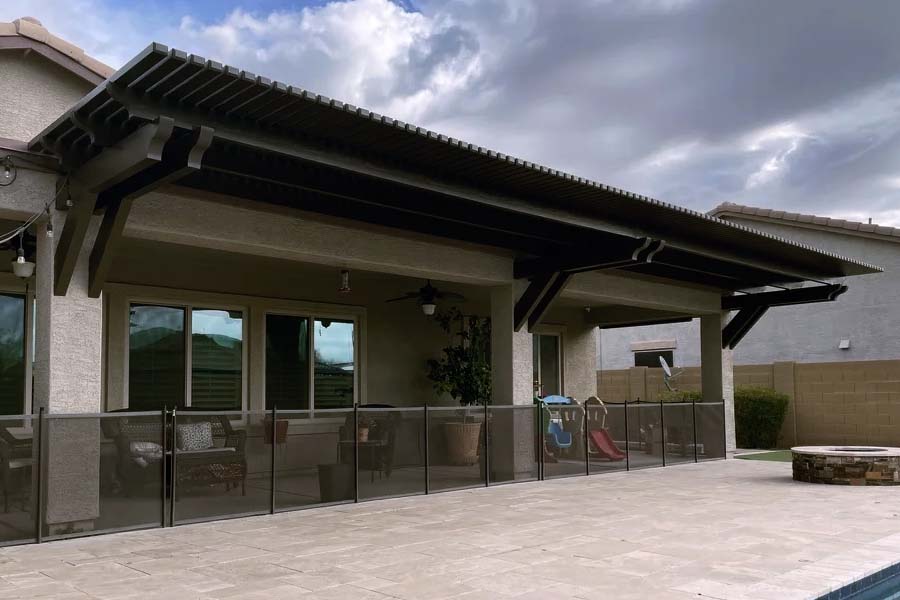
Extensions completed with professional oversight typically maintain the same low-maintenance profile as original installations while providing expanded outdoor functionality.
Source: royalcovers.com
How Should You Approach Alumawood Patio Cover Extensions With a Professional Service?
Approaching Alumawood patio cover extensions requires working with experienced contractors who understand structural requirements, local codes, and proper installation techniques. Professional services ensure extensions integrate seamlessly with existing structures while meeting safety standards and warranty requirements.
Can Royal Covers Help With Extending Alumawood Patio Covers?
Royal Covers can help with extending Alumawood patio covers through their specialized expertise in patio cover installation. Founded in 1979, the company brings over 40 years of experience to the patio cover industry in the Phoenix, Arizona area. As a licensed, bonded, and insured contractor, Royal Covers specializes in Alumawood patio cover installation and offers a comprehensive range of Alumawood products, including both solid and lattice patio covers.
The company has earned numerous positive reviews on platforms such as Yelp, Google, and HomeAdvisor for their professionalism and quality of work. Customers consistently praise Royal Covers for their efficient, courteous, and skilled installation crews who handle complex extension projects with precision and care.
What Are the Key Takeaways About Extending Alumawood Patio Covers We Covered?
The key takeaways about extending Alumawood patio covers include several critical considerations for successful projects. Extensions depend on the existing structure’s condition, proper footing placement, and compliance with local building codes that vary by region. Structural factors such as thicker gauge aluminum, steel inserts, and appropriate span capabilities determine extension feasibility, with snow load ratings ranging from 10-20 PSF for standard areas to 50-70 PSF for high-mountain regions.
Professional planning involves site preparation, permit acquisition, and structural assessments to ensure safety and code compliance. Cost factors range from $25 to $75 per square foot for professionally installed extensions, with typical 10×20-foot projects costing $5,000 to $15,000. Extensions offer significant benefits including increased outdoor living space and potential ROI of up to 80%, while requiring minimal maintenance with Alumawood’s lifetime warranty coverage for manufacturing defects.