
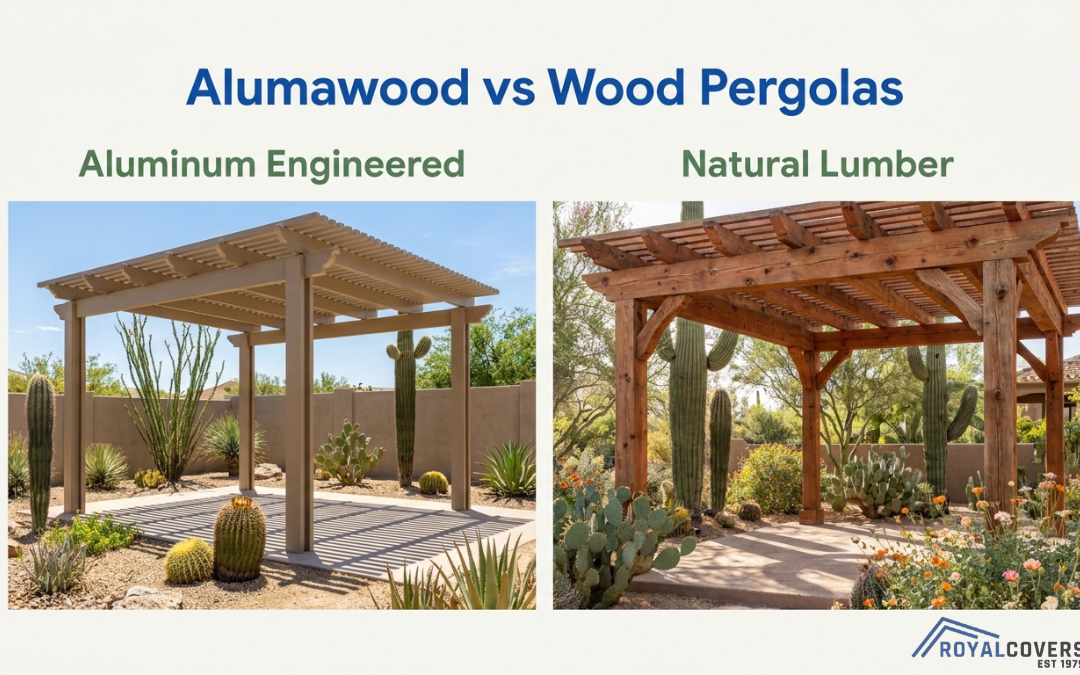
Alumawood is painted aluminum embossed with wood texture and roll formed into building material shapes, while wood pergolas are built from natural lumber species like cedar, redwood, or pressure-treated pine. Choosing between them requires evaluating durability, cost, maintenance, appearance, lifespan, home value impact, installation, and climate suitability.
This guide covers material composition and durability performance, cost and maintenance differences, aesthetic options and lifespan expectations, and decision factors for desert climates.
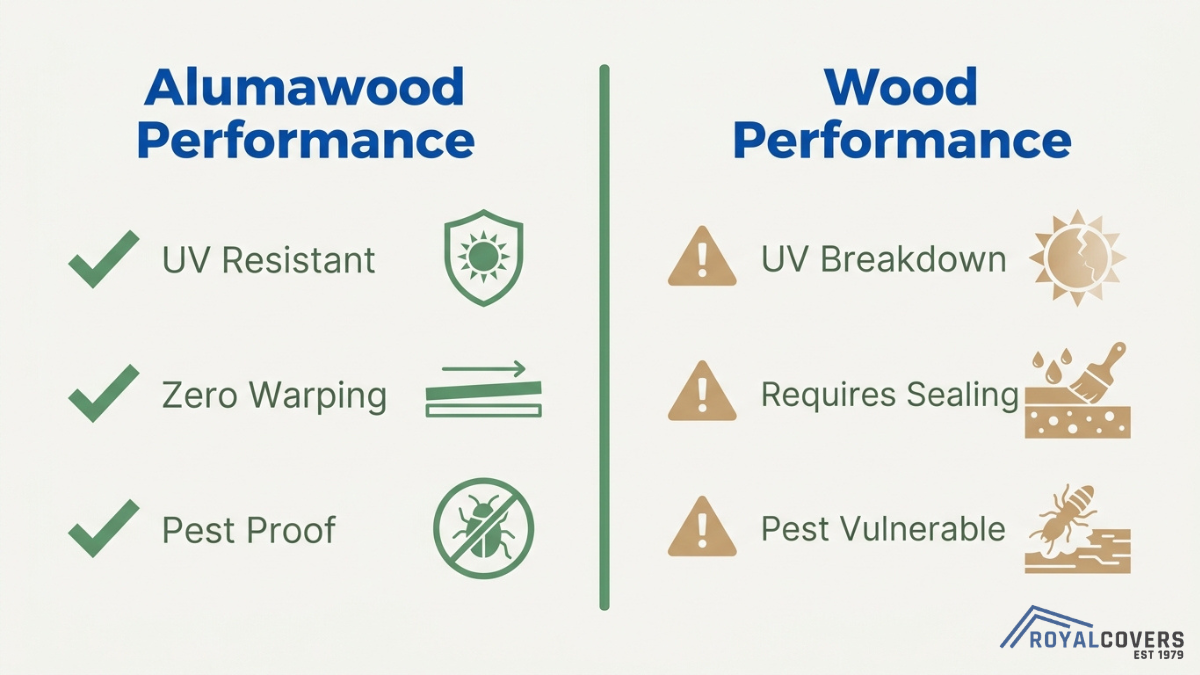
Alumawood resists UV radiation, moisture, and pests without degradation, while wood faces lignin breakdown under intense sun and requires resealing every one to three years to prevent splitting in arid environments.
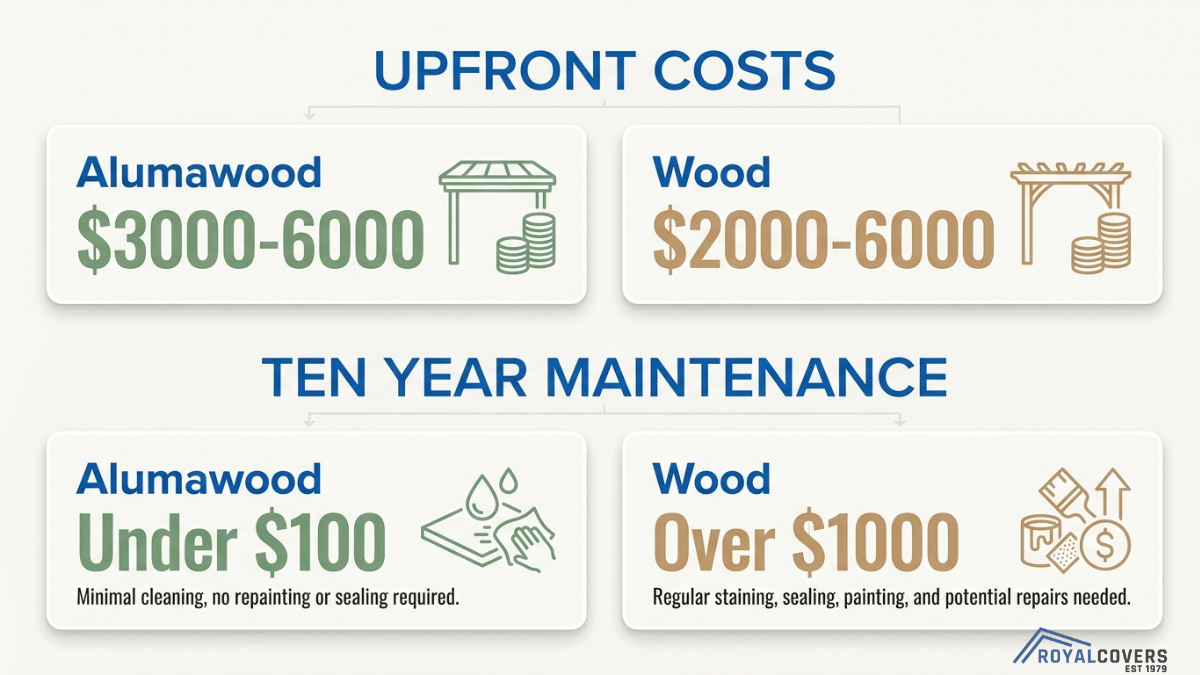
Upfront costs for both materials fall within a similar range of $2,000 to $6,000 for a standard structure, but wood maintenance can exceed $1,000 over ten years compared to under $100 for aluminum cleaning.
Alumawood replicates natural woodgrain through an embossed finish available in eight standard colors, while wood offers unlimited staining and carving options for traditional architectural detail. Aluminum pergolas last 30+ years; wood ranges from 10 to 30 years depending on species and care.
Both materials add measurable property value, with well-designed pergolas helping homes sell faster, though Alumawood’s zero-deterioration appearance at listing time gives it an edge for resale. Installation and permitting requirements apply to both, with Alumawood’s pre-engineered components reducing on-site labor complexity compared to wood’s custom joinery demands.
What Is an Alumawood Pergola?
An Alumawood pergola is a shade structure made from painted aluminum that has been embossed with wood texture and roll formed into building material shapes. According to the ICC Evaluation Service (ICC-ES), Alumawood components consist of roll-formed and extruded aluminum shapes of various alloys and tempers, complying with Chapter 20 of the International Building Code.
The material combines the aesthetic appeal of natural woodgrain with aluminum’s inherent resistance to rot, warping, and insect damage. Available in eight standard colors, including Desert Sand, Spanish Brown, Latte, and Graphite, Alumawood offers design flexibility without the upkeep demands of traditional lumber. For homeowners comparing pergola materials, understanding this engineered alternative provides essential context for evaluating durability, cost, and long-term performance against natural wood options.
What Is a Wood Pergola?
A wood pergola is an outdoor structure built from natural lumber, featuring posts, beams, and rafters that create a partially open framework for shade and architectural interest. Common wood species, construction characteristics, and maintenance demands define this traditional option.
According to Mavera Architecture, traditional wood pergolas are typically constructed from cedar, redwood, or pressure-treated pine, with hardwoods like cedar and redwood offering greater natural resistance to decay than softwoods. Western Red Cedar contains natural oils that provide resistance to rot and insects, while pressure-treated lumber is chemically infused to resist decay. Wood stays cooler to the touch than metal surfaces in hot weather, offering superior thermal comfort. However, natural wood requires periodic staining, sealing, and inspection to maintain structural integrity against UV exposure and moisture over time.
Understanding wood’s strengths and limitations becomes clearer when compared directly against engineered alternatives like Alumawood.
How Do Alumawood and Wood Pergolas Compare in Durability?
Alumawood and wood pergolas compare in durability based on their resistance to UV exposure, moisture, and pest damage. The following sections break down how each material performs under extreme heat, sun, and environmental threats.
How Does Alumawood Hold Up in Extreme Heat and Sun?
Alumawood holds up in extreme heat and sun without cracking, peeling, or warping. According to M&M Home Supply, Alumawood is engineered to withstand extreme heat and UV radiation in desert climates like Arizona, unlike natural wood which dries and splits in low humidity. The painted aluminum surface resists UV-driven degradation because it does not contain organic compounds like lignin that break down under solar exposure. Alumawood shade structures also carry a wind rating of up to 110 mph, confirming structural stability even when intense heat cycles stress material joints. For homeowners in sun-heavy regions, this zero-degradation performance makes Alumawood one of the most reliable overhead shade materials available.
How Does Wood Hold Up in Extreme Heat and Sun?
Wood holds up in extreme heat and sun with notable limitations. Prolonged UV exposure breaks down lignin, the organic compound that gives wood its structural rigidity and color. This degradation causes graying, surface cracking, and eventual splitting, particularly in arid environments where low humidity accelerates moisture loss from wood fibers. According to research by G. dos Santos Bobadilha published via ProQuest, wood decay fungi require a moisture content of at least 20% to grow, meaning dry desert environments reduce rot risk but increase vulnerability to UV-driven lignin degradation. Cedar and redwood resist this process longer than pine due to their natural oils, yet all wood species require regular sealing or staining to maintain structural integrity under relentless sun.
How Does Alumawood Resist Moisture and Pest Damage?
Alumawood resists moisture and pest damage completely. As reported by Syzygy Global, aluminum pergolas do not degrade due to moisture, pests, or UV exposure, maintaining consistent performance year after year without risk of rot or warping. Because Alumawood is inorganic painted aluminum, it provides no cellulose for termites or carpenter ants to consume and no porous surface for mold or mildew to colonize. Even in monsoon-prone regions where humidity spikes temporarily, the material remains dimensionally stable. This immunity to biological threats eliminates the need for chemical treatments or pest inspections over the structure’s lifetime.
How Does Wood Resist Moisture and Pest Damage?
Wood resists moisture and pest damage to varying degrees depending on the species and treatment method. Western Red Cedar contains natural oils that repel insects and resist rot, while pressure-treated lumber is chemically infused to deter decay organisms. However, these protections diminish over time without maintenance. Key vulnerabilities include:
- Termites and carpenter ants can penetrate untreated or aging wood joints.
- Standing moisture from rain or irrigation promotes fungal growth when wood moisture content exceeds 20%.
- Sealant breakdown exposes raw wood fibers within 2 to 3 years in harsh climates.
According to Apollo Opening Roof, Western Red Cedar offers natural resistance, but even premium wood species require consistent resealing to maintain their protective barrier. For homeowners weighing long-term reliability, this ongoing maintenance demand is the central trade-off between wood’s natural beauty and Alumawood’s permanent resistance.
Understanding how each material handles environmental stress sets the stage for comparing their total costs over time.
How Much Does an Alumawood Pergola Cost vs a Wood Pergola?
An Alumawood pergola costs similarly to a wood pergola upfront, but the two materials diverge significantly in long-term maintenance expenses. Below, each cost category is broken down by material.
What Is the Upfront Cost of an Alumawood Pergola?
The upfront cost of an Alumawood pergola falls within the standard range for professionally installed pergola structures. According to Angi, professional pergola installation in 2025 typically costs between $2,123 and $6,435 on average, with materials accounting for approximately 80% of the total expense. Alumawood generally lands in the mid-to-upper portion of that range because the roll-formed aluminum components carry a premium over basic lumber. Most pergolas cost between $20 and $60 per square foot for materials and labor, so a standard 10×10 Alumawood structure often falls between $3,000 and $6,000. That higher initial price, however, buys a material that requires virtually no ongoing upkeep.
What Is the Upfront Cost of a Wood Pergola?
The upfront cost of a wood pergola depends heavily on the species selected. Pressure-treated pine sits at the lower end of the price spectrum, while cedar and redwood push costs higher due to their natural decay resistance. A standard 10×10 wood pergola typically starts around $2,000 and can reach $6,000 or more when built with premium hardwoods and professional labor. Because wood is widely available and requires no specialized fabrication process, material costs for basic species tend to be lower than Alumawood. For homeowners focused strictly on the initial purchase price, pressure-treated pine offers the most budget-friendly entry point, though its shorter lifespan often offsets those savings over time.
What Are the Long-Term Maintenance Costs for Alumawood?
The long-term maintenance costs for Alumawood are minimal. According to Canopy Manufacturing, aluminum pergola upkeep over a 10-year period is often under $100, limited to basic cleaning. Alumawood structures feature the Aluma-Shield paint system with Teflon surface protector, which repels dust, dirt, and stains. Routine care involves nothing more than an occasional rinse with a garden hose. There is no staining, sealing, sanding, or repainting required. For homeowners who value predictable expenses, this near-zero maintenance burden makes Alumawood one of the most cost-effective pergola materials over its full lifespan.
What Are the Long-Term Maintenance Costs for Wood?
The long-term maintenance costs for wood are substantially higher than those for Alumawood. According to Canopy Manufacturing, maintenance costs for a wood pergola can exceed $1,000 over a 10-year period for staining and sealing alone. Wood requires reapplication of protective sealant or stain every one to three years, depending on the species and climate exposure. Without consistent care, wood is vulnerable to UV-driven degradation, cracking, and splitting. These recurring expenses accumulate steadily, and when factored into the total cost of ownership, a wood pergola often ends up costing more than Alumawood despite its lower purchase price.
With cost differences now clear, the next section covers day-to-day maintenance for each material.
What Maintenance Does Each Pergola Material Require?
Each pergola material requires a different level of routine care. Alumawood needs minimal cleaning, while wood demands regular sealing, staining, and inspections.
What Routine Care Does an Alumawood Pergola Need?
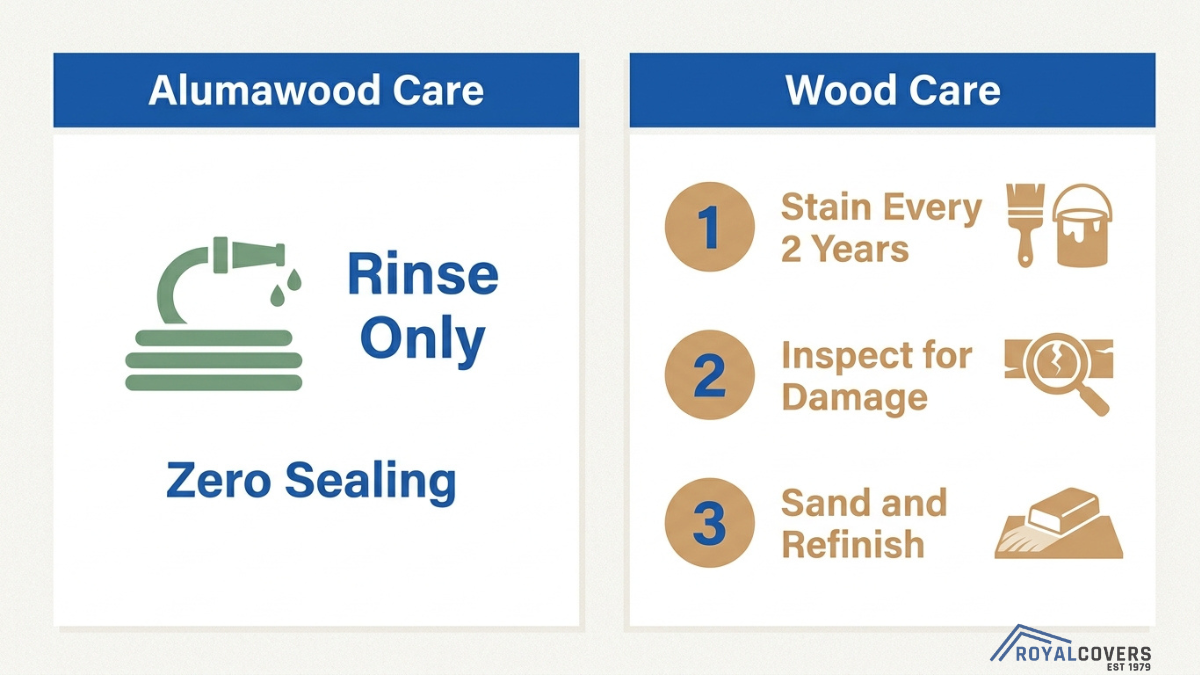
The routine care an Alumawood pergola needs is minimal, typically limited to occasional rinsing. According to Alumawood Outdoor Living, Alumawood structures featuring the Aluma-Shield paint system with Teflon surface protector repel dust, dirt, and stains, requiring only periodic rinsing with a garden hose.
Because aluminum does not rot, warp, or attract pests, there is no need for sealing, staining, or chemical treatments. Routine care involves:
- Rinsing the structure with a garden hose every few months.
- Wiping down panels with mild soap and water if debris accumulates.
- Inspecting hardware connections annually for tightness.
This near-zero maintenance demand is why many homeowners describe Alumawood as a “set it and forget it” solution, particularly in harsh climates.
What Routine Care Does a Wood Pergola Need?
The routine care a wood pergola needs includes staining, sealing, and regular inspections for structural damage. Wood is an organic material susceptible to UV degradation, moisture absorption, and pest intrusion, so consistent upkeep is essential to preserve its appearance and integrity.
A typical wood pergola maintenance schedule includes:
- Applying a UV-protective stain or sealant every 1 to 3 years.
- Inspecting for signs of rot, splitting, or insect damage each season.
- Sanding and refinishing any areas where the finish has worn away.
- Replacing cracked or warped boards as needed.
According to Canopy Manufacturing, over a 10-year period, maintenance costs for a wood pergola can exceed $1,000 for staining and sealing alone. For homeowners who value natural aesthetics, this investment preserves the wood’s beauty, but it does require consistent effort.
With maintenance demands clarified, the next consideration is how each material compares in visual appeal.
How Do Alumawood and Wood Pergolas Compare in Appearance?
Alumawood and wood pergolas compare in appearance through distinct aesthetic approaches: Alumawood replicates natural wood texture using embossed aluminum, while wood offers authentic grain and unlimited finishing options. Below, each material’s visual qualities and customization potential are explored.
Does Alumawood Look Like Real Wood?
Yes, Alumawood looks like real wood from a distance. According to Patio Warehouse, Alumawood features an embossed woodgrain finish that mimics the texture of natural wood while maintaining the durability of a painted aluminum surface. The material is available in eight standard colors, including Desert Sand, Spanish Brown, Latte, and Mojave Tan, which replicate common wood tones.
Up close, subtle differences become apparent. The repeating embossed pattern lacks the randomness of genuine wood grain, and the surface feels like painted metal rather than organic fiber. For homeowners who prioritize a consistent, fade-resistant appearance over authentic tactile warmth, Alumawood delivers a convincing wood-like aesthetic without the upkeep.
What Design Options Are Available With Wood Pergolas?
The design options available with wood pergolas are virtually unlimited. Species like Western Red Cedar, redwood, and pressure-treated pine each offer distinct grain patterns, natural color variations, and structural characteristics. Wood can be carved, routed, or shaped into custom profiles that aluminum cannot replicate.
Beyond species selection, wood accepts any stain color, from transparent natural tones to deep ebony. Builders can taper rafters, add decorative end cuts, or integrate curved elements. This versatility makes wood the preferred material for traditional, rustic, or craftsman-style homes where architectural detail is paramount. The trade-off is that this beauty demands ongoing maintenance to preserve its original character.
Can You Paint or Stain Each Material?
Yes, you can paint or stain each material, though the processes differ significantly.
- Alumawood arrives factory-finished with a baked-on paint system and cannot be traditionally stained. Repainting is possible but rarely necessary, since the original finish resists chalking, fading, and peeling under warranty.
- Wood pergolas accept both paint and stain readily. Staining highlights natural grain, while paint offers complete color freedom. However, wood finishes require reapplication every two to three years to prevent UV degradation and moisture damage.
For homeowners who want to change colors down the road, wood provides more flexibility; for those who prefer a permanent, maintenance-free finish, Alumawood’s factory coating is the more practical choice.
With appearance preferences clarified, understanding how long each material maintains its looks helps finalize the decision.
How Long Does Each Pergola Material Last?
Each pergola material lasts a different number of years depending on its composition and maintenance requirements. Alumawood outlasts wood by a significant margin, as the sections below detail.
What Is the Expected Lifespan of an Alumawood Pergola?
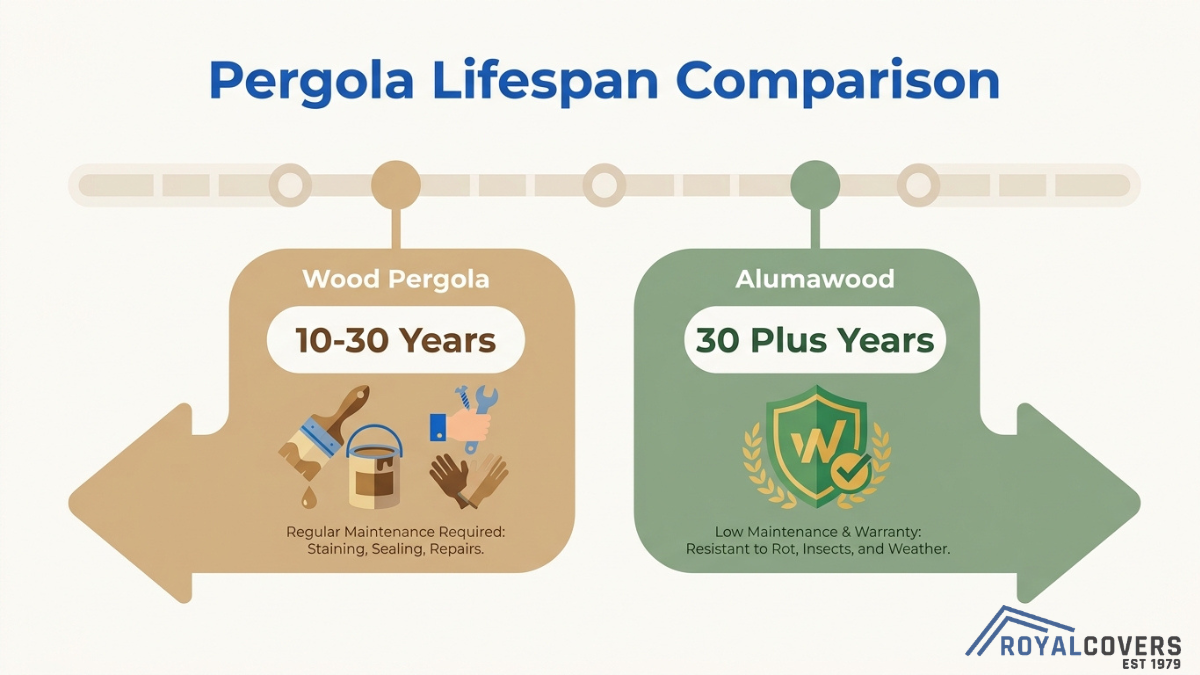
The expected lifespan of an Alumawood pergola is 30 years or more with minimal maintenance. Because aluminum does not rot, warp, or attract pests, the structure maintains its integrity decade after decade without the cyclical repairs wood demands. According to Aoodor’s 2025 material comparison, aluminum pergolas are estimated to last 30+ years, outpacing vinyl alternatives that typically reach only 15 to 25 years. Alumawood products also carry a transferable limited lifetime warranty covering chalking, fading, and peeling. For homeowners seeking a long-term investment, this combination of material resilience and warranty protection makes Alumawood one of the most dependable pergola choices available.
What Is the Expected Lifespan of a Wood Pergola?
The expected lifespan of a wood pergola ranges from 10 to 30 years depending on the species and level of ongoing care. According to Zen Pergolas, pressure-treated pine typically lasts 10 to 15 years, cedar lasts 15 to 20 years, and redwood can reach 20 to 30 years in dry conditions with consistent maintenance. Each species requires regular sealing, staining, and inspection to reach its upper lifespan potential. Without that upkeep, UV degradation, splitting, and structural weakening accelerate considerably. Wood delivers a beautiful natural aesthetic, but homeowners should factor recurring labor and material costs into the true lifetime value of the structure.
With lifespan differences clarified, the next consideration is how each material impacts home resale value.
Which Pergola Material Adds More Value to Your Home?
Alumawood adds more home value than wood because it delivers longer-lasting curb appeal with zero visible deterioration over time. Both materials boost property value, but the factors below explain why low-maintenance aluminum outperforms.
According to real estate expert Brian C. McHugh, covered outdoor spaces rank especially high on buyers’ wish lists and, when thoughtfully designed and professionally installed, can add 8% to 12% to a property’s value. Zillow research confirms homes featuring a pergola sell an average of 10.7 days faster than those without outdoor shade structures.
Alumawood’s advantage for resale comes down to condition at the time of listing. A wood pergola that has faded, split, or developed visible staining detracts from buyer perception, while Alumawood’s transferable limited lifetime warranty assures buyers they inherit a structure requiring no immediate investment. For homeowners planning to sell within five to ten years, this difference in presentation condition often determines whether a pergola functions as a selling point or a negotiation liability.
The material that holds its appearance without ongoing intervention consistently delivers the strongest return at closing, making Alumawood the better long-term investment for home value.
How Do Installation Requirements Differ Between Materials?
Installation requirements differ between Alumawood and wood pergolas in complexity, timeline, and permitting. Below, each factor is covered in detail.
Is Alumawood Easier to Install Than Wood?
Alumawood is easier to install than wood because its components are pre-engineered, roll-formed aluminum shapes designed to fit together with consistent dimensions. Wood pergolas require on-site cutting, measuring, and often additional structural bracing, which increases labor time. According to Alumawood Outdoor Living, typical pergola installation timelines range from 4 to 6 weeks when accounting for permitting, material lead times, and site readiness.
Alumawood’s lightweight panels and standardized connections reduce the need for specialized carpentry skills. Wood, by contrast, demands precise joinery and may require additional hardware to achieve structural integrity. For most homeowners, this difference translates to fewer installation complications with Alumawood.
Does Either Material Require a Building Permit?
Both Alumawood and wood pergolas typically require a building permit. According to the ICC-ES ESR-1398 report, Alumawood components must comply with Chapter 20 of the International Building Code, and patio covers must meet a minimum uniform live load of 10 psf. Posts supporting gravity loads greater than 750 lbf on a 3.5-inch concrete slab without footings require calculations from a registered design professional.
Wood pergolas face similar permitting requirements based on local building codes. Regardless of material, most municipalities mandate structural plans and inspections before construction begins.
Knowing the permitting process upfront helps homeowners select a material that fits both their budget and project timeline.
Which Pergola Material Is Better for Desert Climates?
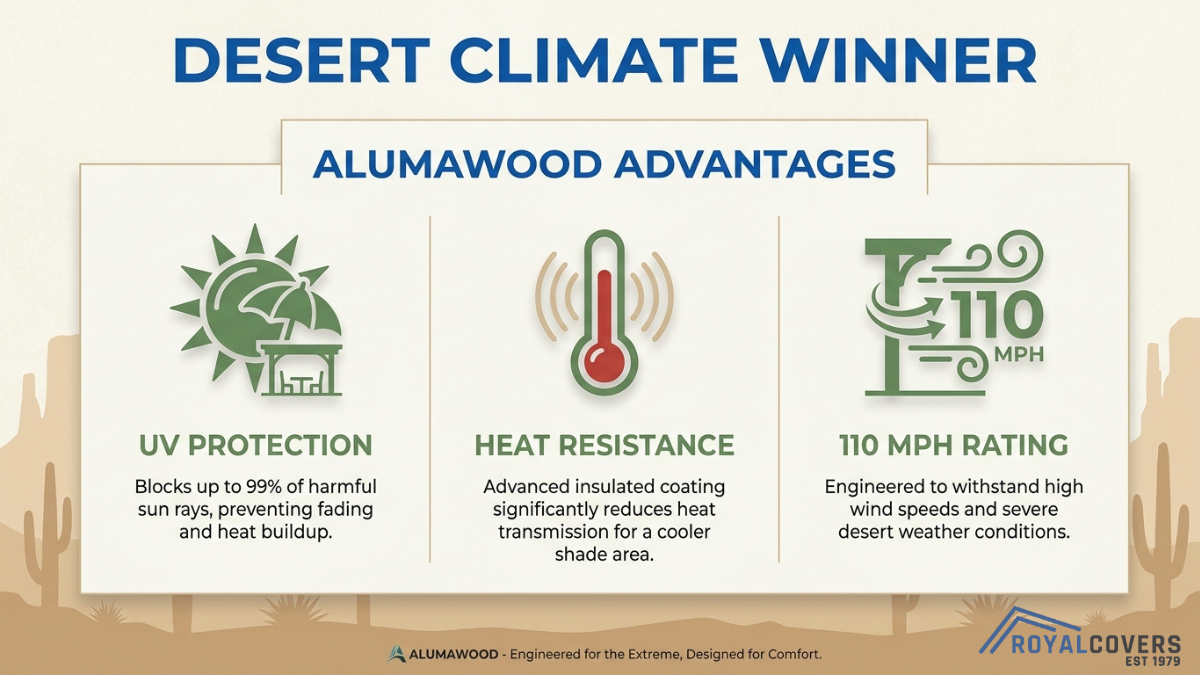
Alumawood is the better pergola material for desert climates. Its engineered aluminum construction resists UV radiation, extreme heat, and low humidity without cracking, warping, or splitting.
According to M&M Home Supply, Alumawood is engineered to withstand extreme heat and UV radiation without cracking, peeling, or warping in desert climates like Arizona, unlike natural wood which dries and splits in low humidity. Wood pergolas face a different set of challenges in arid environments. While dry conditions reduce rot risk (wood decay fungi require at least 20% moisture content to grow), intense sun accelerates lignin degradation, causing graying, splitting, and structural weakening over time.
Alumawood’s advantages in desert conditions include:
- UV-stable painted finish that resists fading and chalking without resealing.
- Wind rating up to 110 mph for monsoon-season stability.
- Zero susceptibility to the dry-cracking cycle that affects cedar, redwood, and pine.
- Aluma-Shield paint system with Teflon surface protector that repels desert dust.
Wood does offer one advantage worth noting: it stays cooler to the touch than metal surfaces in direct sunlight. However, this thermal comfort benefit rarely outweighs the ongoing maintenance burden of annual staining and sealing required to prevent UV damage in desert heat. For homeowners prioritizing longevity and minimal upkeep, Alumawood delivers decades of performance without the constant intervention that desert conditions demand from natural wood.
Choosing the right material is only part of the decision; the next step is matching that choice to your specific patio needs.
How Should You Choose the Right Pergola for Your Patio?
You should choose the right pergola for your patio by evaluating climate demands, long-term maintenance costs, desired aesthetics, and warranty coverage. The following sections explain how a custom Alumawood solution addresses desert shade challenges and summarize the key decision factors.
Can a Custom Alumawood Pergola From Royal Covers Solve Desert Shade Challenges?
Yes, a custom Alumawood pergola from Royal Covers can solve desert shade challenges. Alumawood is engineered to withstand extreme heat and UV radiation without cracking, peeling, or warping, unlike natural wood which dries and splits in low humidity. These structures carry wind ratings up to 110 mph, ensuring stability during Arizona’s monsoon-driven gusts.
Royal Covers brings over 45 years of Phoenix-specific installation experience to every project, pairing Alumawood’s climate resilience with custom designs tailored to each patio’s dimensions and orientation. According to Alumawood Patio, the product line includes a transferable limited lifetime warranty covering the finish against chalking, fading, and peeling. Royal Covers supplements this with a 2-year workmanship warranty.
For homeowners weighing longevity against effort, the combination of desert-rated materials and professional craftsmanship makes this one of the most practical investments for year-round outdoor comfort in Arizona.
What Are the Key Takeaways When Choosing Between Alumawood and Wood Pergolas?
The key takeaways when choosing between Alumawood and wood pergolas center on five decision factors:
- Climate suitability: Alumawood resists UV degradation and extreme heat without maintenance, while wood requires consistent sealing to prevent splitting in arid conditions.
- Total cost of ownership: Wood pergola maintenance can exceed $1,000 over ten years for staining and sealing; aluminum upkeep typically stays under $100 for occasional rinsing.
- Lifespan: Aluminum pergolas last 30+ years with minimal care, whereas cedar reaches 15 to 20 years and pressure-treated pine lasts 10 to 15 years.
- Aesthetic preference: Wood delivers a traditional, cooler-to-the-touch surface; Alumawood offers an embossed woodgrain finish in eight colors with zero refinishing.
- Home value: Well-designed pergolas can add 8% to 12% to a property’s value and help homes sell faster.
For most desert homeowners prioritizing durability and low effort, Alumawood delivers the strongest long-term return. Those who value the authentic warmth and craftsmanship of natural wood should budget for regular upkeep to protect their investment.