
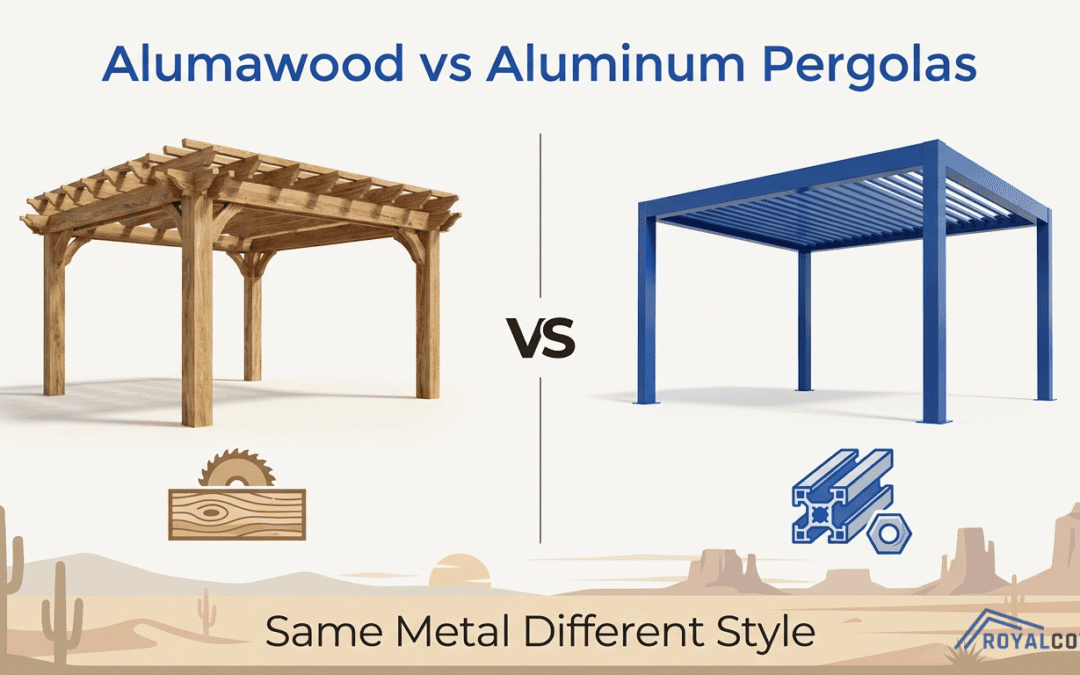
Alumawood is a branded aluminum product painted and embossed with woodgrain texture, while a standard aluminum pergola uses smooth or powder-coated extruded profiles for a modern look. Both are 100% aluminum at their core, so the real differences lie in finish, structure, cost, and design flexibility.
This guide covers material composition and appearance, pricing at every project size, durability and maintenance in extreme heat, customization and home value, and installation logistics including attachment options.
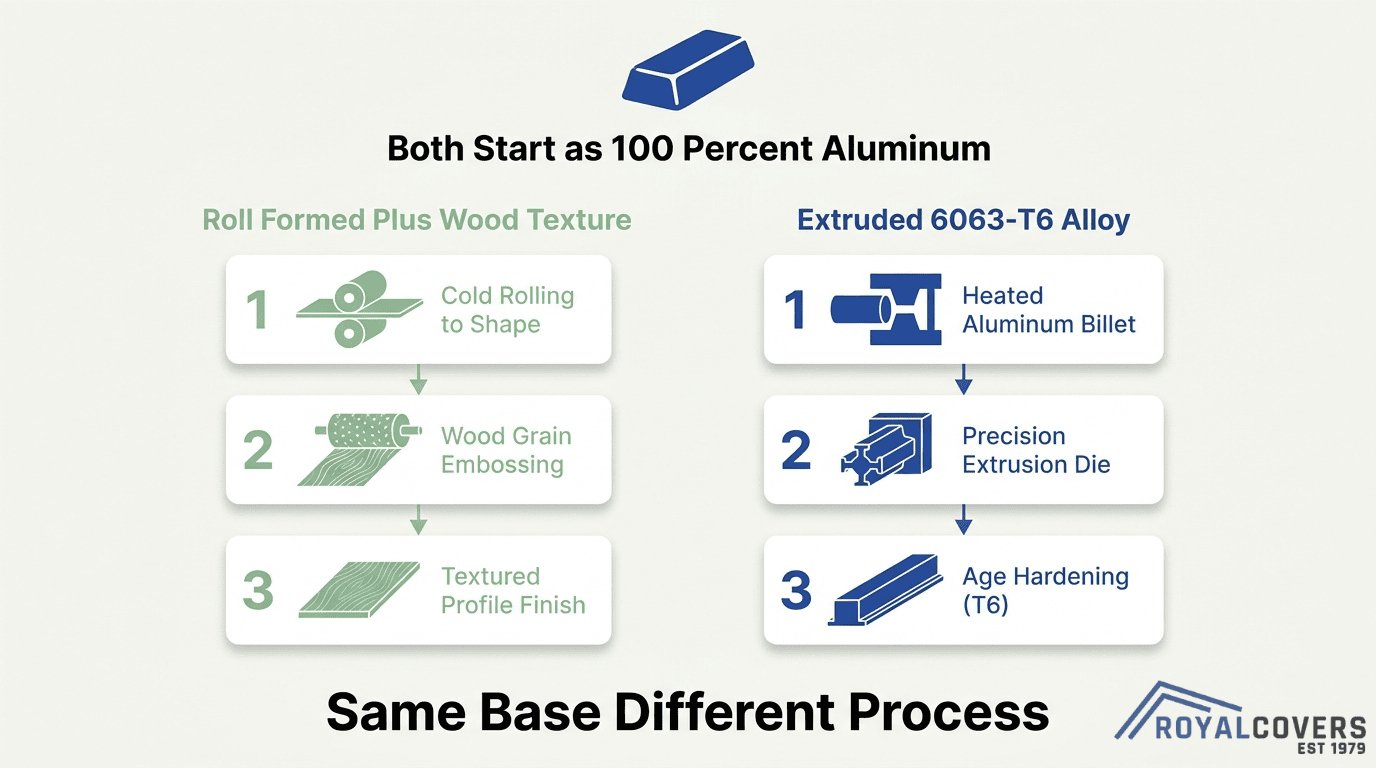
Alumawood and aluminum pergolas start from the same base metal but diverge in manufacturing. Alumawood is roll formed with an embossed woodgrain surface for a traditional aesthetic, while extruded aluminum uses 6063-T6 alloy profiles that allow sleeker designs and greater engineering precision for features like louvered or gabled roofs.
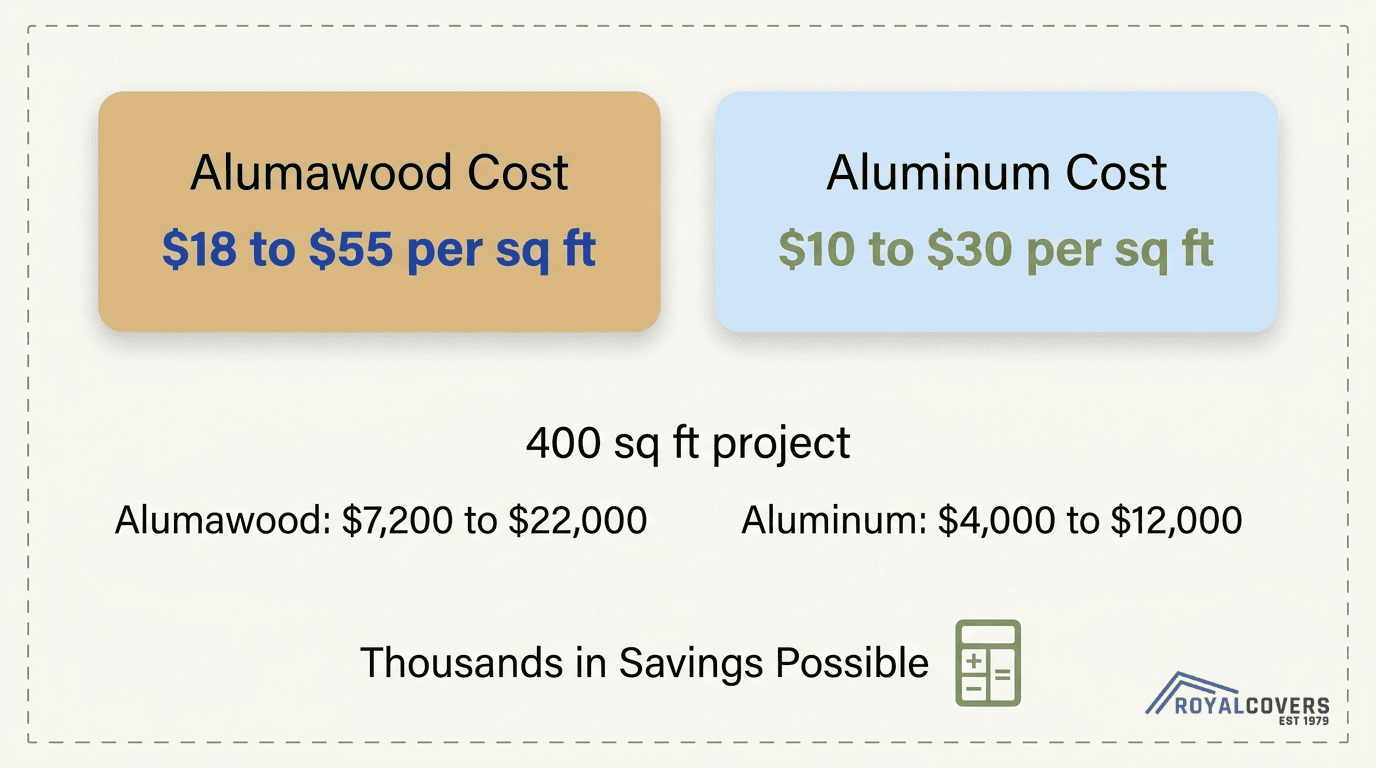
Cost separates the two materials at every scale. Alumawood runs $18 to $55 per square foot installed, while basic aluminum materials start at $10 to $30 per square foot. On a 400-square-foot project, that gap can mean thousands in savings for aluminum, though Alumawood’s woodgrain finish often justifies the premium for buyers who want a natural wood look.
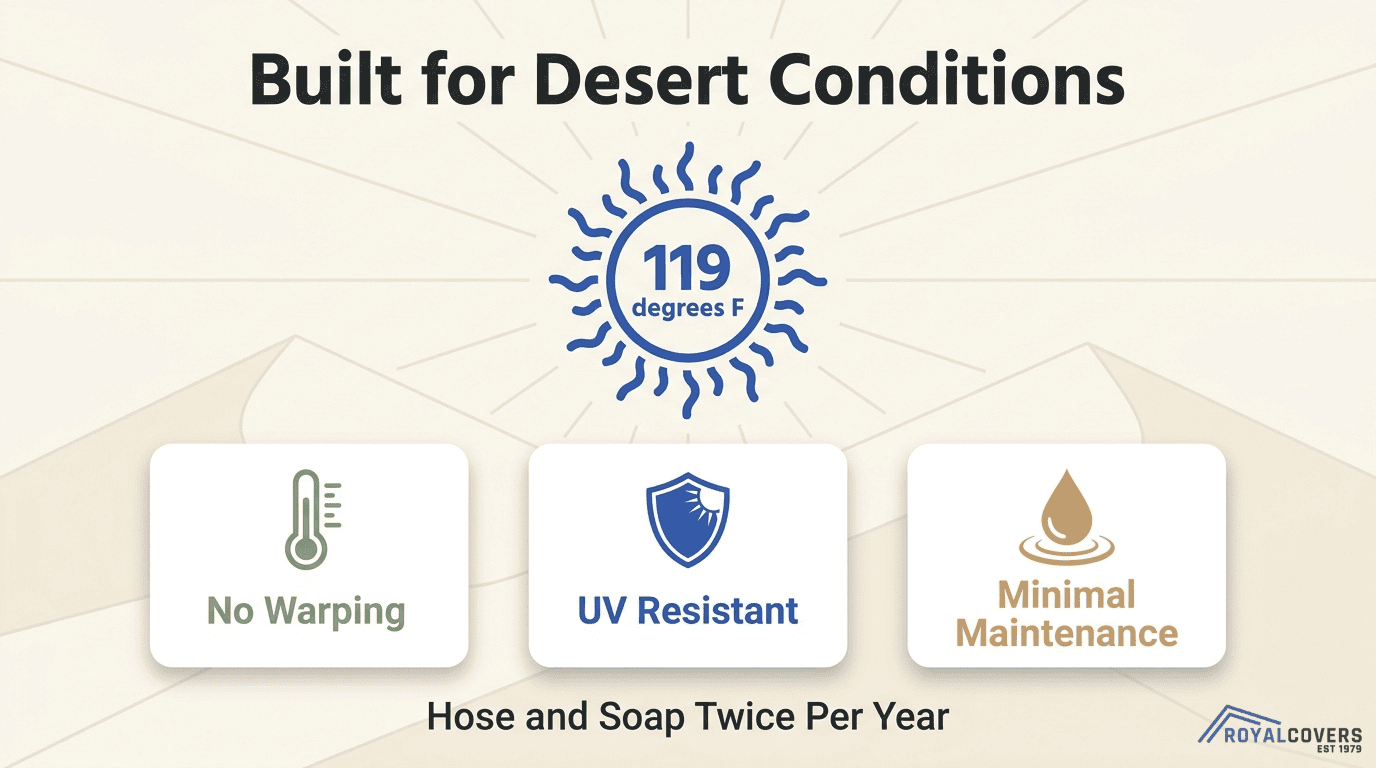
Both materials handle desert sun, monsoon winds, and UV cycling without rotting, warping, or attracting termites. Coating grade determines long-term appearance more than the metal itself; high-performance AAMA 2604 or AAMA 2605 finishes resist chalking and fading far longer than standard paint. Maintenance for both is minimal, requiring only a garden hose and mild detergent a couple of times per year.
Aluminum pergolas offer wider customization through unlimited paint-to-sample programs, adjustable louver systems, and fully engineered roof geometries. Alumawood kits install faster with standardized components but limit design variability. Both materials can attach to existing structures, and both add measurable value to homes in warm climates.
What Is an Alumawood Pergola?
An Alumawood pergola is an outdoor shade structure made from 100% aluminum that has been painted and embossed with a realistic wood-grain texture. According to the Alumawood Products FAQ, “Alumawood is painted aluminum embossed with wood texture, and then roll formed into specific shapes to be used for building materials.” This manufacturing process produces components that replicate the warmth and character of natural wood while eliminating common wood problems, such as termite damage, warping, and rot.
Because Alumawood is aluminum at its core, it inherits the metal’s natural resistance to corrosion and moisture. The embossed surface provides a richly textured finish available in multiple colors, as confirmed by an ICC Evaluation Service report noting that Alumawood components comply with Chapter 20 of the IBC. Alumawood pergolas also feature a hollow-core interior column design that allows for internal cable routing, keeping electrical wiring concealed for a cleaner appearance. Backed by a limited lifetime warranty and requiring only minimal upkeep, Alumawood delivers the aesthetic appeal of a traditional wood pergola with the long-term performance of engineered aluminum.
Understanding what Alumawood is, and how it differs from standard aluminum, sets the foundation for choosing the right pergola material.
What Is an Aluminum Pergola?
An aluminum pergola is an outdoor shade structure built from extruded or roll-formed aluminum alloy, designed for durability and minimal upkeep. Unlike Alumawood (which is a specific brand of aluminum with a woodgrain texture), a standard aluminum pergola uses smooth or powder-coated profiles that emphasize a clean, modern aesthetic.
According to the ICC Evaluation Service, aluminum members used in these structures are “roll-formed and extruded shapes of various alloys and tempers complying with Chapter 20 of the IBC.” Premium systems, such as those from StruXure, use 6063-T6 extruded aluminum with an upgraded AAMA 2604 powder coat finish for enhanced weather resistance. Other manufacturers like Canopia by Palram pair powder-coated corrosion-resistant aluminum frames with polycarbonate roof panels for full UV protection.
Aluminum pergolas come in several configurations:
- Open-lattice designs that filter partial sunlight while maintaining airflow.
- Solid-panel roofs that provide complete shade and weather coverage.
- Louvered systems with manual, motorized, or smart motorized roof options for adjustable sun control.
Because aluminum does not rot, warp, or attract termites, these structures require virtually no annual maintenance. The material’s lightweight density of 2.7 g/cc (per MatWeb data on 6063-T6 alloy) also simplifies installation compared to heavier wood or steel alternatives.
For homeowners comparing options, the key distinction is that “aluminum pergola” describes the broad material category, while Alumawood is one branded product within it. Understanding this difference is essential when evaluating Alumawood against other aluminum pergola systems.
What Is the Difference Between Alumawood and Aluminum Pergolas?
The difference between Alumawood and aluminum pergolas comes down to material composition, appearance, and structural design. Both use aluminum as a base metal, but they differ in how that aluminum is formed, finished, and engineered.
How Do Alumawood and Aluminum Pergolas Differ in Material Composition?
Alumawood and aluminum pergolas differ in material composition primarily through their manufacturing processes and alloy treatments. Alumawood is painted aluminum embossed with wood texture, then roll formed into specific shapes for use as building materials, according to Alumawood Products. Both products are 100% aluminum at their core, which means neither is vulnerable to termites or rot.
Standard aluminum pergolas typically use extruded 6063-T6 aluminum alloy. This alloy contains aluminum at up to 97.5%, with magnesium and silicon as secondary elements. Extrusion creates denser, more uniform structural profiles compared to roll forming. The distinction matters: roll-formed Alumawood components comply with IBC Chapter 20, but extruded aluminum allows for greater engineering precision in custom configurations.
How Do Alumawood and Aluminum Pergolas Differ in Appearance?
Alumawood and aluminum pergolas differ in appearance through their surface finishes and visual styling. Alumawood provides the beauty of a richly textured, woodgrain finish with an embossed surface available in multiple colors, making it ideal for homeowners who want a classic wood look without real wood.
Standard aluminum pergolas feature smooth, clean lines with a powder coat finish that suits contemporary and modern architectural styles. Premium systems offer unlimited paint-to-sample capabilities for precise aesthetic control. Where Alumawood mimics natural wood grain, aluminum embraces a sleek, minimalist profile. For homeowners choosing between the two, the decision often reflects whether the surrounding architecture calls for a traditional or modern aesthetic.
How Do Alumawood and Aluminum Pergolas Differ in Structural Design?
Alumawood and aluminum pergolas differ in structural design through their framing methods and configuration options. Alumawood patio covers feature an interior column hollow-core aluminum design that allows for internal cable routing, making electrical integration straightforward for lighting and fans.
Extruded aluminum pergola systems can be engineered to exact pitch, angle, and roof geometry, including true gabled configurations. This precision allows for louvered roof options with manual, motorized, or smart motorized control systems. Alumawood structures are typically limited to flat or slightly pitched solid-panel and lattice configurations. Each Alumawood structure must bear a permanent tag noting its allowable roof live load, design wind speed, and exposure per ICC Evaluation Service requirements.
Understanding these structural differences helps clarify how each material handles cost and long-term investment.
How Much Does an Alumawood Pergola Cost Compared to an Aluminum Pergola?
An Alumawood pergola costs more than a standard aluminum pergola at every size. The sections below break down pricing for small and large projects in both materials.
How Much Does a Small Alumawood Pergola Cost?
A small Alumawood pergola costs $18 to $55 per square foot installed, according to HomeGuide. For a 10×10 structure (100 square feet), that translates to roughly $1,800 to $5,500 total. Material-only costs for a prefab Alumawood kit run $1,500 to $3,000 before labor.
The wide price range reflects differences between basic lattice designs and insulated solid-roof configurations. Alumawood’s woodgrain embossing and factory-applied paint finish account for much of the premium over plain aluminum. For homeowners who prioritize that natural wood aesthetic without the maintenance, this cost difference is often worthwhile.
How Much Does a Large Alumawood Pergola Cost?
A large Alumawood pergola costs significantly more as square footage increases. At $18 to $55 per square foot installed, a 20×20 structure (400 square feet) ranges from $7,200 to $22,000 depending on design complexity, roof style, and local labor rates.
According to HomeGuide, a 20×20 custom-built pergola of any material can reach $12,000 to $26,000. Alumawood projects at this scale tend to land in the upper half of that range because solid-panel and insulated roof options add material cost. Permits, which average $60 to $150, and footing work also contribute to the final price on larger installations.
How Much Does a Small Aluminum Pergola Cost?
A small aluminum pergola costs $10 to $30 per square foot for materials alone, making it one of the most budget-friendly pergola options. According to HomeAdvisor, aluminum pergolas cost between $1,000 and $3,000 for a 100-square-foot structure. Prefab aluminum kits start as low as $500 to $1,500.
When labor is factored in, a professionally installed 10×10 aluminum pergola typically falls between $1,000 and $4,000 total. This positions aluminum as the clear entry-level choice for homeowners who want a clean, modern look without the textured woodgrain finish that Alumawood provides.
How Much Does a Large Aluminum Pergola Cost?
A large aluminum pergola costs $4,000 to $16,000 installed for a 20×20 kit-based structure, according to HomeGuide. Custom-engineered aluminum pergolas with features like louvered roofs or motorized systems push that range higher, potentially reaching $10,000 to $15,000 for prefab or $5,000 to $15,000 for fully custom builds.
At scale, the per-square-foot savings of aluminum over Alumawood become more pronounced. Aluminum materials at $10 to $30 per square foot versus Alumawood at $18 to $55 per square foot can mean thousands in savings on a 400-square-foot project. For larger outdoor living spaces, this price gap makes material selection one of the most impactful budget decisions.
How Durable Is Alumawood Compared to Aluminum in Extreme Heat?
Alumawood and aluminum pergolas both resist extreme heat, but they handle desert conditions differently. The sections below cover how each material performs under direct desert sun, and how both stand up to wind and monsoon storms.
How Does Alumawood Hold Up in Desert Sun and High Temperatures?
Alumawood holds up well in desert sun and high temperatures because it is made from 100% aluminum with a factory-applied painted finish embossed to simulate wood grain. The base metal does not warp, rot, or crack under prolonged UV exposure the way natural wood does. According to the National Weather Service, Phoenix reached a record high of 119°F on July 19, July 20, and July 25, 2023, yet Alumawood’s aluminum core remains structurally stable through these extremes.
The painted finish is where long-term attention matters most. Sustained UV cycling can gradually fade the woodgrain coating, especially on south-facing surfaces. For homeowners who prioritize that realistic wood appearance without wood’s structural failures, Alumawood delivers a reliable balance of aesthetics and heat resistance.
How Does Aluminum Hold Up in Desert Sun and High Temperatures?
Aluminum holds up exceptionally well in desert sun and high temperatures. The alloys used in modern pergolas, such as 6063-T6, have a tensile yield strength of 214 MPa (31,000 psi), which remains consistent across typical desert temperature swings. Aluminum also has a linear thermal expansion coefficient of 23.4 µm/m-°C, meaning minimal expansion even during peak summer days.
Coating quality determines how well the finish survives. According to the Fenestration and Glazing Industry Alliance, AAMA 2604 is a high-performance exterior specification for organic coatings on architectural aluminum, and AAMA 2605 represents the highest-performing tier. Premium aluminum pergolas with these coatings resist chalking, fading, and chemical degradation far longer than standard paint. For desert installations, coating grade matters as much as the metal itself.
How Do Alumawood and Aluminum Resist Wind and Monsoon Storms?
Alumawood and aluminum pergolas both resist wind and monsoon storms when properly engineered and installed. Both materials are lightweight yet structurally sound, and neither corrodes from rain exposure the way steel or wood can.
Key wind and storm resistance factors include:
- Each Alumawood structure must bear a permanent tag noting its allowable roof live load, design wind speed, and exposure category, per ICC Evaluation Service requirements.
- The minimum uniform live load for patio covers is 10 psf, while carports and commercial structures require 20 psf.
- Proper footing depth, post anchoring, and fastener selection determine real-world storm performance more than material choice alone.
According to the National Weather Service, a transition event on September 12, 2023, produced extensive damaging winds across the Phoenix region. Structures built to code with correct engineering held up; those with shortcuts did not. Professional installation with verified load ratings is the single most important factor for monsoon durability, regardless of whether you choose Alumawood or aluminum.
With durability established, understanding each material’s maintenance demands helps complete the comparison.
How Much Maintenance Does Alumawood Require Compared to Aluminum?
Alumawood requires slightly more routine cleaning than aluminum, but both materials demand far less upkeep than wood. The differences come down to finish type and cleaning methods.
How Do You Maintain an Alumawood Pergola?
You maintain an Alumawood pergola with periodic washing and gentle cleaning products. According to the Alumawood Products FAQ, the manufacturer recommends washing the structure with a garden hose at least twice a year. For stubborn dust or debris, a soft bristle brush and mild detergent will handle the job.
Alumawood’s embossed woodgrain texture can trap fine desert dust in its grooves, so consistent seasonal rinses prevent buildup from dulling the finish. Abrasive cleaners, solvents, and harsh chemicals should never be used, as they can damage the painted surface. Beyond washing, Alumawood requires no staining, sealing, or termite treatments. That simplicity is what makes it one of the most practical low-maintenance pergola options available.
How Do You Maintain an Aluminum Pergola?
You maintain an aluminum pergola with occasional rinsing and inspection of the powder coat finish. Because smooth extruded aluminum lacks textured grooves, dust and debris slide off more easily than on embossed surfaces. A garden hose and soft cloth are typically sufficient for routine cleaning.
Higher-grade powder coat finishes, such as AAMA 2604 rated coatings, resist chalking and fading over extended UV exposure. According to the Fenestration and Glazing Industry Alliance, AAMA 2604 is a high-performance exterior specification for organic coatings on architectural aluminum extrusions and panels. Periodic checks on fasteners and connection points round out the maintenance routine. For homeowners who want the absolute lowest upkeep commitment, aluminum’s smooth profile and durable coatings make it the slightly easier material to maintain long term.
With maintenance needs clarified, the next consideration is how each material handles customization.
Which Offers Better Customization: Alumawood or Aluminum?
Aluminum pergolas offer better customization overall, with wider options for color matching, finish performance, and structural geometry. The sections below compare color and finish choices for each material, then address flexibility in size and shape.
What Color and Finish Options Are Available for Alumawood Pergolas?
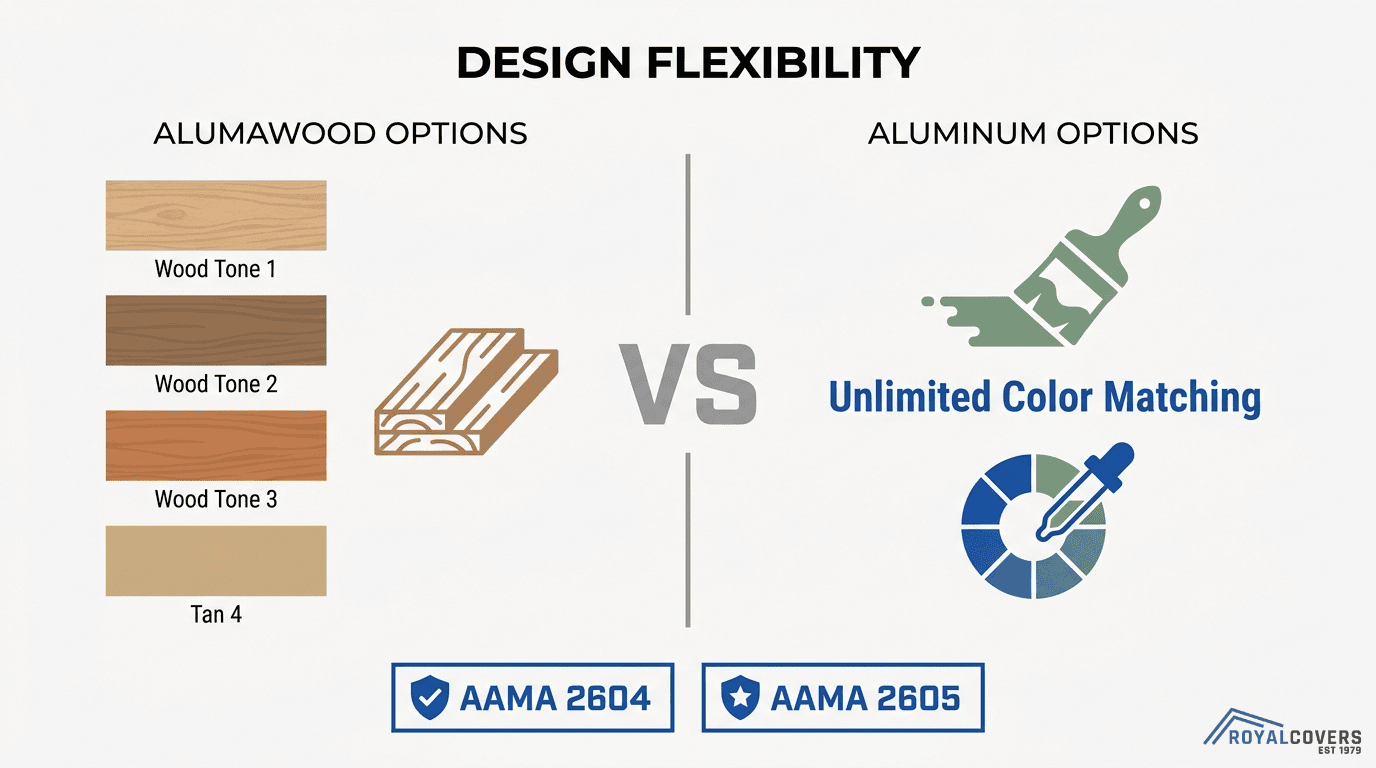
The color and finish options available for Alumawood pergolas include multiple factory-applied colors with an embossed woodgrain texture. According to the ICC Evaluation Service report (ESR-1398), Alumawood components may have an embossed finish that simulates wood and are available in multiple colors. Each panel arrives pre-painted, so the finish is ready at installation with no on-site staining required.
However, these options are limited to the manufacturer’s standard palette. Homeowners cannot request custom color matching or upgrade to higher-performance coating specifications. For buyers who want a traditional wood aesthetic without the maintenance, Alumawood’s curated selection works well, but it leaves little room for personalization beyond what the factory offers.
What Color and Finish Options Are Available for Aluminum Pergolas?
The color and finish options available for aluminum pergolas range from standard powder coat palettes to fully custom paint-to-sample programs. According to StruXure, their systems offer standard finishes as well as unlimited paint-to-sample capabilities for aesthetic control, all applied over an upgraded AAMA 2604 powder coat.
This AAMA 2604 specification is a high-performance exterior coating standard designed to resist chalking, fading, and chemical degradation over time. The ability to match any color sample means aluminum pergolas can coordinate precisely with existing home exteriors, furniture, or landscape design. For homeowners seeking a specific aesthetic rather than choosing from a fixed set of swatches, aluminum provides a clear advantage in finish customization.
Which Material Offers More Flexibility in Size and Shape?
Aluminum offers more flexibility in size and shape than Alumawood. Because aluminum members are extruded into custom profiles, manufacturers can engineer structures to exact pitch, angle, and roof geometry, including true gabled configurations. StruXure systems, for example, are fully customizable and engineered to precise structural specifications.
Alumawood components are roll-formed into specific standardized shapes, which limits design variability. Kit sizes typically follow common dimensions, and complex geometries such as angled rooflines or multi-level configurations fall outside the system’s standard capabilities. For straightforward rectangular layouts, Alumawood performs well. For irregular spaces or architectural designs that demand custom angles, aluminum is the stronger choice.
With customization differences clear, the next consideration is how each material affects your home’s long-term value.
Does Alumawood or Aluminum Add More Value to Your Home?
Both Alumawood and aluminum pergolas add value to your home by expanding usable outdoor living space, boosting curb appeal, and reducing solar heat gain near windows. The material you choose affects how buyers perceive the improvement and how long it holds its value.
According to HomeGuide, a well-maintained pergola increases curb appeal and may help sell the home faster, with pergolas adding the most value in warm climates on a deck or stone patio. Alumawood’s woodgrain finish tends to appeal to buyers seeking a traditional, natural aesthetic without the rot and termite risks of real wood. Aluminum pergolas, particularly modern louvered or powder-coated systems, signal a premium upgrade that resonates with buyers who prioritize sleek design and zero maintenance.
The U.S. Department of Energy notes that solar heat absorbed through windows and roofs can increase cooling costs, and shade structures directly reduce this heat gain. In hot-climate markets, a pergola that lowers cooling costs functions as both a lifestyle upgrade and an energy-efficiency feature, both of which appraisers and buyers recognize.
A few factors determine which material delivers the stronger return:
- Alumawood pergolas offer a lower upfront cost, so the ratio of perceived value to investment is often favorable for budget-conscious projects.
- Aluminum pergolas with advanced finishes or louvered roofs command higher resale appeal because they require virtually no upkeep and last longer without cosmetic degradation.
- Permitted, professionally installed structures carry more weight during appraisals than unpermitted DIY additions, regardless of material.
With the median price of new single-family homes reaching $420,300 in 2024 according to U.S. Census Bureau data, even a modest improvement to outdoor living space represents a meaningful percentage of a home’s overall appeal. For most homeowners, the material that best complements the home’s existing style while requiring the least long-term maintenance will deliver the strongest return. Understanding lifespan expectations for each material helps clarify which investment holds up over time.
How Long Does an Alumawood Pergola Last Compared to Aluminum?
An Alumawood pergola lasts a comparable length of time to a standard aluminum pergola, with both materials offering decades of service when properly maintained. Because Alumawood is made from 100% aluminum at its core, the base material resists rot, rust, and termite damage identically. The real difference in longevity comes down to coating quality, finish grade, and environmental exposure rather than the metal itself.
According to Alumawood Outdoor Living, Alumawood solid panel products are backed by a limited lifetime warranty, which reflects the manufacturer’s confidence in long-term performance. Both Alumawood and extruded aluminum pergolas benefit from aluminum’s natural corrosion resistance; however, the protective coating is what ultimately determines how well either structure ages.
Several factors influence how long each pergola type lasts:
- Finish specification: Higher-grade coatings like AAMA 2604 or AAMA 2605 resist UV degradation, chalking, and color fade far longer than basic painted finishes.
- UV and heat cycling: Repeated thermal expansion and contraction from extreme temperatures can stress joints and fasteners over time, regardless of material type.
- Maintenance consistency: Structures cleaned at least twice a year with mild detergent avoid surface buildup that accelerates finish deterioration.
- Fastener quality: Stainless steel hardware outlasts standard zinc-plated fasteners in corrosive or high-humidity environments.
Alumawood’s embossed woodgrain finish adds a textured paint layer that, while aesthetically appealing, can show wear sooner than a smooth powder coat if exposed to harsh conditions without periodic cleaning. Premium extruded aluminum pergolas with AAMA 2604 or AAMA 2605 finishes generally hold their appearance longer in punishing climates because those specifications are tested against more demanding weathering standards.
For most homeowners, the practical lifespan difference between the two is negligible when both are installed correctly and maintained. The coating specification matters more than whether the product is roll-formed Alumawood or extruded aluminum. Investing in a higher-grade finish at the outset is one of the most cost-effective ways to extend any aluminum pergola’s functional life by years.
Choosing the right material is important, but the installation method plays an equally significant role in long-term performance.
Which Is Easier to Install: Alumawood or Aluminum Pergola?
Alumawood pergolas are generally easier to install than custom aluminum pergolas because of their standardized kit format and lighter, roll-formed components. Both options vary in complexity depending on whether you choose a prefabricated kit or a custom-engineered system.
Alumawood kits ship as complete, pre-cut packages with four support posts, rafters, top runners, support beams, and anchoring hardware. According to HomeAdvisor, prefabricated pergola kits require one to four hours of assembly, while custom pergola designs take an average of eight to 16 hours. Because Alumawood components are roll-formed into standardized shapes, the pieces interlock with minimal cutting or modification on site.
Custom aluminum pergolas, particularly extruded systems with motorized louvers or engineered roof geometries, require more specialized assembly. These installations often involve electrical wiring, precise pitch calibration, and structural attachments that go beyond basic kit assembly. The trade-off is greater design flexibility at the cost of longer installation timelines.
Regardless of material, both types require basic tools: a hammer, drill, saw, and level. Posts can be cemented into a concrete slab for maximum durability or bolted down with brackets onto wooden decks. For most homeowners weighing a straightforward weekend project against a professionally installed custom structure, Alumawood’s kit-based approach offers the simpler path. However, that simplicity comes with design limitations that a fully engineered aluminum pergola avoids entirely.
Knowing how each material installs is useful, but attachment options expand the possibilities even further.
Can You Attach Alumawood or Aluminum Pergolas to an Existing Structure?
Yes, you can attach both Alumawood and aluminum pergolas to an existing structure such as a house wall, garage, or patio fascia. Attached configurations reduce the number of support posts needed and lower overall material costs.
According to LawnStarter, freestanding pergolas need four posts to stay up properly, so homeowners can save money in labor and material costs by removing two posts and attaching the pergola to an existing structure. Attached pergolas use a ledger board fastened directly to the home’s framing, transferring the roof load to the building itself.
However, this approach demands careful structural evaluation. If your home or deck is in bad shape or unable to support a pergola, you may end up paying more in repairs than you would to build the pergola on its own. The existing wall must have adequate framing, proper flashing to prevent water intrusion, and sufficient load-bearing capacity for the added weight and wind loads.
Both Alumawood and extruded aluminum systems accommodate attached configurations, though permit requirements apply regardless of material choice. Building permits are required for all freestanding and attached structures, including shade structures and patio covers, according to Clark County, NV building codes. Similar requirements exist in Phoenix and Tucson. For most homeowners, an attached aluminum or Alumawood pergola is the smarter choice when the existing structure is sound, since it maximizes covered space while minimizing footprint and cost.
Understanding attachment feasibility sets the stage for choosing the right pergola material overall.
How Should You Choose Between Alumawood and Aluminum for Your Outdoor Living Space?
You should choose between Alumawood and aluminum by matching your priorities for aesthetics, budget, durability, and customization to each material’s strengths. The following sections cover how Royal Covers can help and the key takeaways from this comparison.
Can a Custom Pergola From Royal Covers Solve Your Desert Shade Needs?
Yes, a custom pergola from Royal Covers can solve your desert shade needs. Royal Covers specializes in patio covers, pergolas, screen rooms, and paver patios, with over 45 years of experience building shade structures engineered for Arizona’s extreme conditions. Whether you prefer Alumawood’s woodgrain aesthetic or the sleek flexibility of extruded aluminum, Royal Covers designs each project to fit your space, HOA requirements, and functional goals.
Both Alumawood and aluminum are built from 100% aluminum, so neither material is vulnerable to termites or requires annual maintenance. The difference comes down to finish, design complexity, and budget. Royal Covers handles permit approvals, custom design consultations, and professional installation with full-time crews rather than subcontractors. For homeowners weighing these two materials, that hands-on guidance makes the decision far simpler than navigating it alone.
What Are the Key Takeaways About Alumawood vs Aluminum Pergolas?
The key takeaways about Alumawood vs aluminum pergolas center on five decision factors:
- Aesthetics: Alumawood delivers a richly textured woodgrain finish ideal for traditional designs. Smooth aluminum supports modern, minimalist styles with broader color options.
- Budget: Alumawood typically costs $18 to $55 per square foot installed, while basic aluminum pergola materials run $10 to $30 per square foot, making aluminum the lower entry point.
- Durability: Both materials resist rust, rot, and termites. High-performance powder coat finishes (AAMA 2604 or AAMA 2605) protect against UV degradation and desert heat.
- Customization: Extruded aluminum allows more flexibility in pitch, angle, and roof geometry. Alumawood offers multiple colors but fewer structural configurations.
- Maintenance: Both require only occasional cleaning with a garden hose and mild detergent, with no painting or staining needed.
For most desert homeowners, the right choice depends on whether visual warmth or design versatility matters more. Alumawood suits budget-conscious projects that prioritize a wood-like appearance, while aluminum is the stronger option when engineering precision and modern aesthetics take priority. Royal Covers can walk you through both options during a free design consultation.