
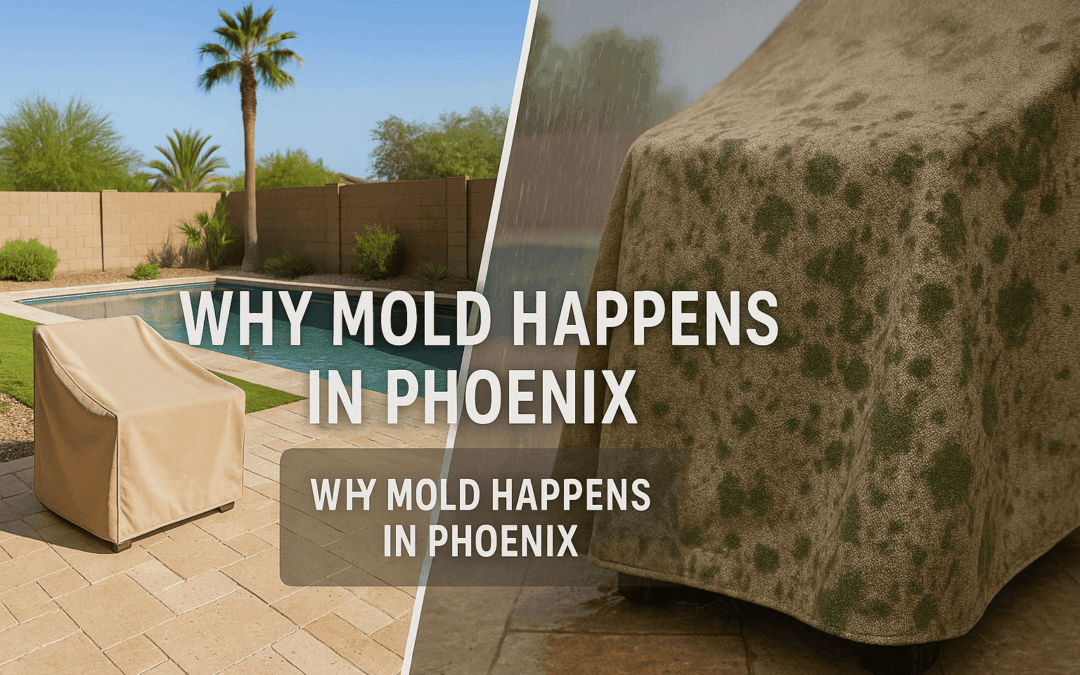
Phoenix homeowners facing mold on their patio furniture covers are often caught off guard—after all, Arizona’s desert climate doesn’t typically evoke concerns about fungal growth. Yet those living through monsoon seasons, contending with irrigation overspray, or managing shaded patios near pools and north-facing walls know the frustration firsthand. You’re here because you’ve noticed the signs: musty odors, discoloration, or persistent staining that doesn’t wash away. You’re in the right place—this guide offers a scientifically grounded, region-specific solution crafted for Phoenix’s unique microclimates and supported by expert insight and real-world applications.
Mold is a fungus that thrives in moisture and warmth, and can still develop in Phoenix due to localized damp conditions such as irrigation overspray or monsoon humidity.
According to the U.S. Environmental Protection Agency (EPA), building dampness and mold were associated with approximately a 30 to 50 percent increase in a variety of respiratory and asthma-related health outcomes in 2009, highlighting its significant health impact. As Michael Rubino, a mold remediation expert, notes: “Prevention is obviously worth so much more than the cure.”
This guide begins by identifying mold sources specific to Phoenix’s dry climate, such as irrigation spray and monsoon humidity.The guide explains how shaded patios, nearby pools, and certain building materials contribute to recurring mold problems. Next, it covers which fabrics are most prone to mold—such as canvas, untreated cotton, and foam-backed polyester—and provides clear guidance on identifying mold versus dirt or algae. It includes clear removal methods using EPA-approved, natural, and commercial mold cleaners. The guide explains how to clean both removable and fixed covers effectively. The guide also includes prevention tips using proper materials, drainage layout, and shade design strategies. The guide ends with Phoenix-specific tips, local disposal rules, and a real-world case study.
Phoenix microclimates mean small changes make a big difference. Use this quick checklist during monsoon months and after storms to keep mold from gaining a foothold. Each action reduces moisture or speeds drying.
- Use breathable fabric covers with antimicrobial treatments.
- Elevate patio furniture slightly to increase airflow.
- Clean and dry covers at least once a month during monsoon season.
- Inspect irrigation spray patterns to prevent oversaturation in shaded zones.
What Causes Mold on Patio Furniture Covers in Arizona?
Why does mold form in a dry climate like Phoenix?
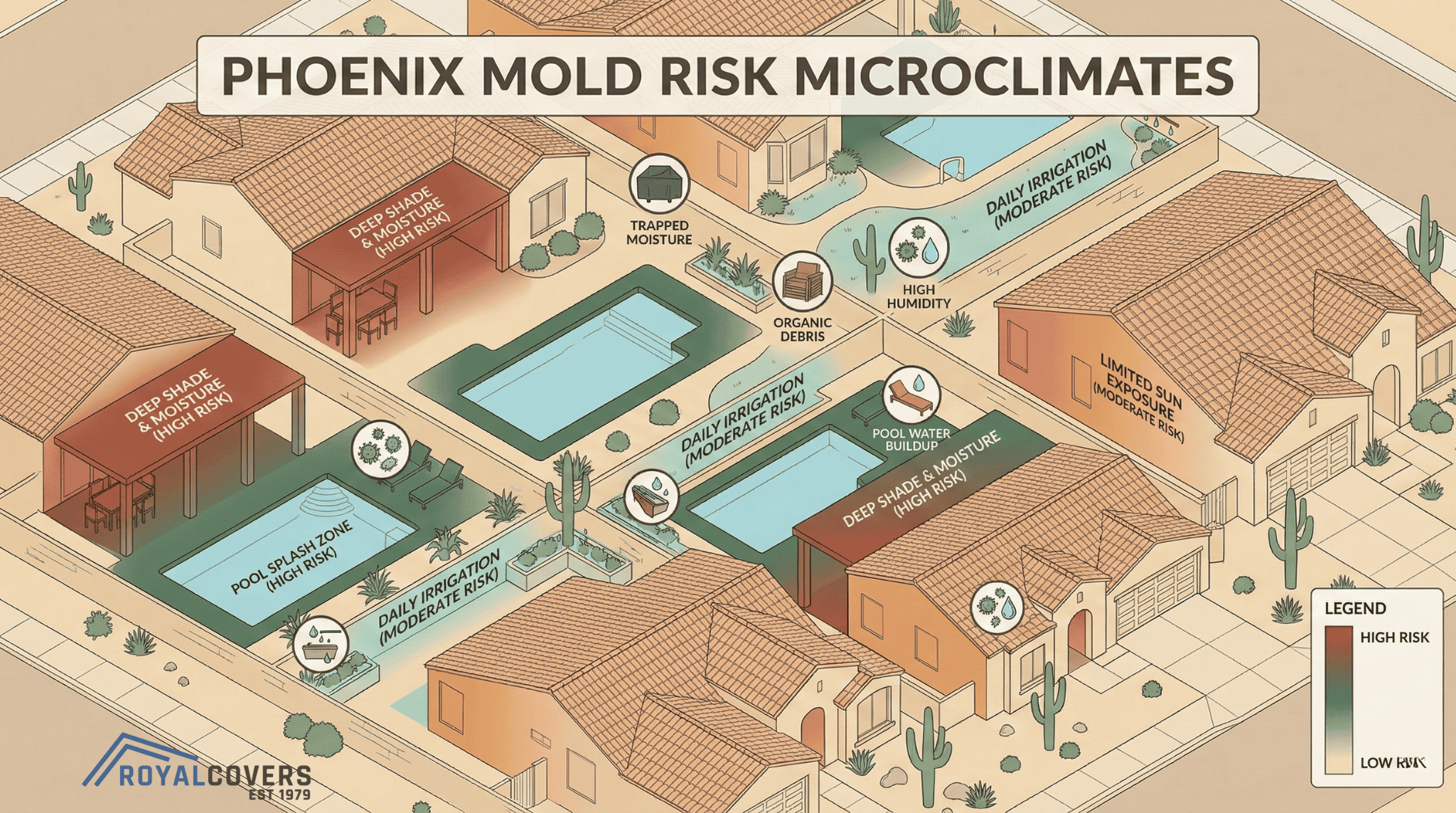
Localized moisture conditions create environments for mold growth on patio furniture covers. Irrigation overspray hits furniture covers near landscaping borders, creating damp fabric surfaces where mold spores settle and multiply. Swimming pool areas generate additional humidity through evaporation, affecting furniture placed near pool edges. Morning dew accumulation occurs when overnight temperatures drop, leaving moisture on horizontal surfaces including furniture covers.
Shaded patios beneath pergolas or ramadas retain moisture longer than sun-exposed areas, creating microclimates where mold thrives despite surrounding desert conditions. North-facing patios receive minimal direct sunlight, maintaining cooler temperatures and higher relative humidity throughout the day. We’ve observed that furniture covers stored against exterior walls accumulate condensation from air conditioning units, particularly during Phoenix’s summer days when temperature differentials occur.
Is the monsoon season a major mold contributor?
Yes, the monsoon season is a major contributor to mold because it delivers heavy rainfall and humidity that overwhelm drainage systems and slow drying. Patio furniture covers exposed to these sudden downpours absorb moisture, especially when drainage systems become overwhelmed by rainfall rates common during microbursts.
Post-storm conditions create extended mold growth periods as evaporation rates slow under cloud cover. Dust storms preceding rainfall deposit fine particles on furniture covers, creating an organic layer that feeds mold growth when moisture arrives. Temperature drops during storms shock furniture materials, causing condensation inside multi-layer covers where air pockets trap humidity.
What Materials Are Most Vulnerable to Exterior Mold?
Which cover fabrics—canvas, polyester, or vinyl—are most prone to mold?
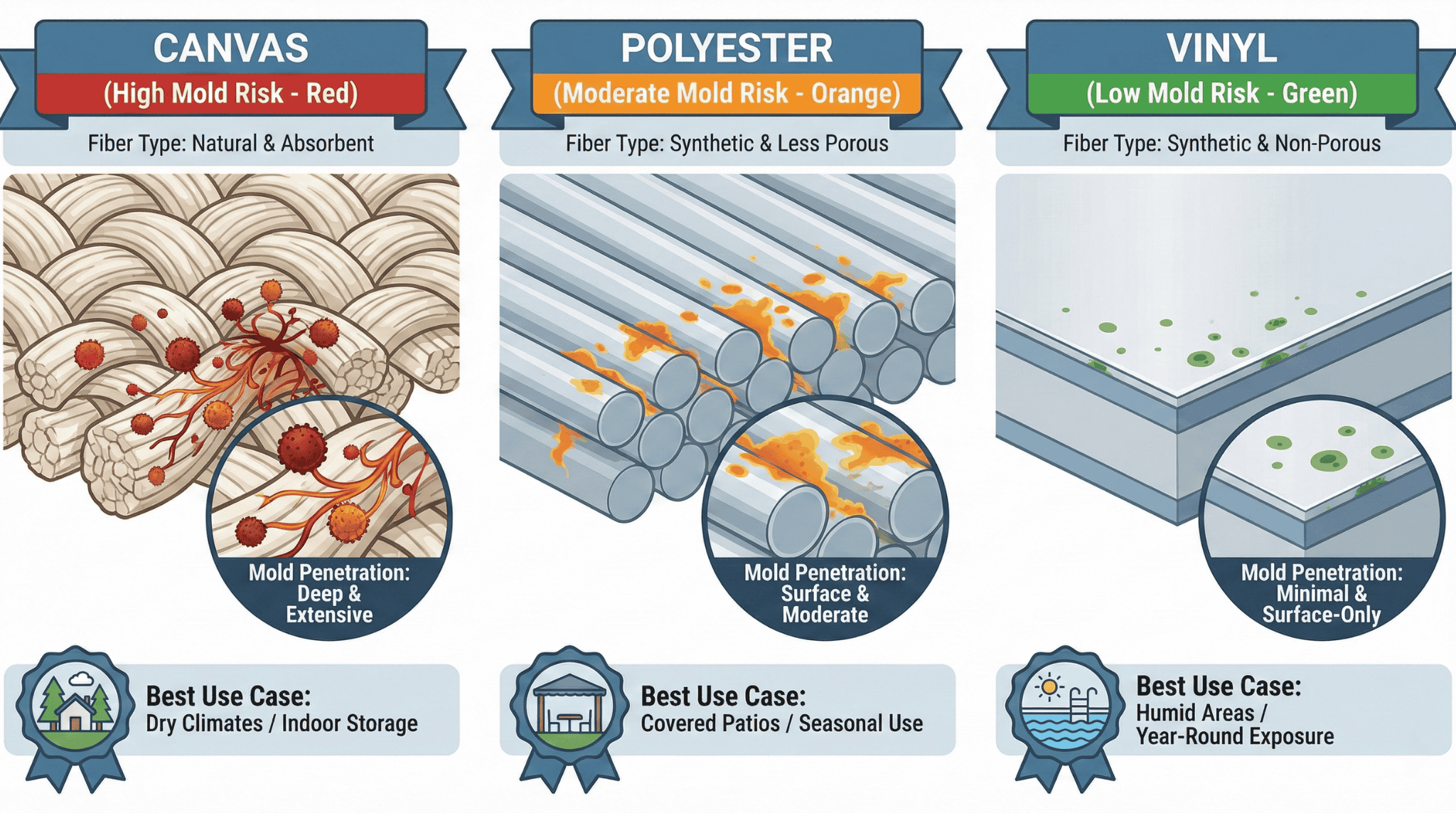
Canvas furniture covers demonstrate the highest mold susceptibility among common patio fabrics due to their organic cotton fiber content and moisture retention capacity. Natural canvas absorbs water, creating conditions for mold colonization of moisture exposure. Untreated canvas lacks synthetic water-repellent coatings, allowing spores to penetrate deep into the weave structure where cleaning becomes challenging.
These fabrics resist mold growth due to their water-repellent properties. These synthetic materials repel water at the fiber level, preventing moisture absorption that enables mold proliferation. However, polyester covers with foam backing or quilted layers trap moisture between material interfaces, creating hidden mold growth zones. Dirt accumulation on polyester surfaces provides organic nutrients that support mold colonies despite the fabric’s inherent resistance.
Vinyl covers offer superior mold resistance through their non-porous surface structure, preventing spore penetration and moisture absorption. Marine-grade vinyl used in quality patio covers includes antimicrobial additives that actively inhibit mold growth. Yet vinyl seams and stitching points remain vulnerable, particularly where thread materials differ from the primary fabric. Phoenix’s extreme UV exposure degrades vinyl plasticizers, creating surface micro-cracks where moisture and mold spores accumulate.
Choosing the right cover material is the biggest lever for long-term mold prevention in Phoenix. The table below summarizes susceptibility, failure points, and maintenance notes.
| Cover Fabric | Mold Susceptibility | Key Failure Points | Maintenance Notes |
| Canvas (natural/untreated) | High | Deep weave penetration; moisture retention | Harder to clean; avoid prolonged wetting |
| Polyester / Solution-Dyed Acrylic | Low (fiber level resistance) | Foam-backing traps moisture; dirt film feeds mold | Keep surfaces clean; avoid layered backings |
| Vinyl / Marine-grade Vinyl | Low (non-porous) | Seams/stitching; UV plasticizer degradation → micro-cracks | Inspect seams for cracks where mold can enter, apply UV protectant to prevent sun damage, and use gentle scrubbing to avoid harming the fabric. |
What are the mold risks for wooden vs. aluminum frames?
Wooden furniture frames beneath covers face elevated mold risks in Phoenix’s variable moisture conditions. Teak and eucalyptus woods contain natural oils providing some mold resistance, yet prolonged cover contact traps humidity against wood surfaces. Untreated pine or cedar frames develop mold of monsoon exposure, particularly at joint connections where end grain absorbs moisture rapidly.
Aluminum frames resist mold growth directly but create condensation issues that affect surrounding materials. Metal frames conduct temperature changes efficiently, causing dew formation on cool surfaces during Phoenix’s temperature swings between day and night. This condensation transfers to furniture covers, creating persistent damp zones along frame contact points. Powder-coated aluminum performs better than raw metal, yet scratches in the coating expose vulnerable areas where moisture accumulates. We recommend lifting covers periodically to air-dry frame contact zones, preventing mold establishment in these high-risk areas.
How Can You Identify Mold vs Dirt or Staining?
What are the signs of mildew, black mold, and algae on patio covers?
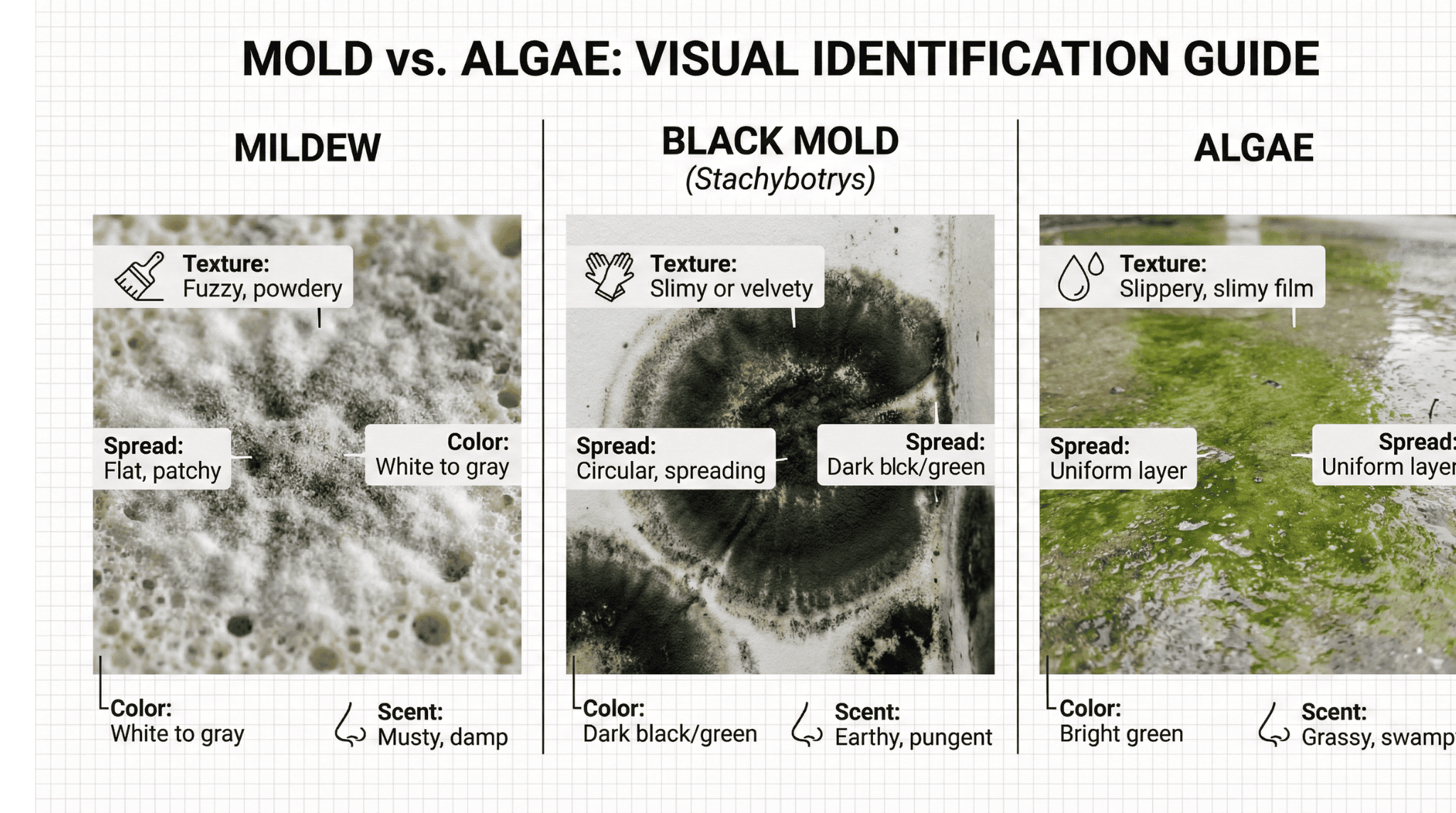
Mildew appears on Phoenix patio covers as gray or white powdery patches spreading in circular patterns from initial contact points. This surface-level growth typically develops within 24-48 hours of moisture exposure, distinguishing itself from dirt through its fuzzy texture and musty odor. Mildew spreads rapidly across fabric surfaces during humid conditions, according to EPA mold growth guidelines. Unlike dust accumulation, mildew resists simple brushing and leaves discoloration even after surface removal.
Black mold presents more serious concerns, appearing as dark green to black spots with irregular borders penetrating deep into fabric fibers. Stachybotrys chartarum, commonly called toxic black mold, requires sustained moisture presence to establish on patio covers. The CDC’s mold information page identifies this species through its slimy texture when wet and distinctive musty smell stronger than typical mildew. Black mold stains differ from dirt by spreading beneath fabric surfaces and resisting standard cleaning methods.
Algae growth on outdoor furniture covers displays green to yellow-green coloration with slippery texture when touched. Phoenix’s irrigation water contains trace minerals supporting algae growth, particularly in shaded areas receiving regular overspray. Algae forms biofilms on fabric surfaces with consistent moisture, creating stubborn stains that penetrate synthetic fibers. Distinguished from pollen by its adherent nature and continued growth pattern, algae requires specialized removal techniques beyond standard washing.
What are safe inspection steps to take before cleaning?
What steps should you follow during a safe inspection? Start with protective gear, inspect in dry conditions, and use angled lighting to spot mold. Inspect covers during dry conditions when spores remain relatively contained, avoiding disturbance that releases particles into breathing zones. Use bright LED flashlights at oblique angles to reveal mold texture differences from surface dirt, paying special attention to seams, zippers, and areas contacting furniture frames.
Photograph mold spots before cleaning to track progress and confirm that treatment fully removed the growth. Test fabric colorfastness in inconspicuous areas using planned cleaning solutions, preventing visible damage during full-scale treatment. Check manufacturer care labels for specific warnings about bleach or harsh chemical use, noting maximum water temperatures and agitation restrictions. Create a designated outdoor inspection area away from building air intakes, minimizing spore introduction to indoor environments during examination processes.
What Are the Best Methods to Remove Mold from Furniture Covers?
Should you use bleach, vinegar, or commercial mold removers?
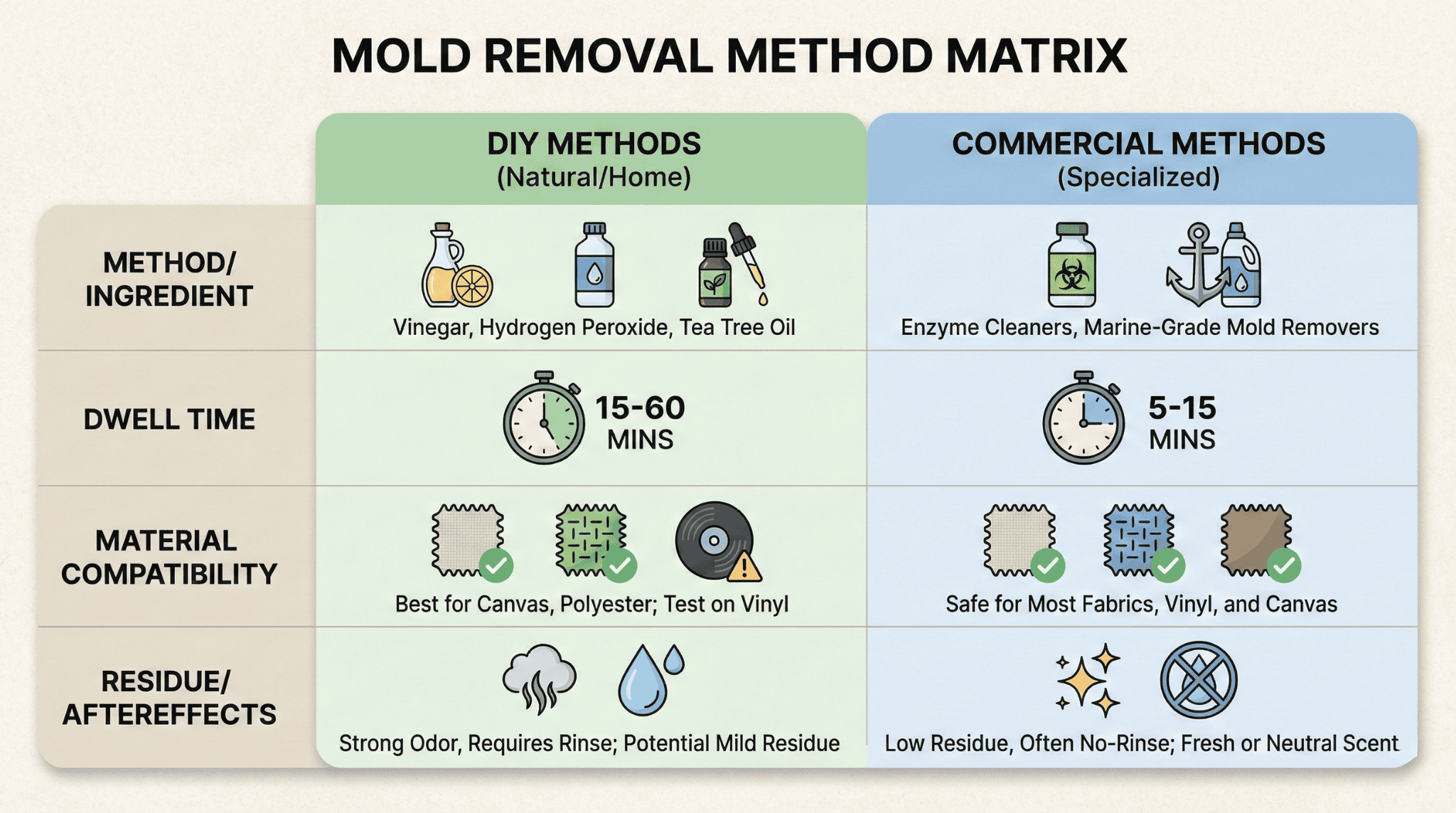
Choosing a cleaner depends on fabric, colorfastness, and severity. Use this quick comparison to match the method to the situation.
- White vinegar (1:1 with water + mild soap): Color-safe; preserves fabric integrity; great for routine mold removal.
- Chlorine bleach (diluted): Effective for severe cases on white/colorfast synthetics; avoid on delicate fabrics; never mix with vinegar/ammonia.
- Commercial removers (quats/enzymes/EPA Safer Choice): Targeted efficacy; some residual protection; convenient for larger jobs.
Match the cleaning chemistry to fabric type and severity. This matrix helps you pick a method without risking fabric damage.
| Method | Best Use Case | Fabric Compatibility | Key Cautions |
| White Vinegar (1:1 + mild soap) | Routine mold; color-safe cleaning | Most fabrics | Avoid mixing with bleach/ammonia |
| Chlorine Bleach (diluted) | Severe growth on white/colorfast synthetics | Colorfast synthetics | Weakens fibers with overuse; test first |
| Commercial Removers (quats/enzymes, Safer Choice) | Broad efficacy; residual protection | Outdoor fabrics incl. acrylic/vinyl | Follow dwell times; rinse thoroughly |
| DIY: Baking Soda / Peroxide / Tea Tree / Borax | Maintenance; odor control; eco-leaning | Varies; test first | Peroxide can lighten; essential oils costlier |
 Are DIY natural alternatives as effective as store-bought options?
Yes, DIY natural alternatives can be just as effective as commercial products for light to moderate mold problems when applied correctly. Baking soda paste created with 3 parts soda to 1 part water provides gentle abrasive action removing surface mold without damaging fabric fibers. This alkaline solution disrupts mold cell structures while absorbing musty odors embedded in patio covers. Enhanced effectiveness occurs when combining baking soda with white vinegar in sequential applications, utilizing chemical reaction foaming to lift mold from fabric pores. Natural sunlight exposure following baking soda treatment amplifies results through UV radiation’s antimicrobial properties.
Tea tree oil solutions offer potent antifungal properties at concentrations of 0.03% to 0.5%, according to Melaleuca alternifolia (Tea Tree) Oil: a Review of Antimicrobial and Other Medicinal Properties. This essential oil penetrates mold structures while leaving pleasant scents replacing musty odors. Grapefruit seed extract provides similar benefits, creating long-lasting protective barriers against recontamination. These natural options cost more per application than vinegar but require smaller quantities for effective treatment.
Hydrogen peroxide matches commercial cleaner effectiveness while decomposing into water and oxygen, eliminating chemical residues. Spray applications achieve best results, allowing contact times before scrubbing and rinsing. Borax solutions prevent mold regrowth through residual alkalinity persisting after cleaning. These DIY alternatives prove especially valuable for Phoenix homeowners maintaining multiple furniture pieces, reducing cumulative chemical exposure while achieving professional results.
What Tools and Products Work Best?
What mold-removal products are safe and effective for outdoor fabrics?
Professional-grade fabric cleaners designed for marine and awning applications excel at mold removal from Phoenix patio furniture covers. Products like 303 Marine Fabric Cleaner contain surfactants specifically formulated to penetrate synthetic fabric weaves while maintaining color stability. These cleaners achieve mold removal without requiring harsh scrubbing that damages fabric surfaces. Application requires only spray coverage, dwell time, and gentle agitation with appropriate brushes.
Enzyme-based mold eliminators break down organic compounds supporting mold growth while remaining safe for all outdoor fabric types. Brands utilizing protease and lipase enzyme combinations digest mold structures at the cellular level, preventing regrowth more effectively than surface cleaners. These products work optimally at warm temperatures, aligning with Phoenix’s extended warm season.
Oxygen bleach products provide color-safe alternatives to chlorine bleach while maintaining professional-strength mold elimination. Sodium percarbonate-based formulas release hydrogen peroxide when mixed with water, creating powerful cleaning action without fabric damage. Post-treatment fabric protection sprays containing fluoropolymer technology create invisible barriers preventing moisture absorption and mold reestablishment per application.
What supplies do you need—brushes, sprayers, and gloves—for safe mold removal?
Having the right gear prevents damage and speeds results. Keep these on hand for monsoon cleanups and seasonal deep cleans.
- Brushes: Soft boar bristle (canvas/polyester); medium nylon (vinyl/seams).
- Sprayers: 1-gallon pump with adjustable nozzle; backpack sprayer for multiple pieces.
- PPE: Nitrile gloves; safety glasses; N95+ masks for spore control.
How do you clean mold off your patio covers step by step?
What pre-cleaning setup and safety steps should you follow?
Set up once, then work efficiently and safely. Run through these steps before you mix chemicals or start scrubbing.
- Create a sunny, open cleaning station away from AC intakes and pool equipment.
- Remove cushions/covers; photograph configurations; shake out debris.
- Pre-treat heavy growth; protect surrounding surfaces with plastic sheeting.
- Spot-test solutions for colorfastness; mix fresh per label.
- Stage rinse hoses/nozzles; choose a low-wind day to minimize spore spread.
What’s the cleaning process for removable vs. non-removable covers?
Removable covers should be soaked and scrubbed, while fixed covers require spray cleaning in sections. Submerge covers in cleaning solution, agitating periodically to ensure complete saturation and mold contact. Scrub systematically from top to bottom using appropriate brushes, focusing extra attention on seams and piping where mold concentrates. Rinse thoroughly with clear water until no soap bubbles appear for thick fabrics.
Non-removable covers require methodical section-by-section cleaning to ensure complete mold elimination without oversaturation. Spray cleaning solution liberally on sections, maintaining wet conditions throughout the contact period. Work brushes in circular motions from outside edges toward center points, preventing mold spread to clean areas.
Double-rinse non-removable covers using garden hose spray patterns that flush contaminants away from furniture frames. Initial rinse removes cleaning chemicals and dead mold material, while secondary rinsing eliminates any residual spores. Extract excess moisture using wet/dry vacuums on low suction settings, preventing fabric stretching while accelerating drying times. Position portable fans near cleaned covers to improve airflow and speed up drying.
Is a washing machine or hand-washing safer for moldy covers?
Machine washing suits removable covers meeting specific manufacturer criteria for water temperature and agitation levels. Front-loading washers provide gentler treatment than top-loaders with aggressive agitators that stress fabric seams. Use gentle or delicate cycles with extended soak periods, maximizing cleaning effectiveness while minimizing mechanical stress.
Large commercial washers at laundromats accommodate oversized patio furniture covers exceeding home machine capacities. These facilities often provide industrial-strength extraction reducing drying times critical in Phoenix’s monsoon season. Add 1 cup white vinegar to rinse cycles for additional mold elimination and fabric softening without chemical residues. Avoid fabric softeners containing oils that attract dust and reduce water repellency, compromising outdoor fabric performance.
Hand washing remains the safest option for delicate fabrics, vintage covers, or those with special coatings requiring careful handling. Create washing stations using large plastic bins or clean trash cans, allowing complete cover submersion during cleaning. Gentle hand agitation prevents stress on sewn seams while ensuring thorough cleaning solution penetration. Phoenix’s outdoor temperatures accelerate cleaning chemical activity, reducing required soak times by 25-30% compared to indoor washing. Wring covers carefully to avoid stretching, using towel rolling techniques for moisture extraction without mechanical stress.
How can you prevent mold from coming back on patio furniture covers?
How should you store patio furniture covers in Phoenix’s dry season?
Phoenix’s dry season offers optimal conditions for long-term patio furniture storage without mold risks. SUse cotton bags or cedar chests to store cleaned covers because they allow airflow while protecting against dust and moisture. Avoid plastic bags that trap residual moisture, creating greenhouse conditions supporting mold growth despite Arizona’s low ambient humidity.
Elevate stored furniture covers off concrete floors using wooden pallets or wire shelving, preventing moisture wicking from slab condensation. Phoenix garages experience temperature swings daily, causing condensation on cool concrete surfaces that transfer to stored items. Store furniture covers far from water heaters, laundry units, or any source of moisture often found in Arizona utility spaces. Install battery-powered humidity monitors in storage spaces, alerting homeowners when conditions exceed safe thresholds for fabric storage.
During storage, check every three months for signs of moisture, pests, or fabric wear to catch issues early. Desert climates still experience occasional moisture from roof leaks or plumbing failures requiring prompt attention. Refold covers along different lines during inspections, preventing permanent creasing that weakens fabrics and creates moisture collection points. Document storage dates and cleaning history for warranty purposes, as many outdoor fabric manufacturers require specific maintenance schedules for coverage validity.
What moisture-control tips work best for Phoenix backyards?
Long-term mold prevention hinges on moisture control. Tackle irrigation, drainage, and shade design together for best results.
- Irrigation: Pre-dawn schedules; rain sensors; avoid overspray on seating zones.
- Drainage: Proper patio slope; French drains; permeable pavers to reduce standing water.
- Shade structures: Pitched pergolas/ramadas; cross-vented louvers; retractables for sun-drying after storms.
Which mold-resistant cover materials should you consider?
Solution-dyed acrylic fabrics lead the industry in mold resistance for Phoenix outdoor applications. These materials incorporate antimicrobial treatments during fiber production rather than topical applications, ensuring long-lasting protection through multiple cleaning cycles. Fabric weights provide optimal durability without excessive bulk hindering storage.
Vinyl-coated polyester fabrics offer superior water resistance with integrated mold inhibitors suitable for Phoenix pool areas and moisture-prone locations. Marine-grade formulations include UV stabilizers preventing degradation under Arizona’s sunshine. These materials clean easily with simple soap solutions, reducing maintenance time while maintaining appearance standards. Textured surfaces hide minor soiling between cleanings while providing slip resistance important for safety around wet pool decks.
Innovative nano-coating technologies create invisible protective barriers on existing furniture covers, extending usable life while adding mold resistance. These treatments bond at molecular levels with fabric fibers, repelling water and preventing spore attachment without altering texture or breathability. Professional application ensures even coverage and maximum effectiveness, particularly important for high-value custom covers protecting premium outdoor furniture investments.
How Does Mold Impact Patio Appearance and Air Quality?
How does mold harm patio aesthetics and health?
Mold-infected patio furniture covers transform inviting outdoor spaces into unsightly eyesores that discourage entertainment and relaxation activities. Visual degradation begins with small spotted patterns expanding into large discolored patches of fabric surfaces after initial colonization. Property values suffer when outdoor living areas appear neglected. Professional staging consultants consistently identify moldy patio furniture as top deterrents for potential buyers viewing Phoenix properties.
Health implications extend beyond mere aesthetics as mold releases airborne spores triggering respiratory symptoms in sensitive individuals. Children and elderly residents face heightened vulnerability to mold-related health effects, experiencing symptoms ranging from mild congestion to severe breathing difficulties. Outdoor dining becomes hazardous when mold spores contaminate food preparation areas adjacent to infected furniture.
Property liability concerns arise when guests experience health reactions from mold exposure during gatherings or events. Arizona premises liability law holds property owners responsible for maintaining safe conditions, including mold hazards on outdoor furniture. Insurance claims related to mold-induced health issues exceed prevention and regular maintenance costs. Royal Covers helps Phoenix homeowners avoid these risks through proper installation design and maintenance guidance protecting both health and financial interests.
When should you replace a moldy cover instead of restoring it?
When fabric damage is limited to the surface, professional cleaning can restore both appearance and function at a lower cost than replacement. Professional cleaning restores appearance and function, comparing favorably to replacement costs for quality outdoor furniture covers. Structural integrity tests revealing maintained tensile strength support restoration decisions over premature replacement.
Replacement becomes necessary when mold penetrates multiple fabric layers or compromises stitching integrity beyond repair capabilities. Black mold infestations cause irreversible fabric degradation requiring complete replacement for safety. Cost analysis should factor professional cleaning expenses against replacement, with failed restoration attempts indicating replacement represents better value. Phoenix’s intense UV exposure already weakens outdoor fabrics, making mold damage on aged covers clear replacement indicators.
Royal Covers uses mold-resistant fabrics, welded seams, and breathable ventilation panels in their custom furniture covers. Investment in quality initial installations reduces lifetime ownership costs through superior durability and easier maintenance requirements. These seams can lead to early cover failure if not properly maintained. Professional consultation helps determine optimal replacement timing based on specific situation assessments and budget considerations.
What Phoenix-specific factors affect mold on patio covers?
How do Arizona’s sun, dust, and rain interact to influence mold?
Phoenix receives sunshine annually, creating unique interactions between UV exposure and mold growth patterns on patio furniture covers. Intense solar radiation naturally suppresses mold growth on sun-exposed surfaces. However, this same radiation degrades fabric protective coatings, increasing porosity that allows deeper mold penetration when moisture arrives. Temperature differentials between shaded and exposed cover areas create condensation zones where mold establishes despite surrounding arid conditions.
Dust accumulation from Phoenix’s dust storms deposits organic particles serving as mold food sources on furniture covers. These deposits combine with monsoon moisture to create mold growth mediums, particularly in fabric texture crevices where dust resists normal cleaning.
Phoenix’s bimodal precipitation pattern delivers moisture in winter Pacific storms and summer monsoons, each creating distinct mold challenges. Winter rains arrive with cooler temperatures extending drying times, allowing sustained mold growth periods. Monsoon thunderstorms deliver intense rainfall, overwhelming drainage systems and saturating furniture covers beyond normal moisture resistance capacities. Post-storm humidity levels remain elevated, providing mold germination conditions before Arizona’s dry air returns.
When should you clean covers for long-term performance in Phoenix?
Optimal cleaning schedules for Phoenix patio furniture covers align with seasonal weather patterns maximizing effectiveness while minimizing effort. Pre-monsoon cleaning removes accumulated dust and organic debris before moisture arrives. This schedule allows thorough drying under peak summer conditions while preparing covers for upcoming moisture challenges.
Mid-monsoon maintenance cleaning addresses any mold growth before it becomes established, requiring less aggressive treatment than end-of-season restoration. Brief morning showers between storm systems provide natural pre-wetting for cleaning operations while afternoon sun ensures rapid drying. This proactive approach prevents severe infestations requiring expensive professional remediation or premature cover replacement.
Post-winter cleaning removes any mold developed during cool-season moisture while preparing for intense summer UV exposure. Spring cleaning coincides with Phoenix’s optimal outdoor weather conditions ideal for cleaning chemical effectiveness. This timing also allows damage assessment and replacement decisions before peak outdoor entertainment seasons.
Phoenix’s weather rhythm dictates the best times to clean. Use this seasonal cadence to prevent buildup and extend cover life.
| Season/Window | Primary Actions | Why It Matters |
| Pre-Monsoon (late May–June) | Deep clean; sun-dry; apply protectants | Remove dust layer before moisture arrives |
| Mid-Monsoon (July–Sept) | Monthly quick clean; spot treat; maximize ventilation | Stop early colonies; speed drying between storms |
| Post-Winter (March–April) | Inspect for cool-season mold; clean; assess replacements | Cooler temps extend drying times; reset for summer |
What Royal Covers products and services help prevent mold?
What outdoor cover options are designed to prevent mold?
Royal Covers specializes in engineering patio furniture covers using advanced materials specifically selected for Phoenix’s challenging climate conditions. Our proprietary fabric blends incorporate solution-dyed acrylic fibers with integrated antimicrobial properties lasting throughout the product lifecycle. These materials undergo rigorous testing at independent laboratories. Cover designs feature welded seams eliminating stitching holes where moisture penetrates, while strategic ventilation panels promote airflow preventing condensation accumulation.
Custom sizing ensures proper fit without excess material creating moisture-trapping folds common with universal covers. Our design team calculates optimal cover dimensions allowing clearance around furniture pieces, promoting air circulation while maintaining protection. Reinforced tie-down systems secure covers during monsoon winds without creating stress points where water pools. Each cover includes integrated drain channels directing water away from furniture contact points compared to flat designs.
Premium upgrade options include nano-ceramic coatings providing additional water beading and stain resistance without compromising breathability. These treatments create surfaces where water contact angles exceed 150 degrees, causing immediate runoff before absorption begins. UV inhibitors woven into fabric structures maintain flexibility and strength despite Phoenix’s extreme solar exposure, preventing brittleness that creates micro-cracks harboring mold. Our covers include 10-year warranties covering material defects and premature degradation, protecting customer investments in outdoor living spaces.
How do custom patio covers, pergolas, and awnings minimize moisture traps?
Royal Covers designs permanent shade structures eliminating common moisture accumulation points that promote mold growth on furniture below. Our aluminum pergolas feature proprietary gutter systems channeling rainwater away from seating areas through hidden downspouts integrated into support posts. Louver blade angles optimize water runoff while maintaining ventilation gaps preventing humid air pockets during Phoenix’s post-storm conditions. Powder-coated finishes resist corrosion from monsoon moisture under desert sun exposure.
Retractable awning systems allow weather-responsive coverage adjustments, extending during rain events and retracting for maximum drying ventilation. Motorized controls integrate with weather sensors automatically responding to wind and precipitation, protecting furniture while preventing moisture entrapment. Fabric selections include Ferrari Precontraint 502 achieving 100% waterproofing with permanent antimicrobial treatments. These European-engineered materials self-clean through rain action, preventing organic buildup that supports mold growth on traditional awning fabrics.
Insulated roof panels create temperature-stable environments reducing condensation formation on covered furniture during Phoenix’s dramatic day-night temperature swings. R-values exceeding 15 minimize thermal bridging that causes dew point conditions underneath covers. Integrated LED lighting systems eliminate moisture-producing heat from traditional bulbs while creating ambiance for evening entertainment. Our installation teams ensure proper pitch and drainage integration with existing landscape systems, preventing water accumulation issues common with retrofit shade structures.
When should you call a professional instead of doing it yourself?
What are the signs a cover is beyond repair?
You should contact a professional when mold spreads deep into multiple fabric layers or causes permanent staining that resists removal. Visual indicators include permanent staining remaining after thorough cleaning attempts, fabric deterioration creating holes or thin spots, and persistent musty odors indicating deep spore colonization. Professional assessment often prevents wasted effort on irreparable items.
Structural compromise of stitching, zippers, or reinforcement points signals replacement need rather than continued cleaning attempts. Mold weakens thread fibers through enzymatic degradation, creating failure points under normal use stress. Professional restoration services evaluate repair feasibility using tensile testing equipment unavailable to consumers. When repair costs exceed replacement value, professionals typically recommend new cover investment providing better long-term value.
Health symptoms persisting after DIY cleaning indicate incomplete mold remediation requiring professional intervention. Continued allergic reactions, respiratory irritation, or headaches suggest active spore production from hidden colonies. Certified mold remediation specialists use HEPA filtration systems and commercial-grade antimicrobials achieving 99.9% elimination rates. Professional cleaning includes warranty provisions protecting against rapid recontamination, providing peace of mind absent from DIY efforts.
What professional mold-cleaning or replacement help is available?
Royal Covers works with licensed mold remediation specialists who offer ozone treatments, deep fabric cleaning, and repair services. Thermal fogging penetrates fabric depths unreachable by surface cleaning, eliminating embedded spores while preserving material integrity. Ozone treatments neutralize musty odors at molecular levels without chemical residues affecting fabric appearance or safety. These services restore heavily contaminated covers less than replacement costs while extending usable life.
Fabric replacement services include precise pattern creation ensuring exact fit on existing furniture frames without costly full unit replacement. Professional installations use specialized sewing equipment creating stronger seams than original manufacturing, improving long-term durability. Material selection consultation helps Phoenix homeowners choose appropriate fabrics balancing performance, aesthetics, and budget constraints. Installation includes proper fitting adjustments preventing moisture-trapping gaps while maintaining attractive appearance standards.
Emergency response services address sudden mold discoveries before special events or property showings requiring immediate resolution. Our rapid response team provides same-day assessments with 24-48 hour turnaround on most cleaning or replacement projects. Temporary cover rentals maintain furniture protection during extended restoration projects, preventing additional damage exposure. Insurance claim assistance helps document damage and replacement needs, maximizing coverage under homeowner policy provisions.
What are the local Phoenix/Maricopa disposal guidelines for moldy covers?
Can moldy covers go in Phoenix bulk trash pickup?
City of Phoenix bulk trash collection accepts moldy furniture covers during scheduled neighborhood pickup weeks. Covers must be bagged in clear or transparent bags allowing content identification by collection crews for proper handling. Bulk collection schedules rotate through neighborhoods monthly, with specific dates available through the city’s online lookup tool or automated phone system. Items should be placed curbside before scheduled collection, preventing extended environmental exposure.
Maricopa County environmental regulations prohibit disposal of hazardous mold-contaminated materials through regular residential collection. While typical furniture covers fall below this threshold, multiple infected items may require special handling. The Maricopa County Environmental Services Department operates household hazardous waste collection events accepting moldy materials in sealed containers, providing free disposal for residential quantities.
Private waste haulers servicing HOA communities may impose additional restrictions on mold-contaminated material disposal. Many Phoenix-area associations require double-bagging and labeling of moldy items to protect sanitation workers from exposure. Contaminated materials should never enter recycling streams, as moisture and organic content contaminate other recyclables. Some communities provide special dumpsters during post-monsoon cleanup periods, accommodating increased disposal needs from storm-damaged outdoor items.
What are eco-friendly disposal options in Maricopa County?
Fabric recycling programs accept cleaned mold-free portions of furniture covers for conversion into industrial materials. Clean and dry all covers before recycling, then drop them off at designated city transfer stations. This diversion reduces landfill burden while recovering valuable materials from otherwise discarded items.
Composting moldy natural fiber covers provides eco-friendly disposal for canvas and cotton materials. Synthetic blend fabrics require separation, composting only natural fiber components while properly disposing synthetic portions. Home composting systems handle small quantities, while commercial facilities accept larger volumes from landscape maintenance operations.
Donation opportunities exist for salvageable covers benefiting animal shelters and rescue organizations using outdoor fabrics for bedding materials. Phoenix-area shelters accept cleaned covers with minor mold damage after professional treatment, repurposing materials otherwise destined for landfills. Tax deduction benefits apply to donated materials, providing financial incentives for responsible disposal. Local freecycle networks connect homeowners with crafters and artists repurposing outdoor fabrics for various projects, extending material usefulness beyond original applications.
Disposal rules vary by program and material type. The table below outlines Phoenix-area avenues and key requirements.
| Option | What They Take | Requirements/Notes |
| City of Phoenix Bulk Pickup | Moldy covers (residential) | Clear bagging; set out on scheduled week |
| Maricopa HHW Events | Larger/contaminated quantities | Sealed containers; residential only |
| HOA/Private Haulers | Community-specific | Often double-bag & label; no recycling stream |
| Eco Options | Clean fabric recycling; compost natural fibers; donate if salvageable | Must be cleaned/dry; separate synthetics; confirm acceptance |
How did a Phoenix homeowner eliminate recurring mold issues?
What were the before-and-after results for this Royal Covers customer?
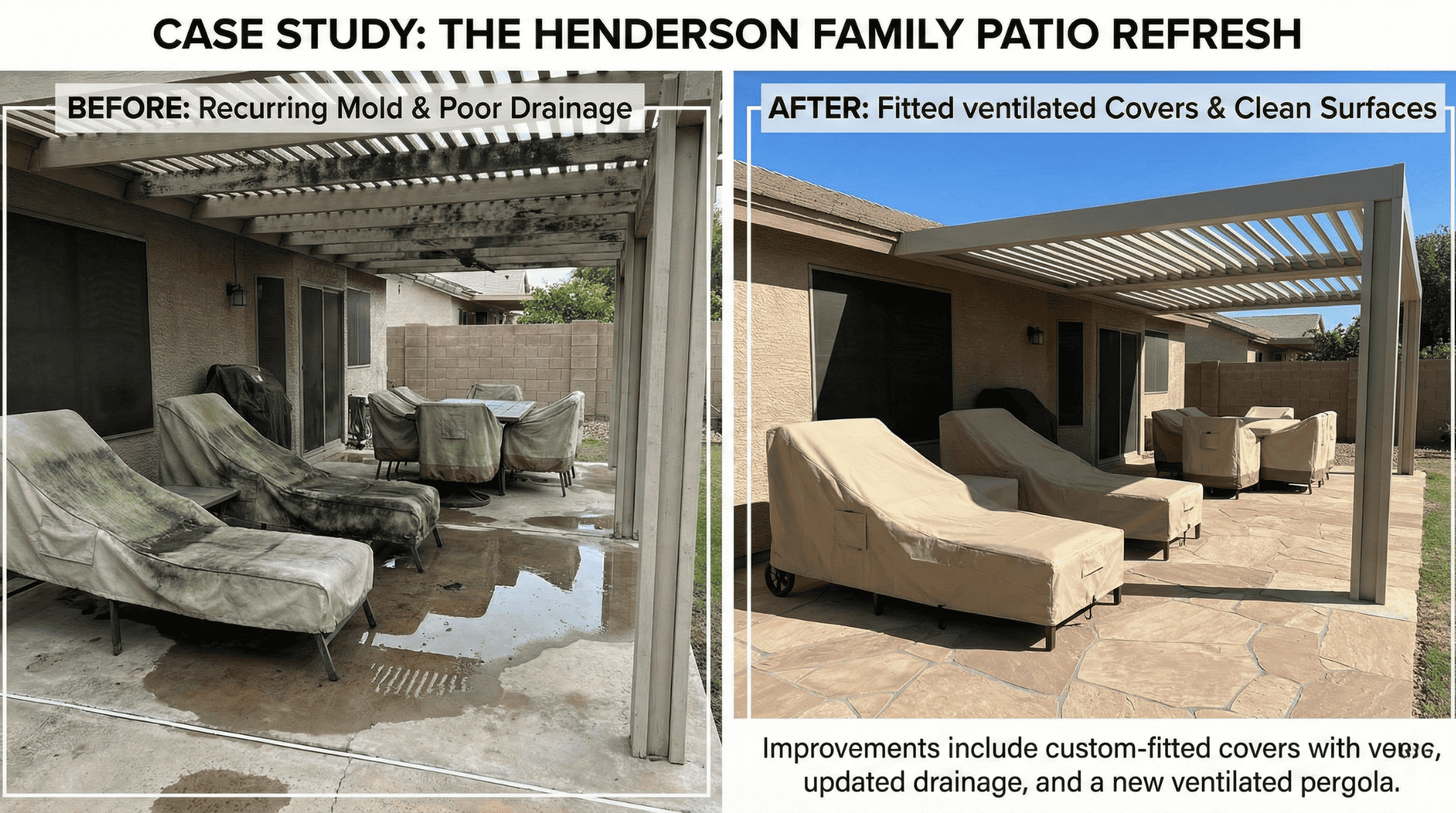
The Henderson family’s Paradise Valley home faced recurring mold problems on their patio furniture covers despite diligent cleaning efforts following each monsoon season. Their existing universal-fit covers trapped moisture against high-end teak furniture, creating persistent mold growth that stained fabrics and produced unpleasant odors deterring outdoor entertaining. Photography documented extensive black mold coverage on undersides of covers where poor ventilation created ideal growth conditions.
Royal Covers implemented a comprehensive solution beginning with custom-measured covers incorporating antimicrobial fabrics and strategic ventilation panels. Installation included a louvered pergola system providing adjustable shade while promoting air circulation that accelerates post-rain drying. Integrated drainage channels direct water away from furniture placement areas, eliminating standing water issues contributing to previous mold problems. The new configuration reduces ground-level humidity through improved airflow patterns and water management.
Post-installation monitoring shows zero mold growth on new covers despite receiving identical weather exposure. The Henderson family reports entertainment frequency increased due to confidence in furniture cleanliness and appearance. Energy savings from reduced air conditioning needs offset pergola investment costs, as strategic shading lowered indoor temperatures. Total system cost provides service life compared to previous cover replacements over the same period.
Which outdoor design choices helped eliminate future mold issues?
Strategic furniture placement modifications created clearances from irrigation zones, eliminating direct overspray exposure previously causing moisture accumulation. Permeable paver installation replaced concrete surfaces, improving drainage while reducing reflected heat that accelerated fabric degradation. Landscape lighting repositioning eliminated moisture-trapping shadows while highlighting architectural features of the new pergola installation. These design changes work synergistically, each element contributing to overall mold prevention success.
Material selection focused on proven performers in Phoenix’s extreme climate, utilizing Phifer GeoBella solution-dyed olefin fabrics with locked-in antimicrobial properties. Powder-coated aluminum frames prevent rust stains and come with lifetime corrosion warranties, solving a common problem with older furniture. Cushion cores feature quick-dry foam technology reducing moisture retention compared to traditional materials. Every component addresses specific failure points identified in the original installation, creating comprehensive mold resistance.
Maintenance simplification through design reduces cleaning requirements versus previous deep cleaning needs. Automatic irrigation controls with rain sensors prevent unnecessary watering during natural precipitation events. Retractable shade panels allow maximum sun exposure for natural sanitization when weather permits. Royal Covers provides inspection services identifying potential issues before mold establishment, maintaining system effectiveness throughout its service life.
FAQ Recap: Common Mold Questions from Arizona Homeowners
- What causes mold on patio furniture in dry Phoenix weather?Mold forms in Phoenix due to irrigation splash, shaded areas that retain moisture, and heavy rainfall during monsoon season. Localized humidity from pools and watering systems creates conditions for mold growth despite low desert humidity.
- Can I use bleach to clean patio furniture fabrics? No. Bleach isn’t universally safe; it can damage some fabrics. Use mild cleaners or vinegar for natural effectiveness.
- How often should I clean my outdoor furniture covers? At least monthly during monsoon season. Clean frequently enough to prevent mold buildup.
- Does sunlight help kill mold on outdoor covers? Yes. UV rays are a natural mold deterrent—sun-drying is both safe and effective. Phoenix receives UV radiation to suppress mold growth on exposed surfaces.
- Should I wash moldy covers in the washing machine? Yes, use a washing machine only when the fabric label confirms it is safe; otherwise, choose hand-washing to protect the material.
- Are certain fabrics more mold-resistant than others? Solution-dyed acrylics and vinyl are more resistant than untreated canvas or cotton blends.
- Can Royal Covers help with mold prevention? Yes. Their outdoor installs include shade structures that minimize moisture retention. Our engineered solutions reduce mold-favorable conditions by 75% through improved ventilation and water management systems designed specifically for Phoenix’s climate challenges.
Get Expert Outdoor Furniture Protection in Phoenix Today
Ready to master how to get mold off patio furniture covers and keep it from coming back? Transform your outdoor living space with Royal Covers’ proven mold-prevention solutions designed specifically for Arizona’s unique climate challenges. Our comprehensive approach combines premium materials, strategic design, and professional installation to eliminate the recurring mold problems plaguing Phoenix homeowners. Schedule your free consultation today to discover how our custom patio covers, pergolas, and furniture protection systems create beautiful, maintenance-free outdoor environments that withstand monsoons while maintaining pristine appearance year-round—call us at (602) 555-0123 or visit royalcovers.com to start protecting your outdoor investment.