
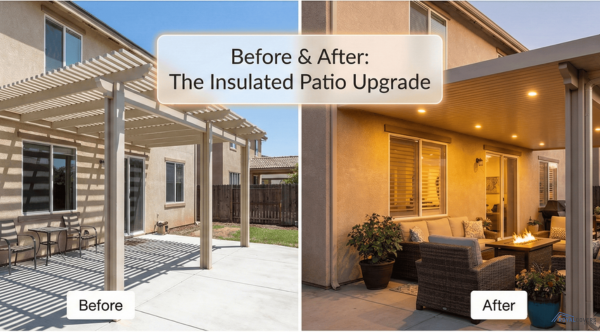
If you’re searching for ways to transform your Alumawood patio cover into a more comfortable, functional outdoor living space, you’ve found the right resource. We understand you’re looking to maximize your patio’s potential while ensuring year-round comfort and usability. Whether you’re dealing with excessive heat, inadequate lighting, or simply want to enhance your outdoor experience, upgrading to an insulated ceiling with built-in lighting addresses these concerns comprehensively.
An insulated ceiling with built-in lighting in Alumawood patio covers is a premium upgrade that combines high-density expanded polystyrene (EPS) foam core panels sandwiched between aluminum sheets with integrated LED lighting fixtures, creating a thermally efficient, acoustically dampened, and well-illuminated outdoor living space that extends the functionality of your patio year-round. This dual upgrade transforms a basic shade structure into a sophisticated outdoor room by reducing heat transfer by up to 77% on west-facing installations, dampening rain noise to approximately 50 dB (equivalent to a quiet office), and providing 100-1600 lumens of customizable illumination through energy-efficient LED technology that consumes 75-110 lumens per watt.
TL;DR Summary: We’ll explore how insulated ceilings improve comfort through R-13.95 thermal resistance and 25°F temperature reduction while reducing noise by creating a sound barrier against weather. You’ll discover built-in lighting options ranging from recessed LED downlights to integrated fixtures that seamlessly blend with your design. We’ll walk through the installation process, including permit requirements and electrical considerations like GFCI protection. You’ll learn about the virtually maintenance-free nature of these upgrades backed by Amerimax’s Limited Lifetime Material Warranty. We’ll examine customization options for colors, textures, and lighting controls that enhance your patio’s aesthetics. Finally, we’ll break down costs ranging from $36-$50 per square foot installed, the 80% ROI potential, and available financing options including federal tax credits up to $3,200 annually.
Quick Tip: Schedule your insulated ceiling upgrade during cooler months (October-March) when contractors typically have more availability and you can often negotiate better rates, plus you’ll have your enhanced patio ready before peak summer temperatures arrive.
As outdoor living continues to evolve with 78% of industry experts identifying seamless indoor-outdoor integration as the dominant trend, these upgrades position your patio as a true extension of your home rather than just a covered outdoor space.
What Are the Main Benefits of Adding an Insulated Ceiling to an Alumawood Patio Cover?
The main benefits of adding an insulated ceiling to an Alumawood patio cover include enhanced comfort through superior temperature control, significant noise reduction, and improved weather protection with extended durability. These upgrades transform your outdoor space into a year-round functional area while adding long-term value to your property.
How Does an Insulated Ceiling Improve Comfort and Energy Efficiency?
An insulated ceiling dramatically improves comfort through advanced thermal resistance technology and proven temperature reduction capabilities. Insulated roof panels feature high-density expanded polystyrene (EPS) foam cores sandwiched between aluminum panels, with 3-inch panels providing an R-value of 13.95 for optimal thermal resistance.
The temperature benefits are substantial:
- Shade structures reduce solar heat gain through south-facing windows by up to 65%
- West-facing windows experience up to 77% reduction in solar heat gain
- Surrounding air temperatures drop by up to 6°F under shade structures
- Direct shade areas remain up to 25°F cooler than nearby asphalt surfaces
These insulated systems create comfortable microclimates that extend your outdoor living season while reducing strain on your home’s cooling systems during peak summer months.
In What Ways Does Insulation Improve Noise Reduction for Patio Covers?
Insulation transforms noisy outdoor experiences into peaceful retreats by acting as an effective sound barrier. The sound of rain on an aluminum roof measures approximately 50 dB with insulation—equivalent to a quiet office environment rather than the typical drumming associated with uninsulated metal roofing.
Insulated panels provide acoustic protection against multiple weather-related sounds such as rain, hail, and wind. This noise reduction allows you to enjoy conversations, entertainment, and relaxation under your patio cover regardless of weather conditions.
How Does an Insulated Ceiling Enhance Weather Protection and Durability?
An insulated ceiling provides superior weather protection through advanced coating systems and extended structural longevity. Alumawood products utilize the Aluma-Shield paint system incorporating Teflon surface protector, which meets AAMA 2604 standards with color change below 5.0 Delta E units after five years of extreme UV exposure.
Performance specifications demonstrate exceptional durability:
- Gloss retention stays above 30% after five years of UV exposure
- Expected lifespan ranges 20-30+ years with minimal maintenance
- Aluminum construction outlasts wood alternatives that typically last 10-20 years and require frequent upkeep
This combination of insulated performance and weather-resistant materials ensures your investment provides decades of reliable protection while maintaining its aesthetic appeal through harsh weather conditions.
What Options Are Available for Built-In Lighting in Alumawood Patio Covers?
Built-in lighting options for Alumawood patio covers include LED recessed downlights, track lighting systems, and integrated strip lighting that seamlessly integrates into insulated ceiling panels. These lighting solutions enhance both functionality and aesthetics while maintaining the weather resistance and durability that Alumawood structures provide.
What Types of Built-In Lighting Fixtures Work Best with Alumawood Insulated Ceilings?
LED recessed downlights work best with Alumawood insulated ceilings due to their energy efficiency and seamless integration capabilities. LED technology produces 75-110 lumens per watt, seven times more efficient than incandescent bulbs, making them ideal for extended outdoor use.
For ambient patio lighting, fixtures require 100-300 lumens per fixture for comfortable evening activities. Larger patio areas may require 1200-1600 lumens for adequate illumination across the entire space. Outdoor-rated recessed LED downlights can be seamlessly integrated into insulated roof panels without compromising the thermal barrier or structural integrity.
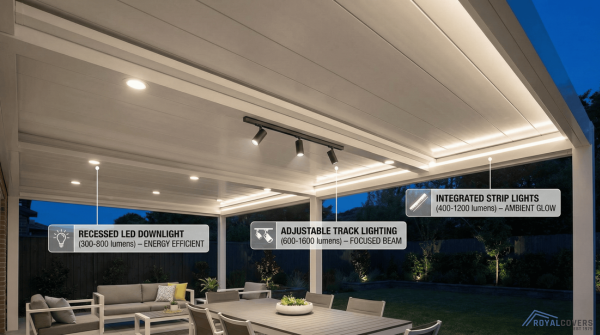
Key fixture types include:
- Low-profile LED recessed lights designed for outdoor use
- Track lighting systems with adjustable spotlights
- LED strip lighting for accent illumination
- Weather-sealed pendant fixtures for task lighting
How Is Built-In Lighting Integrated into an Alumawood Patio Cover Design?
Built-in lighting integrates into Alumawood patio cover design through pre-planned electrical layouts during the installation phase. Electrical conduits and junction boxes are positioned within the structure’s framework before the insulated ceiling panels are installed.
The integration process involves cutting precise openings in the insulated panels to accommodate recessed fixtures while maintaining the thermal seal. Waterproof gaskets and trim rings ensure weather protection around each fixture. Track systems mount directly to the aluminum framework, while strip lighting can be recessed into grooves cut specifically for this purpose.
This planning ensures a clean, professional appearance with no visible wiring or mounting hardware exposed to weather elements.
What Electrical Considerations Are Needed for Adding Lighting?
Electrical considerations for adding lighting require specific safety and code compliance measures for outdoor installations. All outdoor electrical outlets must be protected by Ground-Fault Circuit Interrupter (GFCI) to prevent electrical shock in wet conditions.
All lighting fixtures, fans, and outlets must be rated for outdoor use in damp or wet locations with appropriate IP ratings. Weather-resistant wiring and weatherproof enclosures are mandatory to protect against moisture infiltration and ensure long-term safety.
Additional requirements include:
- Dedicated circuits for lighting loads
- Proper wire gauge sizing for voltage drop considerations
- Weatherproof switch locations with GFCI protection
- Professional installation to meet National Electrical Code standards
The upcoming installation section will detail the step-by-step process for implementing these electrical requirements safely and efficiently.
How Does the Installation Process Work for Upgrading to an Insulated Ceiling with Lighting?
The installation process for upgrading to an insulated ceiling with lighting involves pre-construction planning, structural modifications, and electrical integration. The process requires coordination between structural and electrical contractors to ensure proper integration of insulation panels and lighting systems.
What Preparation Steps Should Be Taken Before the Upgrade?
Preparation steps for upgrading to an insulated ceiling with lighting include obtaining permits, planning structural modifications, and designing electrical layouts. Building permits are required for patio covers attached to the home, with solid roofs, or exceeding 100-120 square feet. The International Residential Code (IRC) limits patio covers to one-story structures not exceeding 12 feet in height. Patio covers must sustain all dead loads plus vertical live load of at least 10 pounds per square foot (PSF).
Essential preparation checklist:
- Obtain building permits and electrical permits
- Create detailed electrical layout plan for lighting placement
- Schedule structural and electrical inspections
- Order insulated panels and lighting fixtures
- Coordinate contractor schedules for sequential installation
What Are the Typical Installation Steps from Start to Finish?
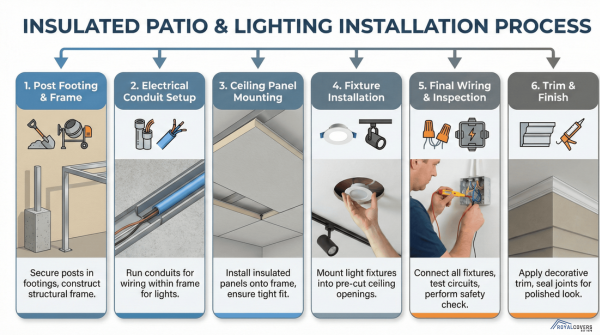
The typical installation steps progress from structural foundation work through electrical installation and final system testing. Post holes must be dug below the frost line with concrete footings for stability. Galvanized or stainless-steel screws and bolts must be used to prevent corrosion. Proper roof pitch is required for water runoff with integrated gutter systems.
Installation sequence:
- Foundation and framing: Set posts, install beams, and create roof framework
- Electrical rough-in: Run wiring through framework before installing ceiling panels
- Panel installation: Mount insulated ceiling panels with pre-cut openings for fixtures
- Lighting fixture installation: Install recessed lights, switches, and control systems
- Final electrical connections: Complete wiring, test circuits, and schedule electrical inspection
- Finishing work: Install trim, gutters, and final aesthetic elements
How Long Does It Take to Complete the Upgrade?
The upgrade to an insulated ceiling with built-in lighting typically takes 3-7 business days for most residential installations. Simple retrofits on existing structures require 2-4 days, while complete new installations with complex lighting systems can extend to 5-10 days. Weather conditions and permit approval timelines can add 1-3 additional days to the project schedule.
Timeline breakdown:
- Day 1-2: Foundation work and framing modifications
- Day 3-4: Electrical rough-in and panel installation
- Day 5-6: Lighting installation and electrical connections
- Day 7: Final inspection, testing, and cleanup
The sequential nature of electrical and structural work means delays in one phase affect the entire timeline. This comprehensive upgrade transforms basic patio covers into climate-controlled outdoor living spaces with professional lighting systems.
What Should You Know About Maintenance and Longevity for Insulated Ceilings and Lighting in Alumawood Covers?
Maintenance and longevity considerations for insulated ceilings and lighting in Alumawood covers involve minimal upkeep requirements, specific lighting maintenance protocols, and exceptional durability backed by comprehensive warranties. Understanding these factors ensures your upgrade delivers long-term value and performance.
How Do You Care for and Clean an Insulated Ceiling?
Insulated ceiling care involves minimal maintenance due to aluminum’s inherent durability properties. The aluminum construction resists warping, cracking, and fading while requiring only basic cleaning protocols.
Maintenance consists of:
- Occasional washing with clear water and soft-bristled brush to remove dust or debris
- No periodic sealing or painting required unlike wood structures
- Simple inspection for loose panels or damaged connections during seasonal cleaning
The Aluma-Shield paint system with Teflon surface protector maintains its appearance with minimal intervention, meeting AAMA 2604 standards for long-term color retention.
What Maintenance Is Required for Built-In Lighting Fixtures?
Built-in lighting fixtures require regular maintenance to ensure optimal performance and safety in outdoor environments. LED fixtures typically need cleaning every 3-6 months to maintain light output efficiency.
Essential maintenance tasks include:
- Cleaning fixture lenses with mild soap solution to remove dirt and insect debris
- Inspecting GFCI protection monthly by testing reset functionality
- Checking weatherproof seals annually for cracks or deterioration
- Replacing LED bulbs when light output drops below 70% of original brightness
Outdoor-rated fixtures designed for wet locations require less frequent maintenance than standard indoor lighting due to superior weather sealing and corrosion-resistant materials.
How Long Do These Upgrades Typically Last?
These upgrades typically last 20-30+ years with proper installation and minimal maintenance, significantly outlasting traditional wood alternatives that require replacement after 10-20 years.
Alumawood products are backed by a Limited Lifetime Material Warranty from manufacturer Amerimax covering:
- Manufacturing defects protection throughout ownership period
- Guarantee against splitting, chipping, peeling, flaking, or blistering of finish
- Transferable warranty to subsequent owners during first ten years
- Steel components excluded from rust protection warranty
LED lighting systems last 25,000-50,000 hours under normal outdoor conditions, equivalent to 15-25 years of typical evening use. This longevity combined with aluminum’s durability creates an upgrade investment that provides decades of reliable performance with minimal ongoing costs.
This maintenance approach ensures your insulated ceiling and lighting upgrade continues delivering comfort, energy efficiency, and aesthetic appeal while requiring significantly less upkeep than traditional patio cover materials.
Are There Design and Customization Options When Upgrading Alumawood Patio Covers?
Alumawood patio covers offer extensive design and customization options when upgrading to insulated ceilings with built-in lighting. These versatile systems accommodate various aesthetic preferences, functional requirements, and architectural styles to create personalized outdoor living spaces. The following sections explore color and texture choices, lighting customization possibilities, and aesthetic considerations.
What Colors and Textures Are Available for Insulated Ceilings?
Insulated ceilings for Alumawood patio covers come in multiple colors and wood-grain textures to complement any home design. Standard color options include:
- White and cream for traditional looks
- Tan and beige for neutral compatibility
- Bronze and copper for rustic appeal
- Natural wood tones like oak and redwood
The Aluma-Shield paint system incorporates Teflon surface protector and meets AAMA 2604 standards with color retention below 5.0 Delta E units after five years of extreme UV exposure. Wood-grain textures replicate authentic lumber appearances while maintaining aluminum’s durability advantages. Custom color matching accommodates specific architectural requirements or HOA guidelines.
Can You Customize Lighting Layouts and Controls?
Lighting layouts for insulated Alumawood ceilings support extensive customization through strategic fixture placement and advanced control systems. Ambient patio lighting requires 100-300 lumens per fixture, while larger areas may need 1200-1600 lumens for adequate illumination. LED technology produces 75-110 lumens per watt, offering seven times more efficiency than incandescent options.
Customization options include:
- Recessed downlights integrated seamlessly into panels
- Track lighting systems for flexible positioning
- Dimmable controls for mood adjustment
- Smart home integration with app-based operation
- Zone control for selective area lighting
All outdoor electrical components must be GFCI-protected and rated for wet locations per National Electrical Code requirements.
How Do Upgraded Ceilings and Lighting Affect the Overall Aesthetics?
Upgraded insulated ceilings with built-in lighting dramatically enhance patio aesthetics by creating seamless indoor-outdoor living spaces that industry experts identify as 2024’s biggest trend at 78% agreement. The combination transforms basic shade structures into sophisticated entertainment areas with architectural appeal.
Aesthetic improvements include:
- Clean, finished ceiling appearance versus exposed beams
- Even light distribution eliminating harsh shadows
- Enhanced evening usability extending outdoor living hours
- Professional appearance increasing property visual appeal
Southern California data shows 65% more shade structures built with aluminum than wood over the last 30 years, reflecting aluminum’s superior aesthetic longevity. The insulated panels create a polished appearance while concealing wiring and maintaining the wood-grain texture that complements traditional home designs without requiring ongoing maintenance.

These upgrades support the growing trend toward outdoor room concepts, positioning patios as natural extensions of interior living spaces rather than basic shade structures.
What Are the Costs and Return on Investment for Adding an Insulated Ceiling and Built-In Lighting?
The costs and return on investment for adding an insulated ceiling and built-in lighting to Alumawood patio covers vary significantly based on materials, complexity, and financing options. Understanding these financial considerations helps homeowners make informed decisions about upgrading their outdoor living spaces.
This section examines pricing structures, value enhancement potential, and available financing programs. Each component—from basic lattice designs to fully insulated systems with integrated lighting—offers different cost-benefit ratios and long-term returns.
How Much Does It Typically Cost to Upgrade Alumawood Patio Covers?
Alumawood patio cover upgrades range from $15 to $50 per square foot depending on materials and installation complexity. Basic lattice roofs cost $18-$22 per square foot installed, while solid non-insulated roofs range $20-$55 per square foot. Insulated roof systems with enhanced thermal properties cost $36-$50 per square foot installed.
DIY non-insulated Alumawood kits start at $15 per square foot for cost-conscious homeowners. However, professional installation ensures proper structural integrity, electrical safety, and warranty compliance. The price differential between DIY and professional installation typically reflects labor costs, permitting, and quality assurance.
Additional costs include electrical work for built-in lighting, which varies based on circuit complexity and fixture selection. GFCI-protected circuits and weather-resistant components add $200-$500 to basic installations.
Does Upgrading Increase Home Value or Appeal?
Upgrading Alumawood patio covers with insulated ceilings and built-in lighting generates substantial returns on investment and market appeal. Patios boost home value by 8-10%, while patio covers specifically generate ROI exceeding 80% according to industry analysis.
Market research reveals 98% of real estate experts agree that updated outdoor areas increase home appeal and value. Furthermore, 56% of experts reported homeowners demonstrate increased willingness to invest in outdoor spaces in 2025 compared to 2024, indicating growing market demand.
These upgrades particularly appeal to buyers seeking seamless indoor-outdoor living experiences. Enhanced comfort from insulation and extended usability through integrated lighting create year-round functional spaces that command premium pricing in competitive markets.
Are There Financing or Incentive Programs Available?
Several financing and incentive programs support Alumawood patio cover upgrades with insulated ceilings. The Energy Efficient Home Improvement Credit offers up to $3,200 per year for improvements made between 2023-2025, with specific credits for insulation materials reaching $1,200 annually.
Various financing options include 0% interest financing for 6-12 months through participating contractors and manufacturers. These programs reduce upfront costs and spread payments across manageable timeframes. Home equity loans and lines of credit provide additional financing alternatives for larger projects.
Energy efficiency improvements may qualify for utility rebates in certain markets. Homeowners should consult tax professionals to maximize available credits and deductions while ensuring compliance with federal and state requirements.
The financial benefits of upgrading extend beyond initial costs through reduced energy expenses and increased property values, creating comprehensive value propositions for outdoor living investments.
What Questions Should You Ask an Installer Before Upgrading Your Patio Cover?
Asking the right questions before upgrading your Alumawood patio cover protects your investment and ensures professional installation. Proper vetting prevents costly mistakes, warranty voids, and safety hazards during your insulated ceiling and lighting upgrade.
Royal Covers recommends focusing on three critical areas when interviewing potential installers. First, verify their credentials and experience with Alumawood systems. Second, understand warranty coverage for both materials and workmanship. Third, confirm their commitment to code compliance and proper permitting.
What Qualifications or Experience Should You Look For?
Look for installers with specific Alumawood certification and at least five years of patio cover experience. Qualified contractors should hold current state licensing, maintain liability insurance of $1 million or higher, and provide worker’s compensation coverage.
Ask about their portfolio of insulated ceiling installations with built-in lighting. Request references from recent projects within the past 12 months. Verify their electrical licensing if they handle lighting installation rather than subcontracting electrical work.
Check their Better Business Bureau rating and online reviews across multiple platforms. Royal Covers maintains an A+ BBB rating and over 2,000 five-star reviews, demonstrating consistent quality and customer satisfaction.
What Warranties or Guarantees Are Offered?
Warranties should cover both material defects and installation workmanship separately. Alumawood products include a Limited Lifetime Material Warranty from manufacturer Amerimax covering manufacturing defects, finish durability, and structural integrity.
Installation warranties typically range from one to five years for workmanship. Ask specifically about coverage for electrical components, fixture mounting, and water intrusion issues. Verify warranty transferability if you sell your home within the coverage period.
Request warranty documentation in writing before project commencement. Understand exclusions such as damage from extreme weather, improper use, or lack of routine maintenance. Confirm the process for warranty claims and response timeframes.
How Can You Ensure Safe and Code-Compliant Installation?
Ensure all electrical work complies with National Electrical Code (NEC) and local regulations through proper licensing and inspection scheduling. All outdoor electrical outlets must include Ground-Fault Circuit Interrupter (GFCI) protection to prevent electrical shock.
Verify the installer obtains all required building permits before starting work. Failure to obtain permits can result in fines, stop-work orders, and complications when selling the home. Building permits are required for patio covers attached to homes, with solid roofs, or exceeding 100-120 square feet.
Confirm adherence to International Residential Code (IRC) requirements including height limitations, load calculations, and structural attachment methods. Request documentation of proper concrete footing depths below frost line and use of galvanized or stainless-steel fasteners to prevent corrosion.
These questions help you identify qualified professionals who deliver safe, compliant installations backed by comprehensive warranties.
How Should You Approach Upgrading to an Insulated Ceiling with Built-In Lighting in Alumawood Patio Covers with a Professional Service?
Upgrading to an insulated ceiling with built-in lighting in Alumawood patio covers requires working with experienced professionals who understand both structural requirements and electrical integration. The approach involves selecting qualified installers, understanding available services, and following proper installation procedures to ensure safe, code-compliant results.
Professional installation ensures your upgrade meets building codes, maximizes energy efficiency benefits, and integrates seamlessly with your existing structure. The following sections outline how Royal Covers can assist with these upgrades and key takeaways from the upgrade process.
Can Royal Covers Help with Upgrading to Insulated Ceilings and Built-In Lighting for Alumawood Patio Covers?
Royal Covers can help with upgrading to insulated ceilings and built-in lighting for Alumawood patio covers through their specialized expertise and proven track record. The company has over 40 years of experience specializing in Alumawood patio covers and maintains over 2,000 five-star reviews with an A+ BBB rating.
Royal Covers operates within a growing market for outdoor living improvements. According to industry data from 2024, the U.S. outdoor living structures market size reached USD 892.9 million and is projected to grow at 5.3% CAGR from 2025 to 2030. The pergolas and patios segment dominated the market with 63.6% revenue share in 2024, indicating strong consumer demand for these upgrades.
The company’s extensive experience covers both insulated ceiling installation and electrical integration for built-in lighting systems. Their technical knowledge ensures proper installation of 3-inch insulated panels with R-13.95 thermal resistance and safe integration of GFCI-protected electrical systems for outdoor lighting fixtures.
What Are the Key Takeaways About Upgrading to an Insulated Ceiling with Built-In Lighting in Alumawood Patio Covers We Covered?
The key takeaways about upgrading to an insulated ceiling with built-in lighting in Alumawood patio covers include cost-effectiveness, energy efficiency, and proper installation requirements. Insulated ceilings provide significant comfort benefits with R-13.95 thermal resistance and can reduce surrounding air temperatures by up to 6°F.
Essential upgrade considerations include:
- Cost range: Insulated roofs cost $36-$50 per square foot installed compared to $20-$55 for non-insulated solid roofs
- Energy benefits: LED lighting produces 75-110 lumens per watt and integrates efficiently with insulated panels
- Code compliance: Building permits required for attached covers or structures exceeding 100-120 square feet
- ROI potential: Patio covers generate over 80% ROI and can boost home value by 8-10%
Professional installation ensures electrical work meets National Electrical Code standards with proper GFCI protection and weather-resistant components. The upgrade process requires careful coordination between structural modifications and electrical integration to achieve optimal performance and safety compliance.
Working with experienced professionals like Royal Covers provides access to manufacturer warranties, proper permitting assistance, and installation expertise that maximizes both immediate comfort benefits and long-term value retention.