
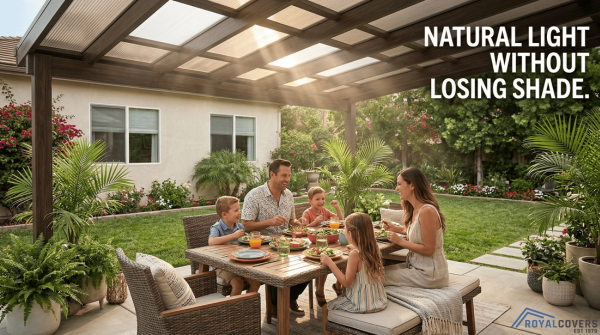
Adding skylights or polycarbonate inserts to an Alumawood patio cover is a structural modification that introduces natural light into a covered outdoor space while preserving the low-maintenance aluminum framework. These inserts replace solid roof panels with translucent or transparent materials, transforming a shaded patio into a brighter, more versatile living area.
This guide covers the benefits and types of skylight and polycarbonate options, installation methods and weatherproofing, long-term maintenance and structural impact, common challenges and solutions, and cost considerations for custom patio cover designs.
Skylights and polycarbonate panels each serve distinct purposes. Skylights offer ventilation options and higher clarity, while polycarbonate inserts provide superior impact resistance, lightweight handling, and UV coatings that block over 99% of harmful radiation. Selecting between them depends on the desired light transmission, thermal performance, and budget.
Proper installation requires precise flashing, quality sealants, and drainage planning around each insert. These steps prevent the most common issue homeowners face: water intrusion caused by deteriorated seals or improper fit within the Alumawood framework.
Ongoing care is straightforward but essential. Routine cleaning, seal inspections, and debris removal protect both the inserts and the structural integrity of the patio cover over time.
Heat gain and condensation present manageable challenges. Tinted panels, low Solar Heat Gain Coefficient ratings, and adequate ventilation keep covered patios comfortable without sacrificing natural light.
Cost varies by material, panel size, and installation complexity, but the long-term return includes energy savings, increased property value, and expanded usability of outdoor living space.
Why Consider Installing Skylights or Polycarbonate Inserts in an Alumawood Patio Cover?
Installing skylights or polycarbonate inserts in an Alumawood patio cover is worth considering because these additions bring natural light into shaded outdoor areas while maintaining weather protection. The subsections below cover the core benefits and how these features enhance outdoor living spaces.
What Are the Benefits of Adding Skylights or Inserts to Patio Covers?
The benefits of adding skylights or inserts to patio covers include increased natural light, improved ambiance, greater usability of covered outdoor areas, and potential gains in property value. Solid Alumawood roofs provide excellent shade and UV protection, but they can make the space beneath feel enclosed or dim. Skylights and polycarbonate inserts solve this by channeling daylight through the roof panel without sacrificing overhead coverage from rain or debris.
According to the California Building Code 2022, patio covers must meet specific structural standards, which means properly integrated skylights or inserts can be installed while remaining fully code-compliant. When leak prevention is a concern, proper flashing and sealed connections address the most common failure point, since improper installation and deteriorated flashing are the leading causes of skylight leaks. For homeowners who want both full shade control and natural brightness, these inserts offer a practical middle ground that a fully solid or fully open roof cannot match on its own.
How Do Skylights and Polycarbonate Inserts Enhance Outdoor Living Spaces?
Skylights and polycarbonate inserts enhance outdoor living spaces by transforming a fully shaded patio into a brighter, more inviting environment that feels connected to the outdoors. Natural daylight filtered through roof inserts reduces the need for artificial lighting during daytime hours, creating a more comfortable and energy-conscious space for dining, entertaining, or relaxing.
According to Palram (2025), polycarbonate roofing helps contractors sell and build better outdoor living solutions because the material combines high impact resistance with lightweight versatility. Recent advancements in polycarbonate technology have introduced improved UV-blocking coatings, enhanced thermal performance, and even sustainable manufacturing options using recycled or bio-based materials. Smart skylight systems now offer motorized shades and rain sensors that integrate with home automation platforms, giving homeowners precise control over light and ventilation. These innovations make it easier than ever to customize the outdoor experience while keeping maintenance demands low.
With the core advantages established, the next step is understanding which skylight and polycarbonate options best suit Alumawood patio covers.
What Types of Skylights and Polycarbonate Inserts Are Suitable for Alumawood Patio Covers?
The types of skylights and polycarbonate inserts suitable for Alumawood patio covers include UV-coated polycarbonate panels, fixed skylights, and ENERGY STAR certified units. The sections below cover the key features to evaluate and which options balance light transmission with long-term durability.
What Features Should Homeowners Look for in Patio Cover Skylights or Polycarbonate Panels?
The features homeowners should look for in patio cover skylights or polycarbonate panels include UV protection, light transmission levels, thermal performance ratings, weatherproof construction, and manufacturer warranty coverage. Polycarbonate panels with UV coatings, such as those from Plaskolite and Arla Plast, block over 99% of harmful UV radiation while maintaining high visible light transmission. Thermal performance matters equally; panels with a low Solar Heat Gain Coefficient (SHGC) or tinted coatings reduce excessive heat buildup, while insulated glazing minimizes condensation caused by interior-exterior temperature differences. Proper flashing and sealing are essential, as emphasized by the Laguna Woods Village Standard for Skylight Installations, which highlights water intrusion prevention as a primary installation concern. Warranty protection also deserves attention: VELUX, for example, provides a 10-year skylight warranty covering materials and workmanship. For any Alumawood structure, always confirm compatibility with the manufacturer’s accessory guidelines before selecting a panel or skylight.
Which Options Provide the Best Balance of Light Transmission and Durability?
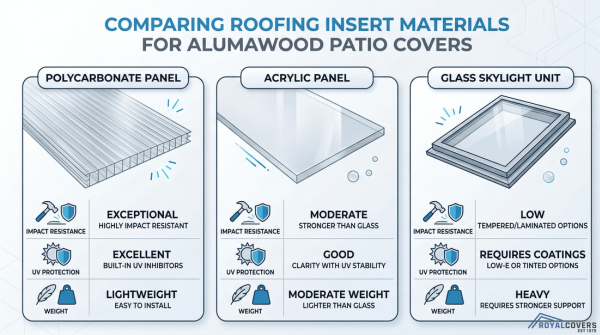
The options that provide the best balance of light transmission and durability are UV-coated polycarbonate panels and ENERGY STAR certified skylights. Polycarbonate delivers very high impact resistance at a lightweight profile, outperforming both acrylic and glass in shatter resistance while offering comparable light transmission.
| Material | Impact Resistance | UV Resistance | Weight | Cost |
| Polycarbonate | Very high | Excellent (with coating) | Lightweight | Moderate |
| Acrylic | Medium | Good | Lightweight | Low |
| Glass | Low | Excellent | Heavy | High |
According to the National Fenestration Rating Council (NFRC), standardized U-factor and SHGC ratings help homeowners compare energy performance across skylight products. ENERGY STAR certified skylights meet strict criteria for reduced heating and cooling costs. Smart skylights with motorized shades and rain sensors add another layer of performance, automatically adjusting ventilation based on weather conditions. For most Alumawood patio covers, polycarbonate panels offer the strongest combination of durability, UV protection, and affordability, making them the most practical choice for homeowners who want reliable natural light without frequent replacement concerns. With suitable materials selected, proper installation techniques ensure these additions perform as intended.
How Is the Installation of Skylights or Polycarbonate Inserts in Alumawood Patio Covers Performed?
The installation of skylights or polycarbonate inserts in Alumawood patio covers is performed through a structured process of measurement, cutting, framing, and sealing. The following subsections cover the key installation steps and the safety and weatherproofing measures required.
What Are the Key Steps and Materials Involved in the Installation Process?
The key steps and materials involved in the installation process include site assessment, panel selection, structural preparation, and precise fitting within the Alumawood framework. A typical installation follows this sequence:
- Measure the roof panel opening where the skylight or polycarbonate insert will sit.
- Select the appropriate insert material, matching thickness and tint to desired light transmission.
- Cut or modify the Alumawood panel to accommodate the insert dimensions.
- Install a support frame or adapter kit to secure the insert within the opening.
- Set the skylight or polycarbonate panel into the frame and fasten it according to manufacturer specifications.
- Apply sealant around all edges to create a watertight bond.
Materials commonly required include polycarbonate sheets, aluminum trim pieces, compatible sealants, flashing tape, and fasteners. According to a 2025 guide from Sunsquare Skylights, professional installation is strongly recommended to ensure proper flashing, sealing, and structural integrity. For most homeowners, hiring a qualified installer rather than attempting a DIY approach significantly reduces the risk of leaks and structural issues down the line.
What Safety and Weatherproofing Measures Are Necessary During Installation?
The safety and weatherproofing measures necessary during installation include proper personal protection, structural reinforcement, and comprehensive sealing techniques. Installers should wear slip-resistant footwear, use fall protection when working at height, and ensure the Alumawood structure can support the added weight of the insert.
Weatherproofing priorities include:
- Applying continuous flashing around the insert perimeter to direct water away from joints.
- Using UV-resistant, flexible sealant rated for outdoor exposure and temperature fluctuation.
- Verifying that drainage channels remain unobstructed so water flows off the cover properly.
- Inspecting all connection points for gaps before completing the installation.
These measures protect both the patio structure and the investment itself. Skylights and polycarbonate inserts can deliver a positive return on investment through energy savings, increased property value, and improved quality of life, but only when installed with rigorous weatherproofing from the start.
With the installation process covered, understanding ongoing maintenance helps these upgrades perform reliably over time.
What Maintenance and Longevity Considerations Come With Skylights or Inserts in Patio Covers?
The maintenance and longevity considerations that come with skylights or inserts in patio covers include routine cleaning, seal inspections, and protecting the structural integrity of the Alumawood frame. The sections below cover care techniques and long-term durability impacts.
How Do Homeowners Care for and Clean Skylights or Polycarbonate Panels?
Homeowners care for and clean skylights or polycarbonate panels through regular, gentle washing and periodic seal inspections. A soft cloth or sponge with mild, non-abrasive soap and water removes dust, pollen, and debris without scratching the glazing surface. Harsh chemicals, ammonia-based cleaners, and abrasive pads should always be avoided, as these can damage UV-protective coatings on polycarbonate sheets.
Key maintenance tasks include:
- Clearing leaves and debris from the panel surface and surrounding flashing after storms.
- Checking weep holes for blockages that could trap water.
- Inspecting rubber seals and gaskets for cracking or shrinkage at least twice per year.
- Verifying that flashing remains tight and corrosion-free around each insert.
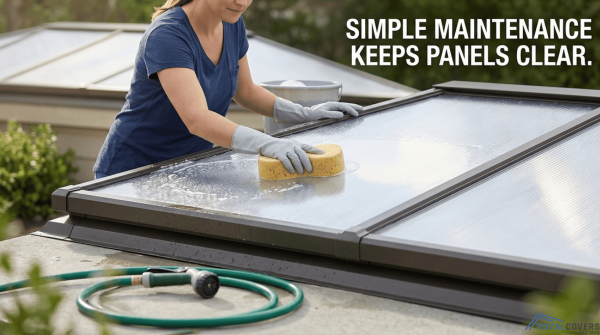
According to Wasco Skylights’ residential maintenance guide, consistent cleaning and inspection schedules are essential for preserving clarity and preventing moisture intrusion over time [7]. Catching minor seal deterioration early is far less costly than addressing the water damage it causes if left unattended.
How Do These Additions Affect the Lifespan or Integrity of Alumawood Patio Covers?
These additions affect the lifespan or integrity of Alumawood patio covers minimally when installed correctly, though improper integration can introduce vulnerabilities. Alumawood’s aluminum-based construction resists rust, rot, and insect damage, so the frame itself tolerates modifications well. The critical factor is how the opening is cut, sealed, and flashed during installation.
Leaks are the most common problem with skylights, often caused by improper installation, deteriorated flashing, or clogged weep holes. If a leak occurs, identifying the source and making repairs promptly prevents moisture from compromising adjacent panels or the patio cover’s powder-coated finish.
Following Alumawood’s manufacturer guidelines for accessories and modifications helps ensure that structural load ratings remain intact [2]. For most homeowners, professional installation paired with annual inspections keeps both the inserts and the Alumawood structure performing reliably for decades.
With proper maintenance established, understanding common challenges helps homeowners stay ahead of potential issues.
What Are the Common Challenges or Issues When Adding Skylights or Inserts to Alumawood Structures?
The common challenges when adding skylights or inserts to Alumawood structures include leaks, heat gain, condensation, and design compatibility limitations. The sections below cover practical solutions and key restrictions to consider.
How Can Homeowners Address Potential Leaks or Heat Gain With These Additions?
Homeowners can address potential leaks or heat gain by combining proper installation techniques with strategic material and placement choices. Leaks typically result from improper flashing, degraded seals, or debris buildup around the skylight perimeter; routine inspection of these areas catches problems early.
To manage heat gain and condensation, consider these approaches:
- Select polycarbonate panels or skylights with a low Solar Heat Gain Coefficient (SHGC), or choose tinted and coated materials that reduce thermal transfer.
- Orient and position skylights to maximize natural light while limiting direct solar exposure during peak hours.
- Ensure adequate ventilation beneath the cover to minimize condensation caused by interior-exterior temperature differences.
Sustainable polycarbonate options made from recycled materials and bio-based feedstocks are increasingly available, offering reduced environmental impact without sacrificing performance. For most Alumawood patio covers, the combination of proper sealing, thoughtful placement, and the right panel specification eliminates the majority of leak and heat issues before they start.
Are There Any Limitations or Compatibility Issues With Certain Patio Cover Designs?
There are limitations and compatibility issues with certain patio cover designs that homeowners should evaluate before installation. Not every Alumawood configuration can accommodate skylights or polycarbonate inserts without structural modification, particularly covers with non-standard panel spacing or integrated fan beams.
Building codes add another layer of restriction. According to the California Building Code (2022), patio covers must meet specific requirements including height limitations and structural standards. Homeowners should consult local building departments to confirm compliance and obtain necessary permits before starting any installation.
Span width, roof pitch, and load-bearing capacity all influence whether a given design can support an insert without compromising integrity. Royal Covers offers free on-site design consultations throughout the Phoenix metro area, where experienced professionals assess structural compatibility, code requirements, and placement options before any installation begins.With code compliance confirmed and structural factors assessed, the next consideration is how costs compare across different patio cover upgrade options.
How Does the Cost of Adding Skylights or Polycarbonate Inserts Compare to Other Patio Cover Upgrades?
The cost of adding skylights or polycarbonate inserts generally falls in the mid-range compared to other patio cover upgrades. Several factors drive the final price, and cost-effective options exist for homeowners on tighter budgets.
What Factors Influence the Overall Cost of Installation?
The factors that influence the overall cost of installation include material type, panel size, project complexity, and labor requirements. Skylights with glass glazing typically cost more than polycarbonate inserts due to heavier framing and more involved flashing work. Key cost variables include:
- Number and size of openings cut into the existing Alumawood structure.
- Panel material, since multiwall polycarbonate costs less than solid polycarbonate or tempered glass.
- Weatherproofing requirements, because condensation management and proper drainage add labor time.
- Permit fees and local code compliance inspections.
- Structural reinforcement if the existing patio cover needs modifications.
According to Gallina USA, condensation between polycarbonate layers can affect long-term panel performance, which means selecting the right panel profile upfront avoids costly replacements later. Royal Covers has been helping Phoenix homeowners customize Alumawood patio covers since 1979, including integration of polycarbonate inserts and skylights that are specifically engineered to withstand Arizona’s intense desert sun and heat.
Are There Cost-Effective Solutions for Maximizing Natural Light in Covered Patios?
Cost-effective solutions for maximizing natural light in covered patios include multiwall polycarbonate inserts, tubular skylights, and strategically placed single-panel openings. Rather than installing multiple large skylights, a few well-positioned polycarbonate panels can brighten a patio at a fraction of the cost.
Newer skylight technologies also help stretch budgets further. According to Origin Exteriors (2025), smart skylights with motorized shades and integrated sensors now offer improved energy management, reducing long-term cooling costs that offset the initial investment. Meanwhile, Covestro has developed polycarbonate made from renewable raw materials, expanding the range of sustainable yet affordable panel options.
Prioritizing panel placement based on sun orientation delivers the most light per dollar spent. With cost and innovation considerations in place, partnering with the right installer ensures these upgrades perform as intended.
How Should Homeowners Approach Skylight or Insert Projects With Royal Covers’ Custom Patio Cover Services?
Homeowners should approach skylight or insert projects with Royal Covers by starting with a custom design consultation that accounts for material selection, weatherproofing, and structural compatibility. The following sections cover design integration and key takeaways.
Can Royal Covers’ Custom Alumawood Patio Covers Be Designed for Skylight or Insert Integration?
Yes, Royal Covers’ custom Alumawood patio covers can be designed for skylight or insert integration. Royal Covers specializes in custom shade structures engineered for Arizona’s desert climate. The company offers free on-site design consultations to assess structural requirements and placement options.
Polycarbonate panels are a popular insert choice due to their high impact resistance, lightweight nature, and UV protection. Materials from manufacturers like Plaskolite and Arla Plast feature advanced UV-protective layers that prevent yellowing and degradation. These panels come in various thicknesses and tints, allowing precise customization of light transmission and heat gain.
Proper weatherproofing remains essential for any integration project. According to Wasco Skylights’ maintenance guidelines, this involves using high-quality sealants, appropriate flashing techniques, and ensuring proper drainage around each insert.Royal Covers handles permit and HOA approvals for installations, helping to streamline the process for homeowners. For projects requiring this level of precision, working with a contractor that has over 45 years of proven installation experience makes a meaningful difference in long-term performance.
What Are the Key Takeaways About Adding Skylights or Polycarbonate Inserts to Alumawood Patio Covers We Covered?
The key takeaways about adding skylights or polycarbonate inserts to Alumawood patio covers are:
- Polycarbonate inserts offer high impact resistance, UV protection, and customizable light transmission in various thicknesses and tints.
- Proper installation requires correct flashing, quality sealants, and adequate drainage to prevent leaks.
- Material selection should balance light transmission, thermal performance, and long-term durability for your specific climate.
- Building code compliance and permits are mandatory before any structural modification.
- Regular inspection of seals and flashing protects against water damage over time.
- Professional installation by an experienced contractor ensures structural integrity and warranty coverage.
Royal Covers brings over 45 years of custom patio cover expertise to projects, from initial design consultation through professional installation.