If you’re researching motorized louvered alumawood systems, you’re likely looking to transform your outdoor living space with a versatile, weather-resistant solution that offers both style and functionality. We understand the importance of making an informed decision about this significant home improvement investment, and you’ve come to the right place for comprehensive insights into how these innovative systems work and what they’ll cost.
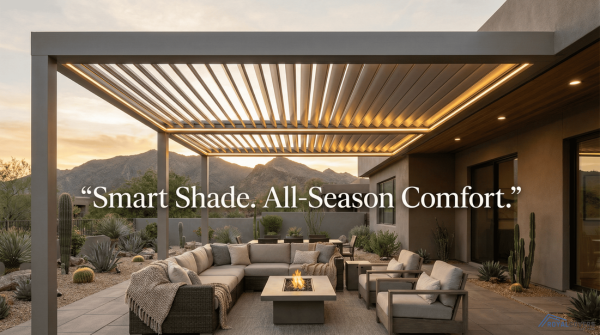
Motorized louvered alumawood systems are sophisticated outdoor covering solutions that combine the aesthetics of traditional wood with the durability of aluminum, featuring adjustable louvers controlled by quiet electric motors to provide customizable shade, ventilation, and weather protection.
TL;DR Summary: Motorized louvered alumawood systems use 6063-T6 aluminum alloy louvers that rotate via 12V or 24V DC motors, controlled by remotes, apps, or smart home integration. These systems cost $65-$150 per square foot installed, with materials ranging $40-$90 and labor adding $25-$60 per square foot. Key benefits include year-round outdoor living enhancement, energy efficiency through strategic shading, and extensive customization options with integrated lighting and accessories. When compared to fixed roofs, motorized systems offer superior versatility and weather adaptability. Before purchasing, homeowners must navigate local permits (required for structures over 200 sq ft in Phoenix) and HOA approvals (typically 30-60 days). Royal Covers specializes in Equinox systems designed for Arizona’s climate, offering professional installation and comprehensive services from design through construction.
Motorized louvered systems represent a significant advancement in outdoor living technology, offering homeowners unprecedented control over their patio environment. Unlike traditional fixed covers, these systems adapt to changing weather conditions and personal preferences throughout the day, making outdoor spaces usable year-round. The investment in quality materials and professional installation ensures decades of reliable performance with minimal maintenance requirements.
How Do Motorized Louvered Alumawood Systems Function?
Motorized louvered Alumawood systems function through precision-engineered aluminum components and automated motor controls that adjust louver positions for optimal shade, ventilation, and weather protection. These systems integrate architectural-grade materials with smart technology to create adaptable outdoor living spaces.
The following sections detail the materials, operation mechanisms, control technologies, and environmental performance factors that enable these systems to deliver reliable functionality across various weather conditions.
What Materials and Components Are Used in Motorized Louvered Alumawood Systems?
Motorized louvered Alumawood systems use 6063-T6 aluminum alloy as their primary structural material. This architectural aluminum provides excellent strength-to-weight ratio and corrosion resistance through key alloying elements including magnesium and silicon. The aluminum forms a protective oxide layer that ensures long-term durability in outdoor environments.
Components feature powder coating finishes in multiple colors for aesthetic customization and enhanced UV protection. Motorization systems utilize 12V or 24V DC motors engineered for quiet, reliable operation with varying torque specifications to handle wind and snow loads based on system size.
The combination of architectural aluminum and precision motors creates systems capable of withstanding extreme weather while maintaining smooth, consistent operation for years of reliable performance.
How Do the Louvers Operate and Adjust for Shade or Sunlight?
The louvers operate through interlocking mechanisms that form solid, waterproof covers when closed. This interlocking design creates watertight seals specifically engineered for rain protection and channels water into integrated gutter systems. Louver adjustment allows users to control sun exposure and ventilation levels throughout the day by rotating to various angles for partial shade or full sun exposure.
The louver mechanism handles high wind loads, with configurations withstanding winds up to 115 mph. Users can adjust positions from fully closed for complete weather protection to fully open for maximum airflow and sun exposure.
This operational flexibility transforms outdoor spaces from open-air environments to protected covered areas within seconds, adapting to changing weather conditions and user preferences.
What Controls and Technology Are Used for Motorization?
The controls integrate remote control, wall switches, smartphone apps, and smart home platforms for comprehensive operation management. Equinox systems offer compatibility with popular smart home platforms and proprietary apps that enable remote monitoring and adjustment. The Breeze Pro smart sensor enables automated responses to wind, rain, and sun conditions without manual intervention.
App-controlled features include:
- Louver position adjustment
- Integrated lighting brightness and color control
- Automated weather response settings
- Scheduling for optimal sun protection
Optional sensors include rain, wind, and sun sensors for fully automated operation that responds to environmental changes in real-time.
How Do Weather and Environmental Factors Affect Performance?
Weather and environmental factors significantly impact system performance and design specifications. Equinox systems are rated for wind loads up to 115 mph in certain configurations, while powder-coated finishes provide high resistance to fading and chalking from prolonged UV exposure. Integrated gutter systems effectively channel water away when louvers are closed, preventing water damage and maintaining structural integrity.
The 6063-T6 aluminum alloy maintains structural integrity in extreme temperature variations, from desert heat exceeding 115°F to occasional freezing conditions. Systems operate reliably across this temperature range without material degradation or operational failure.
Environmental factors such as dust, debris, and seasonal weather changes require minimal maintenance while the aluminum construction resists corrosion even in harsh climates. This weather resistance ensures consistent operation and extends system lifespan significantly compared to alternative materials.
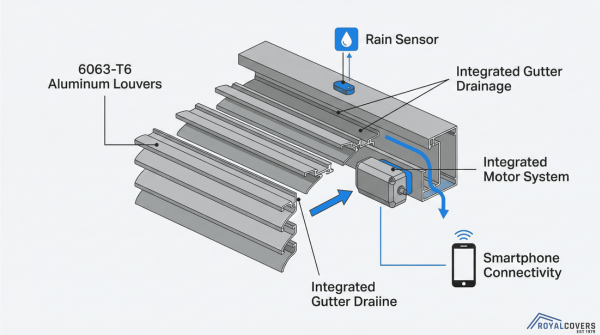
The integration of weather sensors allows systems to automatically respond to changing conditions, closing during storms and adjusting throughout the day to optimize comfort and protection for outdoor living spaces.
What Are the Main Benefits of Installing a Motorized Louvered Alumawood System?
Motorized louvered Alumawood systems provide year-round outdoor living flexibility, energy savings, and complete customization options that transform patios into multi-season entertainment spaces. These systems deliver measurable business value and homeowner satisfaction through weather adaptability and smart technology integration.
How Do These Systems Improve Outdoor Living Spaces?
These systems transform outdoor areas into year-round entertainment spaces through instant weather adaptability and climate control. Del Frisco’s Grille increased outdoor dining capacity with a 20×60 ft louvered roof installation, making it their most popular dining area. The Peninsula Club experienced a 35% year-over-year increase in restaurant sales and 300% rise in outdoor dining after installing an Equinox system.
The versatility enables transformation from open-air to covered space within seconds via remote control. Systems provide weather protection during rain, wind, or intense sun while allowing natural ventilation when desired. This adaptability extends the usable outdoor season from occasional summer evenings to year-round entertainment possibilities.
These improvements demonstrate how motorized louvered systems deliver both comfort and measurable value for residential and commercial outdoor spaces.
What Energy Efficiency or Comfort Advantages Do They Offer?
Louvered roofs reduce solar heat gain on windows and outdoor walls, leading to lower cooling costs throughout peak summer months. Strategic shading decreases indoor temperatures and reduces air conditioning usage during peak hours when energy rates are highest. The adjustable louvers allow natural ventilation when desired, reducing reliance on mechanical cooling systems.
Key efficiency benefits include:
- Reduced solar heat gain on adjacent building surfaces
- Natural ventilation control through louver positioning
- Lower peak-hour air conditioning demands
- Strategic shade deployment based on sun angles
Energy savings contribute to the overall return on investment of the system. The combination of reduced cooling costs and extended outdoor space usage creates both immediate comfort and long-term financial benefits.
Are Motorized Louvered Systems Customizable for Aesthetics and Function?
Motorized louvered systems offer extensive customization for both visual appeal and enhanced functionality. Powder coating is available in multiple colors to match existing architecture, while systems can be designed to complement both modern and traditional architectural styles.
Customization options include:
- Integrated LED lighting systems with adjustable brightness and color options
- Optional motorized screens, fans, and heaters for enhanced functionality
- Multiple powder coating colors for architectural coordination
- Smart home integration with app-controlled features
Integrated LED lighting systems offer adjustable brightness and color options for personalized ambiance during evening entertainment. Optional accessories include motorized screens for privacy, fans for air circulation, and heaters for cool-weather comfort. These customization options allow homeowners to create outdoor spaces that match their specific aesthetic preferences and functional requirements.
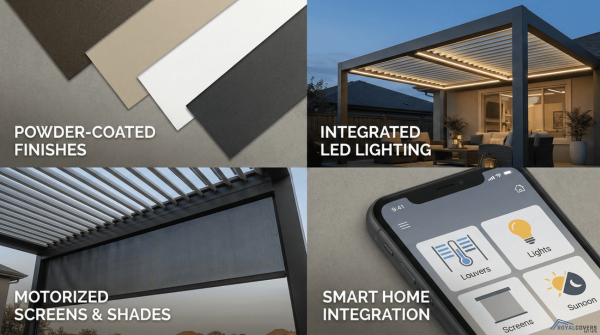
The extensive customization options ensure these systems integrate seamlessly with existing outdoor design while providing the specific functionality each homeowner values most.
What Is the Typical Cost Breakdown for Motorized Louvered Alumawood Systems?
Motorized louvered Alumawood systems typically cost between $65 to $150 per square foot for complete installation, with material and labor costs comprising the primary expense categories. The final investment depends on system specifications, installation complexity, and optional features that enhance functionality and convenience.
What Factors Influence the Total Price of Installation?
The total price of installation depends on material quality, labor complexity, and system specifications. Material costs range from $40 to $90 per square foot depending on brand selection, with premium systems using 6063-T6 aluminum alloy commanding higher prices. Labor costs add $25 to $60 per square foot based on installation complexity, structural requirements, and site accessibility.
System size significantly impacts total cost through economies of scale, where larger installations reduce the per-square-foot expense. Geographic location affects both material transportation and local labor rates, with Phoenix-area installations reflecting regional pricing standards for skilled aluminum fabrication work.
| Cost Factor | Average Installation Cost Range | Key Pricing Variables |
| Materials | $40–$90/sq ft | Brand, specifications, aluminum grade |
| Labor | $25–$60/sq ft | Complexity, crew experience, site access |
| Total System | $65–$150/sq ft | Size, location, customization level |
These pricing factors combine to determine the total investment, with most residential installations falling within the middle range of this spectrum.
How Do Labor, Materials, and Optional Features Affect the Cost?
Labor requirements significantly impact total cost, with professional installation typically requiring 3 to 5 days for standard-sized systems using experienced crews. Complex installations involving structural modifications, electrical integration, or challenging site conditions extend both timeline and labor expenses.
Optional features substantially increase the base system investment. Integrated lighting systems, ceiling fans, infrared heaters, and motorized screens each add functional value while increasing total cost. Smart home integration features, including automated sensors for wind, rain, and sun detection, enhance convenience but require additional investment in control systems and professional programming.
Administrative costs include permit fees and HOA approval processes, which may add several hundred to several thousand dollars depending on local requirements. These regulatory expenses are essential for legal compliance and should be factored into budget planning from project inception.
What Maintenance Costs Should Homeowners Expect Over Time?
Maintenance costs remain minimal due to the durable 6063-T6 aluminum construction and powder-coated finishes. Primary maintenance consists of regular cleaning of louvers and integrated gutters to remove debris, requiring basic tools and minimal time investment. This routine cleaning prevents operational issues and maintains aesthetic appearance.
Periodic inspection of motor assemblies and electronic components ensures optimal performance and identifies potential issues before they require costly repairs. Common maintenance tasks include routine cleaning and lubrication of louver mechanisms, with occasional component replacement for heavily used systems.
Water leakage issues, though uncommon with proper installation, may require seal replacement and drainage channel clearing. These repairs typically involve professional service calls but remain infrequent due to the engineered interlocking design that creates watertight seals when louvers are closed.
The 20-year limited warranty on structural components minimizes long-term maintenance expenses, while electronic components carry shorter warranty periods that reflect their operational nature. Overall maintenance costs represent a small fraction of the initial investment throughout the system’s operational lifetime.
How Do Motorized Louvered Alumawood Systems Compare to Alternative Patio Cover Options?
Motorized louvered Alumawood systems offer superior functionality compared to traditional patio covers through their adjustable design and smart technology integration. The comparison reveals significant differences in versatility, cost, and long-term value across various outdoor shade solutions. Understanding these distinctions helps homeowners select the optimal patio covering for their specific needs and budget.
How Do These Systems Stack Up Against Fixed Roofs or Pergolas?
Motorized systems provide weather-adaptive versatility that fixed roofs cannot match. Traditional Alumawood solid or lattice covers cost 30-50% less initially but lack the adjustability to respond to changing sun angles throughout seasons. Fixed pergolas deliver consistent shade patterns but cannot adapt when Arizona’s monsoon season arrives or when winter sun sits lower in the sky.
The adjustable louver design allows precise control over sunlight and ventilation levels throughout the day. Fixed structures remain static regardless of weather conditions, temperature changes, or user preferences. This adaptability extends the usable time of outdoor spaces from partial-day use to year-round functionality.
Comparison of Cover Types:
| Patio Cover Type | Average Cost Range (Per Sq Ft) | Weather Adaptability Level | Smart Home Integration | Manufacturer Warranty Period |
| Motorized Louvered | $65-$150 | Full adjustment | Yes | 20 years structural |
| Fixed Alumawood Solid | $25-$45 | None | No | 15 years |
| Traditional Pergola | $15-$35 | None | No | 10 years |
| Manual Louvered | $40-$80 | Manual only | No | 15 years |
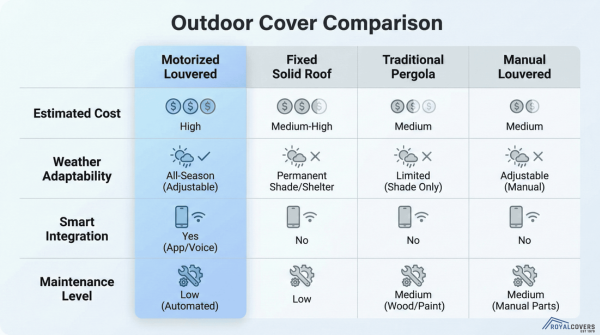
Fixed structures provide immediate cost savings but limit future flexibility as outdoor living needs evolve.
What Are the Key Differences Between Manual and Motorized Louvers?
Manual systems require physical effort to adjust louver positions and cannot integrate with smart home technology. Motorized versions use quiet 12V or 24V DC motors that enable effortless operation via remote control, smartphone apps, or automated sensors. The convenience factor becomes significant when quick weather adjustments are needed.
Motorized louvers enable automated responses through integrated rain, wind, and sun sensors. When sudden weather changes occur, the system can automatically close louvers without user intervention. Manual systems require someone to be present to make adjustments, potentially leaving outdoor furniture or electronics exposed during unexpected storms.
Remote control and app operation provide scheduling capabilities unavailable in manual systems. Users can program opening and closing times, create seasonal adjustments, and monitor system status from anywhere. This automation transforms the patio cover from a static structure into a responsive outdoor climate control system.
The motor systems are engineered for durability with torque specifications designed to handle wind loads up to 115 mph in certain configurations. Manual mechanisms rely on user strength and may become difficult to operate in windy conditions when adjustment is most needed.
How Durable and Long-Lasting Are Motorized Alumawood Systems?
The 6063-T6 aluminum alloy construction ensures decades of reliable performance even in Arizona’s extreme climate conditions. Equinox systems carry a 20-year limited warranty on structural components including louvers, beams, gutters, and posts. This architectural-grade aluminum forms a protective oxide layer that provides excellent corrosion resistance during monsoon seasons and year-round UV exposure.
Electronic components typically carry shorter warranty periods than structural elements, ranging from 2-5 years depending on the manufacturer. However, customer satisfaction remains high with Houzz reviews averaging 5 out of 5 stars for product longevity. The DC motor systems are designed for quiet operation and extended service life with minimal maintenance requirements.
The powder-coated finish provides superior resistance to fading and chalking compared to painted alternatives. This finish maintains its appearance and protective qualities for decades, reducing long-term maintenance costs. Regular cleaning and periodic inspection of moving parts represent the primary maintenance requirements.
Professional installation by certified contractors like Royal Covers ensures proper motor calibration and control system setup, maximizing system lifespan and performance reliability.
What Should Homeowners Know Before Purchasing a Motorized Louvered Alumawood System?
Homeowners should understand local regulations, contractor selection criteria, and project timelines before purchasing a motorized louvered Alumawood system. These three factors significantly impact project success, cost, and completion schedules in Phoenix’s regulated construction environment.
Are There Local Regulations or HOA Guidelines Affecting Installation?
Local regulations and HOA guidelines directly affect motorized louvered system installations through specific permit requirements and approval processes. Phoenix requires permits for patio covers exceeding 200 square feet or any attached structure, with a maximum height limit of 12 feet under Phoenix building codes. Setback requirements include 3 feet side and rear clearance in most zones, and the city adheres to 2024 International Building Code (IBC) with local amendments.
HOA approval processes typically take 30 to 60 days and require submission of plans, drawings, and material samples. These regulatory requirements protect property values and ensure structural safety but add time and administrative costs to projects.
Regulation Compliance Checklist:
- Verify permit requirements for structures over 200 square feet
- Confirm 12-foot height limit compliance
- Measure setback distances (3 feet minimum)
- Prepare HOA submission materials early
- Budget for permit fees and inspection costs
How Should Homeowners Select a Skilled Installer or Contractor?
Homeowners should select skilled installers based on experience with motorized systems, local code knowledge, and comprehensive service capabilities. Professional installation is emphasized by companies like Royal Covers, which handle design, permitting, and construction through a single point of contact.
Experienced installers ensure proper motor calibration and control system setup, which prevents operational issues and warranty voiding. Certified installers familiar with local building codes can expedite the permit process and avoid costly compliance delays. Customer testimonials praise professionals who demonstrate attention to detail and perfectionism in their work.
Installer Selection Criteria:
- Verify licensing and insurance coverage
- Request references from recent motorized system projects
- Confirm local permit and code expertise
- Evaluate comprehensive service offerings (design through completion)
- Review customer testimonials and warranty support
What Timeline Should Be Expected for Project Completion?
Project timelines for motorized louvered systems range from 35 to 70 days total, including approval and installation phases. Standard-sized louvered roof installation typically takes 3 to 5 days with a professional crew, but HOA approval adds 30 to 60 days to the project timeline before installation can begin.
Permit processing time varies by municipality but should be factored into planning, and custom designs and additional features may extend the installation timeline. A 2024 study by the Phoenix Building Department shows average permit processing takes 7-14 business days for complete applications.
Timeline Planning Framework:
- Week 1-2: Design consultation and contract signing
- Week 3-10: HOA approval process (if applicable)
- Week 11-12: Permit submission and approval
- Week 13-14: Material ordering and delivery scheduling
- Week 15-16: Installation completion (3-5 days)
Understanding these three key factors—regulations, contractor selection, and timelines—enables homeowners to make informed decisions and set realistic expectations for their motorized louvered Alumawood system investment. Royal Covers helps navigate these considerations through comprehensive project management from initial consultation through final installation.
How Can Royal Covers Help You with Motorized Louvered Alumawood Systems?
Royal Covers provides comprehensive motorized louvered alumawood solutions to transform your outdoor living space into a year-round retreat. The company specializes in premium systems designed specifically for Arizona’s demanding climate while offering full-service support from initial design to final installation.
What Motorized Louvered Alumawood Solutions Does Royal Covers Offer?
Royal Covers’ motorized louvered alumawood solutions include the premium Equinox Louvered Roof system and traditional Alumawood alternatives. The company features the Equinox system as their flagship motorized patio cover, delivering advanced automation and weather-responsive technology. For budget-conscious homeowners, Royal Covers offers traditional Alumawood patio covers in solid and lattice configurations that provide excellent value without motorization.
Royal Covers delivers comprehensive project management from design consultation through permitting and construction. Their Phoenix-specific approach emphasizes durability, UV resistance, and low maintenance requirements essential for Arizona’s extreme climate conditions. Installation pricing aligns with industry standards of $65 to $150 per square foot, varying by system complexity and features.
What Are the Key Takeaways About Motorized Louvered Alumawood Systems and Their Cost Breakdown?
The key takeaways about motorized louvered alumawood systems reveal strong investment returns and long-term value. Well-designed and professionally installed systems deliver ROI of 50-80%, with some markets exceeding 100% return on investment. Complete installation investment ranges from $65 to $150 per square foot, reflecting material quality and installation complexity.
Systems constructed with 6063-T6 aluminum alloy provide decades of reliable performance with minimal maintenance requirements. Smart home integration and automated weather sensors enable convenient operation for maximum outdoor comfort. Professional installation and local code compliance ensure optimal long-term performance and safety standards.
These systems represent a strategic investment in outdoor living that enhances property value while expanding usable space year-round. Royal Covers ensures each installation meets Phoenix’s specific requirements for durability and performance in desert conditions.