
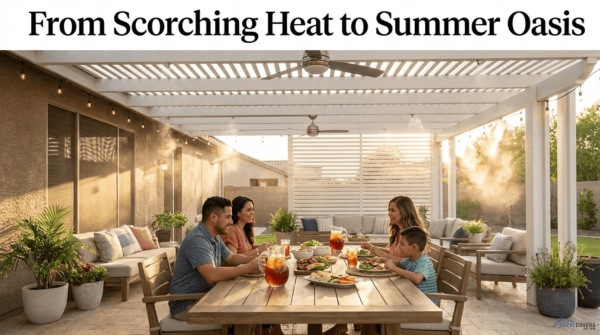
If you’re reading this, you’re likely facing the harsh reality of Arizona summer energy bills that seem to climb higher each year. We understand the frustration of watching your electricity costs soar while trying to maintain a comfortable home temperature during those relentless 110°F+ days. You’re in the right place to discover a proven solution that thousands of Arizona homeowners have already implemented to slash their cooling costs by up to 25%.
Alumawood patio covers are engineered shade structures made from recycled aluminum with advanced insulation and heat-reflective coatings, specifically designed to block radiant heat and reduce the temperature of adjacent indoor spaces by creating a thermal barrier between the intense Arizona sun and your home. In 2020, Arizona State University found that insulated patio covers reduced cooling costs by 15-22% during peak summer months, while a 2019 energy efficiency study documented savings of up to 25% when properly installed.
TL;DR Summary:
• Arizona’s extreme summer temperatures (106°F average, with 54 days exceeding 110°F in 2023) drive air conditioning to consume over 60% of household electricity, resulting in $200-$400 monthly bills during peak season.
• Alumawood differs from traditional materials through its recycled aluminum construction, achieving R-values of 12-14 with insulation, lasting 20-30+ years compared to wood’s 10-20 years, and requiring only occasional washing versus frequent staining.
• These covers reduce direct sunlight and heat absorption by blocking up to 65% of solar heat gain on south-facing windows, lowering temperatures underneath by up to 30°F, and creating a thermal barrier that reduces air conditioning usage by 15-25%.
• Energy savings translate to significant financial benefits, with homeowners saving 15-25% on cooling costs, achieving 50-80% ROI on their investment, and enjoying maintenance-free operation that eliminates recurring upkeep expenses.
• Beyond energy savings, Alumawood covers provide comfortable outdoor living spaces even during extreme heat, boost property values through increased usable square footage, and support environmental sustainability through 95% reduced emissions compared to virgin aluminum.
• Professional installation by Royal Covers ensures compliance with Phoenix’s 115 mph wind load requirements, proper permitting for structures over 200 square feet, and maximizes energy efficiency through expert design and placement.
Quick Tip: For immediate energy savings while planning your patio cover installation, use your AC fan on “auto” instead of “on” to save $15-$25 monthly, and raise your thermostat by just one degree to reduce cooling costs by 2-3%.
As we explore the specific ways Alumawood patio covers combat Arizona’s unique climate challenges, you’ll discover why this investment makes both financial and lifestyle sense for desert homeowners seeking relief from extreme heat and high energy costs.
What Challenges Do Arizona Summers Pose for Homeowners’ Energy Bills?
Arizona summers create a perfect storm of extreme heat that drives cooling costs through the roof. Phoenix experiences summer average highs of 106°F in July and August, with temperatures occasionally exceeding 115°F, forcing homeowners into energy consumption patterns that strain both budgets and electrical grids. These temperature extremes, combined with intense UV radiation and urban heat amplification, make effective home cooling both essential and expensive.
The following sections examine how intense sun exposure drives cooling costs, why outdoor spaces become unusable during peak heat, and why traditional shading methods fail under Arizona’s extreme conditions.
How Does Intense Sun Exposure Impact Home Cooling Costs in Arizona?
Intense sun exposure drives cooling costs to extreme levels in Arizona homes. Air conditioning accounts for over 60% of household summer electricity consumption, with average monthly electricity bills in Phoenix ranging from $200 to $400 during summer months. In 2023, Phoenix set a record with 54 days of temperatures exceeding 110°F, including 31 consecutive days that pushed cooling systems to their limits.
Energy demand peaks correlate directly with temperature spikes. On a 118-degree day, APS customers set a peak energy demand record of 8,527 megawatts, demonstrating how extreme heat translates to massive electrical consumption. For every degree the thermostat is set above 80°F, homeowners save approximately 2-3% on cooling costs, making even small temperature adjustments financially significant.
These cooling cost challenges stem from the relentless solar radiation that penetrates homes and outdoor spaces throughout Arizona’s extended summer season.
What Factors in Arizona’s Climate Make Outdoor Spaces Difficult to Use Comfortably?
Arizona’s climate factors make outdoor spaces virtually unusable during summer months. Phoenix has one of the most significant urban heat island effects globally, with temperature differences of 10-14°F between urban and rural areas, amplifying already extreme temperatures. When air temperature reaches 105°F, asphalt surfaces can reach 155°F and concrete in direct sunlight can hit 140°F.
UV radiation intensity compounds the heat problem significantly. Arizona averages a UV index of 11+ during June, causing skin burns in less than 10 minutes of exposure. Phoenix experienced 151 days with “very high” or “extreme” UV radiation levels in 2024, making unprotected outdoor time dangerous.
The built environment amplifies temperatures by an average of 7.4°F in the Phoenix metropolitan area, creating localized heat zones that exceed natural desert temperatures. Maricopa County will face 100 days of extreme heat (100°F or higher) annually within the next three decades, making effective outdoor shading increasingly critical.
These extreme conditions reveal why standard shading solutions often prove inadequate for Arizona’s unique climate challenges.
Why Are Traditional Shading Methods Often Ineffective During Arizona Summers?
Traditional shading methods often fail during Arizona summers due to material degradation and insufficient heat protection. Traditional wood patio covers require frequent staining and sealing, lasting only 10-20 years under normal conditions but may need replacement every 3-7 years if left untreated in Arizona’s extreme UV environment.
The intensity of Arizona’s climate accelerates material breakdown rapidly. Phoenix endured 113 consecutive days of temperatures at or above 100°F in one recent year, while UV index levels in high-UV zones like Phoenix can reach 12.5+, both exceeding the design parameters of most conventional shading materials.
Wood structures experience warping, cracking, and color fading that compromises their structural integrity and shading effectiveness. The constant expansion and contraction from extreme temperature swings, combined with intense UV degradation, makes traditional materials unsuitable for long-term Arizona outdoor applications.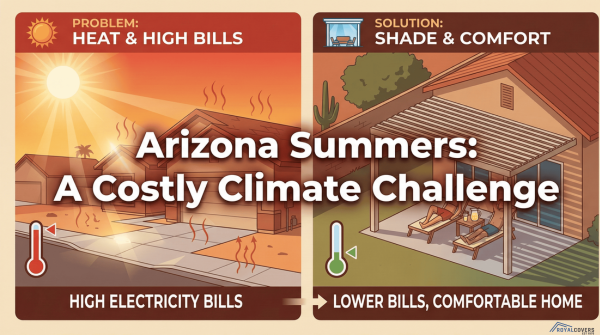
This material failure pattern demonstrates the need for specialized shading solutions engineered specifically for Arizona’s extreme summer conditions.
What Is an Alumawood Patio Cover and How Does It Work?
An Alumawood patio cover is an aluminum-based shade structure engineered with wood-grain textures and advanced insulation systems to provide superior heat protection for Arizona homes. These covers combine recycled aluminum construction with specialized paint systems and thermal barriers to create effective outdoor cooling solutions that significantly reduce indoor temperatures and energy consumption.
Alumawood covers work by creating a thermal barrier between your home and Arizona’s intense sun, using reflective paint technology and insulation to block radiant heat transfer. The system’s engineered design allows for maximum shade coverage while maintaining structural integrity against monsoon winds up to 115 mph. This comprehensive approach makes Alumawood an optimal solution for Arizona’s extreme climate challenges, setting up effective strategies for material comparison, temperature regulation features, and customization options that address unique desert conditions.
How Is Alumawood Different From Other Patio Cover Materials?
Alumawood differs from traditional materials through its recycled aluminum core that requires 95% less energy to produce than virgin aluminum. The aluminum construction provides inherent resistance to rust, corrosion, termites, and rot that commonly affect wood structures in Arizona’s harsh climate.
Durability comparisons show Alumawood covers lasting 20-30+ years compared to 10-20 years for traditional wood covers. Over a 60-year period, homeowners might replace wood covers 6-10 times versus only two Alumawood installations. The material maintains 100% recyclability at end-of-life, creating sustainable long-term value for Arizona homeowners seeking reliable shade solutions.
What Features of Alumawood Contribute to Temperature Regulation?
The features of Alumawood that contribute to temperature regulation include insulated construction achieving R-values of 12-14 for effective radiant heat blocking. The Aluma-Shield™ paint system incorporates Teflon® surface protectors for exceptional heat reflection, reducing temperatures under patio covers by up to 15 degrees.
Insulation options provide varying thermal performance levels:
- Rigid foam board insulation: R-3.6 to R-5.0 per inch
- Spray foam insulation (closed-cell): R-6.0 to R-7.5 per inch
- Reflective foil systems: R-3 to R-17 depending on configuration
These thermal features work together to create substantial cooling effects that directly impact indoor comfort and air conditioning efficiency during Arizona’s extreme summer months.
Does Alumawood Allow for Customization to Meet Unique Arizona Needs?
Alumawood allows extensive customization to meet Arizona’s unique environmental and regulatory requirements. Structures must be engineered to withstand wind speeds up to 115 mph for monsoon protection, with maximum heights typically limited to 12 feet per Phoenix building codes.
Installation parameters require 3-foot clearance from side and rear property lines in most residential zones. These customization capabilities ensure Alumawood covers integrate properly with existing home architecture while meeting local safety standards. The engineering flexibility allows homeowners to optimize shade placement for maximum energy efficiency while maintaining compliance with Arizona’s desert climate building requirements.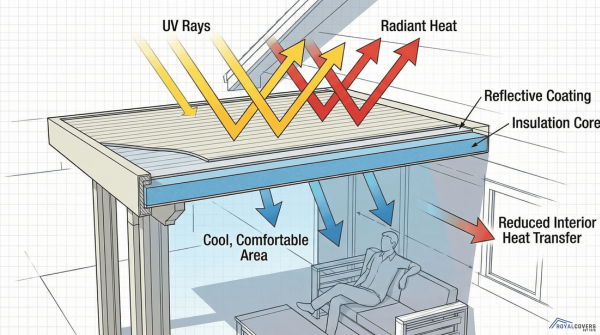
Royal Covers specializes in designing custom Alumawood solutions that address Arizona’s specific challenges, preparing homeowners to understand how these covers effectively reduce direct sunlight and heat absorption for maximum energy savings.
How Do Alumawood Patio Covers Reduce Direct Sunlight and Heat Absorption?
Alumawood patio covers reduce direct sunlight and heat absorption through multiple mechanisms that create significant thermal barriers and temperature reductions. The material’s reflective properties, combined with strategic placement and insulation options, creates measurable cooling effects that directly translate to energy savings.
How Does Blocking UV Rays Affect Indoor Temperatures?
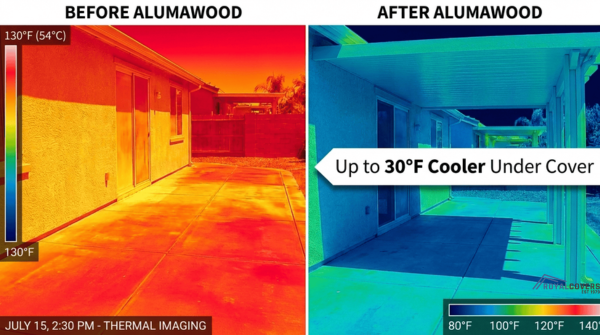
Blocking UV rays through Alumawood patio covers dramatically reduces indoor temperatures by preventing solar heat gain. Shading south-facing windows can reduce solar heat gain by up to 65%, while insulated patio covers can lower temperatures underneath by as much as 30°F compared to unshaded areas.
Air temperature directly under shade structures can be up to 25°F cooler than above nearby blacktop surfaces. The Aluma-Shield™ paint system meets AAMA 2604 standards, withstanding over 3,000 hours of salt spray testing while maintaining superior heat reflection properties. These temperature reductions occur because the covers intercept solar radiation before it can penetrate indoor spaces, preventing the greenhouse effect that drives up cooling costs.
This UV blocking creates a thermal barrier that reduces the workload on air conditioning systems during peak Arizona summer months.
What Role Does Patio Placement and Cover Design Play in Shading Effectiveness?
Patio placement and cover design play crucial roles in maximizing shading effectiveness and thermal performance. Attached patio covers require permits regardless of size due to connection to primary structure, ensuring proper engineering for optimal shade placement. Freestanding covers exceeding 200 square feet require permits in Phoenix, with most homeowners opting for covers in the 300-400 square foot range.
Proper installation creates a thermal barrier between outdoor heat and indoor spaces by:
- Positioning covers to shade windows during peak sun hours
- Extending coverage to protect sliding doors and patios
- Creating air circulation channels that promote cooling
- Establishing buffer zones that reduce radiant heat transfer
Strategic placement considers sun angles throughout the day, with south and west-facing installations providing maximum heat reduction during afternoon peak temperatures.
Can Using Alumawood Covers Lower Air Conditioning Usage?
Using Alumawood covers significantly lowers air conditioning usage through documented energy savings. Properly installed aluminum patio covers can lower air conditioning costs by up to 25% in hot climates like Arizona. An Arizona State University study found an insulated patio covers reduced cooling costs by 15-22% during peak summer months when energy demands are highest.
The U.S. Department of Energy states awnings can reduce cooling energy use by as much as 25%, while SRP suggests shade screens can cut cooling costs by up to 25%. These savings occur because:
- Reduced solar heat gain lowers indoor temperatures
- Less frequent AC cycling extends equipment life
- Lower thermostat settings become comfortable
- Peak demand charges decrease during hottest periods
Additional energy savings come from simple adjustments like using an AC fan on “auto” instead of “on,” which saves $15 to $25 per month when combined with effective shading solutions.
What Are the Energy Savings and Cost Benefits of Installing Alumawood Patio Covers?
Alumawood patio covers deliver significant energy savings and cost benefits for Arizona homeowners facing extreme summer heat. These engineered aluminum structures provide both immediate cooling cost reductions and long-term financial advantages through reduced energy consumption and minimal maintenance requirements.
How Much Can Homeowners Expect to Save on Energy Bills?
Homeowners can expect substantial energy savings from properly installed Alumawood patio covers. A 2019 energy efficiency study found aluminum patio covers can lower AC costs by up to 25% during Arizona’s peak summer months. Arizona State University documented cooling cost reductions ranging from 15-22% when insulated patio covers create thermal barriers between outdoor heat and indoor spaces.
With Arizona’s average monthly electricity bill at $167.21 and energy rates of 15.76¢/kWh, these percentage savings translate to meaningful dollar amounts. Shade from Alumawood covers reduces surrounding air temperatures by as much as 6°F, decreasing the workload on air conditioning systems throughout the day.
The following table shows projected annual savings based on different home cooling costs:
| Monthly Summer AC Cost | 15% Savings | 20% Savings | 25% Savings |
| $200 | $180/year | $240/year | $300/year |
| $300 | $270/year | $360/year | $450/year |
| $400 | $360/year | $480/year | $600/year |
Are There Long-Term Cost Advantages Compared to Other Shade Structures?
There are substantial long-term cost advantages when comparing Alumawood to traditional shade structures. Alumawood costs $20-35 per square foot compared to wood at $25-40 per square foot, while insulated aluminum ranges from $35-45 per square foot for enhanced thermal performance.
A standard 12×20 foot cover (240 square feet) costs between $4,800 and $10,800 installed. Homeowners can expect ROI of 50% to 80% on patio cover investments, with custom installations averaging approximately 80% ROI through energy savings and property value increases.
The durability advantage becomes clear over time—Alumawood lasts 20-30+ years compared to wood’s 10-20 year lifespan, eliminating replacement costs that accumulate with traditional materials during Arizona’s harsh climate conditions.
Do Alumawood Covers Require Less Maintenance, Contributing to Savings?
Alumawood covers require significantly less maintenance than traditional alternatives, contributing substantial ongoing savings. The material requires only occasional washing versus frequent staining and sealing required for wood structures in Arizona’s intense UV environment.
Performance testing demonstrates exceptional durability:
- Color stability shows less than 5.0 Delta E change after 5 years of extreme UV exposure
- Maintains over 30% original gloss after 5 years
- Achieves chalking resistance rating of 8 or higher on industry scales
Environmental benefits also provide cost advantages—the carbon footprint of recycled aluminum is 0.6 tonnes CO2 equivalent versus 14.8 tonnes for virgin aluminum, supporting sustainable building practices while reducing long-term material costs.
This section demonstrates how Alumawood patio covers create both immediate energy savings and long-term financial benefits, preparing homeowners for the additional comfort and lifestyle advantages these structures provide.
What Additional Comfort and Lifestyle Benefits Do Alumawood Patio Covers Offer?
Alumawood patio covers provide comfort and lifestyle benefits that extend far beyond energy savings, creating usable outdoor spaces and enhancing property value in Arizona’s challenging climate. These covers transform unusable hot patios into comfortable outdoor living areas while supporting environmental sustainability goals.
How Do Covered Outdoor Spaces Improve Living in the Arizona Heat?
Covered outdoor spaces dramatically improve Arizona living by creating temperature-controlled zones for year-round enjoyment. Shaded concrete remains at 93°F when unshaded concrete reaches 140°F in direct sunlight, making outdoor areas accessible even during extreme heat periods.
Alumawood covers create usable outdoor living space during Arizona’s intense summer months when exposed patios become uninhabitable. The temperature reduction transforms patios into functional extensions of indoor living areas. Royal Covers customers report immediate comfort improvements, with one customer stating: “Transformed our patio in just 2 days. Can’t wait to see how much cooler our outdoor area will be.”
The enhanced comfort enables outdoor dining, entertaining, and relaxation throughout Arizona’s extended summer season. Families can utilize outdoor furniture and grilling areas without exposure to dangerous UV levels or surface temperatures exceeding 140°F.
Can Alumawood Patio Covers Boost Property Value or Outdoor Enjoyment?
Alumawood patio covers boost property value by increasing usable living space, a feature highly desirable for Arizona homebuyers seeking outdoor comfort solutions. Well-designed patio covers can lead to faster home sales and higher selling prices by addressing the primary concern of outdoor livability in extreme heat climates.
The enhanced outdoor enjoyment factor appeals to buyers who prioritize outdoor living but recognize Arizona’s climate challenges. Properties with quality shade structures demonstrate thoughtful adaptation to local conditions. Royal Covers maintains approved vendor status with over 40 HOAs in the Phoenix area, ensuring installations meet community standards that protect property values.
Covered spaces enable year-round outdoor activities such as barbecuing, entertaining, and relaxation that would otherwise be limited to cooler months. The increased functional square footage effectively expands living space without costly indoor additions.
What Are the Environmental Benefits of Reducing Energy Use With Patio Covers?
Patio covers provide environmental benefits through reduced energy consumption and sustainable material choices that support long-term ecological goals. Recycled aluminum reduces greenhouse gas emissions by up to 95% compared to virgin aluminum production, significantly lowering the environmental impact of shade structure installation.
Alumawood’s 30+ year lifespan dramatically reduces material consumption and waste generation compared to traditional wood covers requiring replacement every 10-20 years. The aluminum can be repurposed multiple times without loss of structural integrity, creating closed-loop recycling similar to aluminum beverage cans.
The reduced air conditioning usage achieved through effective shading decreases household energy consumption and associated carbon emissions. Lower energy demand reduces stress on Arizona’s electrical grid during peak summer months when power generation emissions typically increase. These combined benefits make alumawood an environmentally responsible choice for Arizona homeowners seeking comfort and sustainability.
The environmental advantages extend throughout the product lifecycle, from sustainable manufacturing through decades of energy savings to end-of-life recyclability, supporting Arizona’s broader sustainability initiatives.
How Can Royal Covers Help You Select and Install the Right Alumawood Patio Cover?
Royal Covers provides comprehensive Alumawood patio cover services, from initial consultation through professional installation and ongoing warranty support. The company leverages over four decades of experience to deliver energy-efficient shade solutions that maximize cooling cost savings during Arizona’s extreme summers.
Why Is Professional Installation Important for Maximizing Energy Efficiency With Alumawood?
Professional installation ensures optimal energy efficiency by meeting Phoenix’s strict building codes and wind load requirements. Phoenix adopted the 2024 International Building Code with local amendments for desert climate conditions. Most permanent patio cover installations require permits in Phoenix, which professional contractors handle as part of comprehensive service.
Professional installation ensures compliance with wind load requirements of 115 mph for monsoon protection. Proper installation techniques create thermal barriers that achieve the documented 15-25% energy savings potential of Alumawood covers. Incorrect installation compromises both structural integrity and energy performance.
The next sections detail Royal Covers’ qualifications and warranty coverage that support these professional installation standards.
What Makes Royal Covers a Trusted Provider of Alumawood Patio Covers in Arizona?
Royal Covers is a licensed, bonded, and insured company founded in 1979 with over four decades of experience in Arizona’s challenging climate. The company maintains an A+ rating from the Better Business Bureau and holds five-star ratings on Home Advisor and featured professional status on Houzz.
Customer satisfaction metrics demonstrate consistent quality:
- 5-star average rating across 2,000+ reviews on multiple platforms
- Approved vendor status with over 40 HOAs in the Phoenix area
- Member of Local First Arizona, supporting the local economy
Royal Covers’ installation teams operate under dedicated installation manager oversight for quality assurance. This management structure ensures every project meets energy efficiency and structural performance standards required for maximum cooling cost benefits.
What Are the Key Takeaways About How Alumawood Patio Covers Help Reduce Energy Bills During Arizona Summers?
Alumawood patio covers deliver verified energy savings through comprehensive warranty protection and professional installation standards. Royal Covers provides a 2-year workmanship warranty on all patio and pergola installations, complemented by limited lifetime manufacturer warranty on Alumawood products.
Warranty coverage includes:
- Paint finish protection against chipping, peeling, and blistering
- Structural components protected against splitting and failures
- Installation quality backed by dedicated manager oversight
These warranty terms protect the 15-25% cooling cost reductions documented by energy efficiency studies. Professional installation ensures optimal thermal performance that can lower monthly electricity bills by $30-100 during peak summer months in Phoenix.
Royal Covers’ combination of experience, customer satisfaction ratings, and comprehensive warranties provides homeowners confidence in achieving maximum energy savings from their Alumawood patio cover investment.