
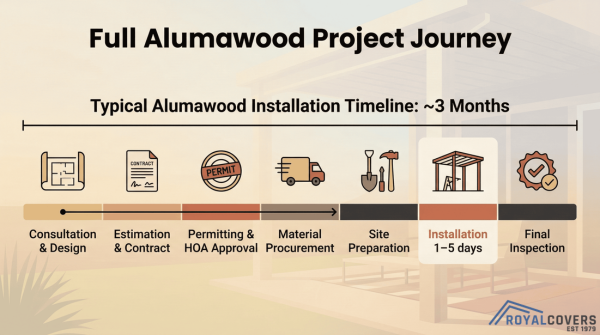
Alumawood installation is a multi-phase process that typically takes about three months from initial consultation to final walkthrough, though the actual on-site build often wraps up in one to five days depending on project size.
This guide covers the factors that influence installation duration, the step-by-step stages of the process, realistic timeframes for each phase, ways to optimize your timeline, and how Alumawood compares to traditional wood construction.
Project size, design complexity, site conditions, and local permitting requirements all play a role in how long your installation takes. A small cover under 200 square feet may require just one to two days of construction, while larger or more customized projects can extend to a full week or more.
The installation process follows a predictable sequence: consultation and design, estimating and contracts, permitting and HOA approval, material procurement, site preparation, foundation work, assembly, and final inspection. Each phase feeds into the next, and delays in early stages (particularly permitting, which runs two to six weeks) ripple through the entire schedule.
We break down realistic durations for every phase so you can plan with confidence. Permitting and material lead times account for most of the overall timeline, while the physical build moves quickly due to Alumawood’s prefabricated components.
Homeowner preparation, prompt decision-making, and proactive communication with your contractor are the most effective ways to keep your project on schedule and avoid common delays like HOA holdups or site access issues.
Alumawood’s prefabricated panel system installs in roughly half the time of traditional wood framing, which requires more on-site cutting, fitting, and finishing. This efficiency makes Alumawood an attractive option for homeowners who want a durable patio cover without a drawn-out construction process.
What factors influence how long Alumawood installation takes?
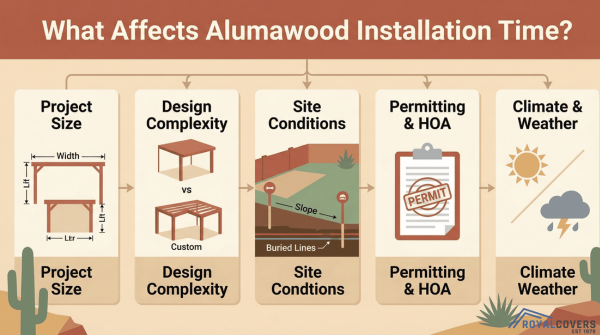
Several factors influence how long Alumawood installation takes, including project size, design complexity, site conditions, permitting requirements, and seasonal climate. Each variable can shorten or extend the overall timeline significantly.
How does project size affect installation time?
Project size affects installation time by directly determining how many days the construction phase requires. Smaller covers under 200 square feet can be built in one to two days, while projects exceeding 600 square feet may need one to two weeks of on-site work. The entire process, from initial consultation to final walkthrough, typically takes two to three months regardless of size, because design, permitting, and material procurement consume the bulk of the timeline.
Contractors often have a backlog of projects during peak season in spring and summer, so scheduling several months in advance is advisable. Efficient coordination of crew schedules, subcontractor availability, and material deliveries is essential for keeping projects on track.
What role do design complexity and customization play in the timeline?
Design complexity and customization play a significant role in the timeline by adding engineering, material sourcing, and fabrication steps. Standard rectangular Alumawood patio covers with basic configurations install faster than custom layouts featuring multiple corners, integrated lighting, ceiling fans, or mixed roof styles.
Custom designs often require more detailed engineering drawings and structural calculations before permits can be submitted. Specialized components may also carry longer lead times from the manufacturer. For homeowners who want a truly unique outdoor space, the added design time is worth the investment, but it should be factored into the schedule from the start.
How do site preparation and permitting impact the schedule?
Site preparation and permitting impact the schedule by introducing variable wait times before construction can begin. Permitting alone can add two to six weeks to the timeline, depending on local jurisdiction review speeds and whether plan revisions are needed. Unforeseen site conditions discovered during preparation, such as underground utilities or poor soil conditions, can require additional work and extend the pre-construction phase.
Clearing the installation area, grading the ground, and pouring concrete footings must all be completed before the Alumawood structure goes up. Experienced contractors like Royal Covers handle permit submissions and HOA approvals directly as part of their structured installation process, removing a common source of homeowner stress and timeline delays.
How does Phoenix’s climate affect Alumawood installation timing?
Phoenix’s climate affects Alumawood installation timing primarily through extreme summer heat, which reduces worker productivity and limits safe working hours. A new Arizona law now allows construction work to begin as early as 5 a.m. during summer months (May 1 through October 15), helping crews complete tasks before peak afternoon temperatures.
Despite this accommodation, monsoon season from June through September can halt work entirely due to high winds, dust storms, and heavy rain. Royal Covers, with over 45 years of Phoenix-area experience, schedules projects year-round but helps homeowners understand how seasonal factors may impact their specific timeline based on decades of working in Arizona’s desert climate.
What are the step-by-step stages in the Alumawood installation process?
The step-by-step stages in the Alumawood installation process include initial consultation, measuring and design scheduling, site preparation, construction, and final inspections. Each stage builds on the previous one to keep the project on track.
What happens during the initial consultation and quoting phase?
The initial consultation and quoting phase is a detailed meeting with the contractor to discuss the project, select materials, and finalize the design. This phase typically takes 1 to 2 weeks. A thorough initial consultation helps clarify project requirements, identify potential challenges, and set realistic expectations. During this stage, the contractor evaluates your property, reviews your goals for the space, and prepares a detailed estimate. Investing time here prevents costly changes later in the build. Homeowners who arrive with a clear vision of their desired layout and budget tend to move through this phase faster.
How does measuring and project design scheduling work?
Measuring and project design scheduling works by combining precise on-site measurements with coordination of crew availability, subcontractors, and material lead times. Phoenix’s extreme summer heat directly impacts construction scheduling and worker productivity, so timing matters. Coordinating with subcontractors for specialized work, such as electrical or concrete, can sometimes cause delays. According to a 2025 Associated General Contractors of America survey, 92% of construction firms report difficulty finding qualified workers, which further affects scheduling timelines. Booking well ahead of peak season gives contractors more flexibility to align all moving parts efficiently.
What’s involved in site preparation before installation begins?
Site preparation before installation begins involves clearing the installation area and preparing the ground for the foundation. This phase typically takes 1 to 2 days. Homeowners should complete the following before the crew arrives:
- Clear the area of any furniture, plants, or other obstacles.
- Ensure the installation crew has an unobstructed path for bringing in materials and equipment.
Proper preparation on the homeowner’s side eliminates unnecessary downtime on installation day and helps the crew move directly into groundwork.
What are the major tasks during the actual Alumawood installation?
The major tasks during the actual Alumawood installation include pouring concrete footings, setting support posts, assembling the framework, attaching rafters, and securing the roofing panels. Electrical work for lighting or fans, if included in the design, is integrated during this phase. Because Alumawood components are prefabricated, on-site assembly moves quickly compared to materials that require extensive cutting and fitting. Each task follows a specific sequence to meet structural and code requirements.

What communication and inspections should customers expect throughout the process?
Customers should expect regular updates from the contractor at each major milestone, along with scheduled building department inspections. Maintaining open communication with the contractor throughout the process helps address any questions or concerns before they become delays. Inspections typically occur after foundation work and upon project completion. Responding promptly to contractor questions about design details or access keeps the project moving without gaps in the schedule.
How long does each installation stage typically take?
Each installation stage typically takes anywhere from a single day to several weeks, depending on the phase. Permitting and approvals consume the most calendar time, while physical construction is often the shortest stage.
How much time is needed for permitting and approvals?
The time needed for permitting and approvals ranges from 2 to 6 weeks for most Alumawood patio cover projects. Structures over 200 square feet or decks more than 30 inches off the ground generally require building permits. According to a 2024 PermitPlace analysis of Phoenix residential permits, the City of Phoenix Planning and Development Department estimates 10 to 20 business days for additions and remodels, and 15 to 25 business days for new construction. HOA reviews can add another 1 to 4 weeks on top of municipal processing. Submitting complete, accurate plans from the start is the single most effective way to avoid delays in this phase.
How long do site preparation and groundwork require?
Site preparation and groundwork require 1 to 2 days for most Alumawood patio cover projects. This phase includes clearing the installation area, grading the ground, and pouring concrete footings to support the posts. Footing work itself typically takes 1 to 2 days, though cure time for concrete may extend the wait before construction begins. Homeowners can shorten this stage by removing furniture, planters, and obstacles before the crew arrives, and by ensuring clear access paths for materials and equipment.
What is the usual duration for material delivery and staging?
The usual duration for material delivery and staging is 1 to 3 weeks. Alumawood components are prefabricated, so lead times depend on manufacturer availability and shipping schedules. Custom color selections or larger projects may push delivery closer to the three-week mark. Once materials arrive on site, staging and organizing components for assembly typically takes a few hours. Ordering materials early, ideally during the permitting phase, is a practical way to keep this stage from adding unnecessary gaps to the overall timeline.
How many days does the actual Alumawood build take?
The actual Alumawood build takes 1 to 5 days depending on project size and complexity. Covers under 200 square feet often go up in a single day, while projects exceeding 600 square feet may require a full week. The prefabricated aluminum components assemble faster than traditional wood framing, which allows a small crew to work efficiently. For most standard residential installations in the 200 to 400 square foot range, expect 2 to 3 days of on-site construction followed by a final inspection that typically wraps up in one day.
With clear timelines for each stage established, the next step is understanding how to keep everything on schedule.
How can homeowners speed up or optimize the Alumawood installation timeline?
Homeowners can speed up the Alumawood installation timeline by preparing their property early, making design decisions quickly, and understanding common delays before they occur.
What should customers prepare ahead of time?
Customers should prepare ahead of time by completing several practical steps before the installation crew arrives. Clearing the work area of furniture, plants, and other obstacles prevents unnecessary slowdowns on build day. Homeowners should also ensure a clear access path for materials and equipment delivery to the installation site. Gathering HOA documents, reviewing property lines, and confirming electrical or lighting preferences early gives the contractor everything needed to move forward without pauses. This upfront preparation often determines whether the project stays on schedule or encounters avoidable setbacks during the critical first hours of construction.
How does prompt decision-making affect scheduling?
Prompt decision-making affects scheduling significantly because most contractors operate on a first-signed, first-served basis. According to a TNT Builders Inc. project timeline guide, the sooner a contract is signed, the sooner the project enters the installation queue. Delays in choosing colors, roof styles, or layout configurations push back the estimate phase, which cascades into later permitting and material procurement windows. Finalizing design selections during or immediately after the initial consultation compresses the pre-construction timeline. During peak spring and summer seasons, when contractor backlogs are longest, even a one-week decision delay can shift a start date by several weeks.
What are common delays, and how can they be avoided?
Common delays include permitting holdups, HOA approval wait times, material lead times, weather disruptions, and unforeseen site conditions such as underground utilities or poor soil. Homeowners can avoid most of these by working with a contractor who submits permit applications and HOA documents proactively at the start of the project. Scheduling several months in advance, particularly before peak season, reduces the risk of labor backlog conflicts. Maintaining open communication with the contractor throughout every phase helps identify and resolve emerging issues before they stall progress. The homeowners who stay responsive and engaged consistently see the smoothest timelines from consultation to final walkthrough.
How does Alumawood installation compare to traditional wood or other patio cover materials in terms of timeline?
Alumawood installation compares favorably to traditional wood and other patio cover materials, offering significantly shorter construction times and lower labor demands. The subsections below break down the speed advantage and the logistical differences that separate these materials.
Does Alumawood generally offer a faster installation process?
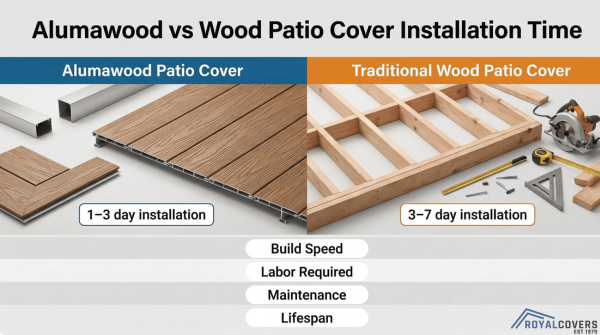
Yes, Alumawood generally offers a faster installation process than traditional wood. According to a comparative analysis from RFMC Inc., Alumawood construction typically takes 1 to 3 days, while traditional wood patio covers require 3 to 7 days for the build phase alone. This speed advantage stems from Alumawood’s prefabricated components, which arrive ready for assembly rather than requiring on-site cutting, fitting, and finishing. A smaller crew can complete the work because the material is lighter and the connections are engineered for efficient alignment. For homeowners weighing material options, this difference often translates to less disruption and faster enjoyment of the finished space.
What logistical differences can impact project durations?
The logistical differences that can impact project durations between Alumawood and wood patio covers span material procurement, labor complexity, and maintenance demands.
- Material procurement: Alumawood kits ship with lead times of 2 to 3 weeks, while sourcing, treating, and delivering lumber for a custom wood build can extend that window.
- Labor intensity: Wood requires skilled carpenters to measure, cut, and finish each piece on-site, increasing both crew size and build time. Alumawood’s prefabricated panels streamline assembly.
- Foundation work: Both materials require concrete footings, which typically take 1 to 2 days regardless of the cover type.
- Long-term upkeep: Wood demands annual staining and sealing, adding recurring project time over its 15 to 20 year lifespan. Alumawood, lasting 25 to 30 years or more, needs only occasional washing.
These logistical realities make Alumawood the more time-efficient choice across the full project lifecycle. Understanding this comparison helps set realistic expectations before selecting a contractor.
How should you approach Alumawood installation timelines with a Royal Covers custom patio project?
You should approach Alumawood installation timelines with a Royal Covers custom patio project by understanding that the full process, from consultation to final walkthrough, typically spans about 3 months. The following subsections cover how Royal Covers streamlines that timeline and the key takeaways from the entire installation process.
Can Royal Covers’ custom-designed patio covers and in-house installation teams help streamline the Alumawood installation process?
Yes, Royal Covers’ custom-designed patio covers and in-house installation teams can help streamline the Alumawood installation process. Because Alumawood components are prefabricated, installations can be completed efficiently with smaller crews than traditional wood construction requires. Royal Covers employs full-time, continuously trained installation teams rather than subcontractors, which tightens coordination and reduces scheduling gaps.
Royal Covers also handles permitting and HOA approvals directly. Submitting these documents early is critical, since HOA approval alone can take 1 to 4 weeks in Arizona. Freestanding patio covers under 200 square feet may not require a permit at all, which can eliminate weeks from the timeline.
Customer testimonials reinforce this efficiency. One homeowner described the entire experience, from sales to installation, as seamless, with all parties on the same page. Having a single company manage design, approvals, and construction removes the handoff delays that slow down projects using multiple vendors.
What are the key takeaways about how long Alumawood installation takes, timeline, and process breakdown we covered?
The key takeaways about how long Alumawood installation takes, timeline, and process breakdown are:
- Most Alumawood patio cover projects take approximately 3 months from initial consultation to final walkthrough.
- The physical construction phase is the shortest stage, often finishing in 1 to 5 days depending on project size.
- Permitting, HOA approval, material procurement, and weather represent the most common sources of delay.
- Proactive document submission, prompt decision-making, and clear homeowner preparation shorten the overall schedule.
- Choosing a contractor like Royal Covers, with in-house teams and integrated permit handling, consolidates multiple timeline variables under one roof.
According to one industry contractor, “each project is different, and certain factors like permitting approval, HOA regulations, inspection schedules, material availability, and subcontractor timelines can occasionally lead to delays.” Planning for these variables from the start is the most reliable way to keep your project on track.