
Phoenix homeowners searching for durable yet stylish outdoor shade solutions often consider aluminum patio covers—but concerns about extreme heat performance, noise during monsoon storms, and architectural compatibility require attention.
You’re here because you’re weighing those trade-offs. This article delivers a precise, expert-level breakdown of aluminum patio covers in the context of Arizona’s high-temperature, low-humidity desert climate, where material behavior diverges significantly from coastal or temperate regions. With local entities like Royal Covers at the forefront of customized installations, the insights below provide clarity and strategic guidance for investing in the right patio cover.
An aluminum patio cover is a lightweight, corrosion-resistant shade structure designed to protect outdoor living spaces from sun and rain.
According to Grand View Research, the U.S. outdoor living structures market size was estimated at USD 892.9 million in 2024, reflecting increased demand due to growing interest in low-maintenance, functional outdoor spaces.
As Sarah Kim, a landscape architect, notes: “Aluminum and teak are top choices, as they withstand rain, snow, and sun without warping or rusting.”
This article explores the functional performance of aluminum patio covers under Phoenix-specific conditions. We begin by examining their rising popularity due to low maintenance demands and installation speed, then transition into how dry climates influence corrosion resistance and reflectivity.
From there, we evaluate key disadvantages—surface heat, glare, wind noise, dent susceptibility, and aesthetic limitations—using homeowner feedback and environmental data from the region.
Comparative sections on wood, vinyl, and hybrid alternatives clarify performance differences in insulation, structural stability, and design flexibility.
You’ll find insights on climate-induced expansion risks, HOA restrictions, and scenarios where aluminum may not be appropriate, supported by custom solutions from local experts like Royal Covers.
The article ends with a material selection guide tailored to Arizona homes, addressing costs, longevity, and comfort. Homeowners can reduce heat and noise by integrating heat-reflective coatings, insulated roof panels, or hybrid designs that combine aluminum framing with fabric shading membranes.
Routine inspection of expansion joints and reflective finishes enhances long-term performance.
Why do Phoenix homeowners choose aluminum patio covers in the first place?
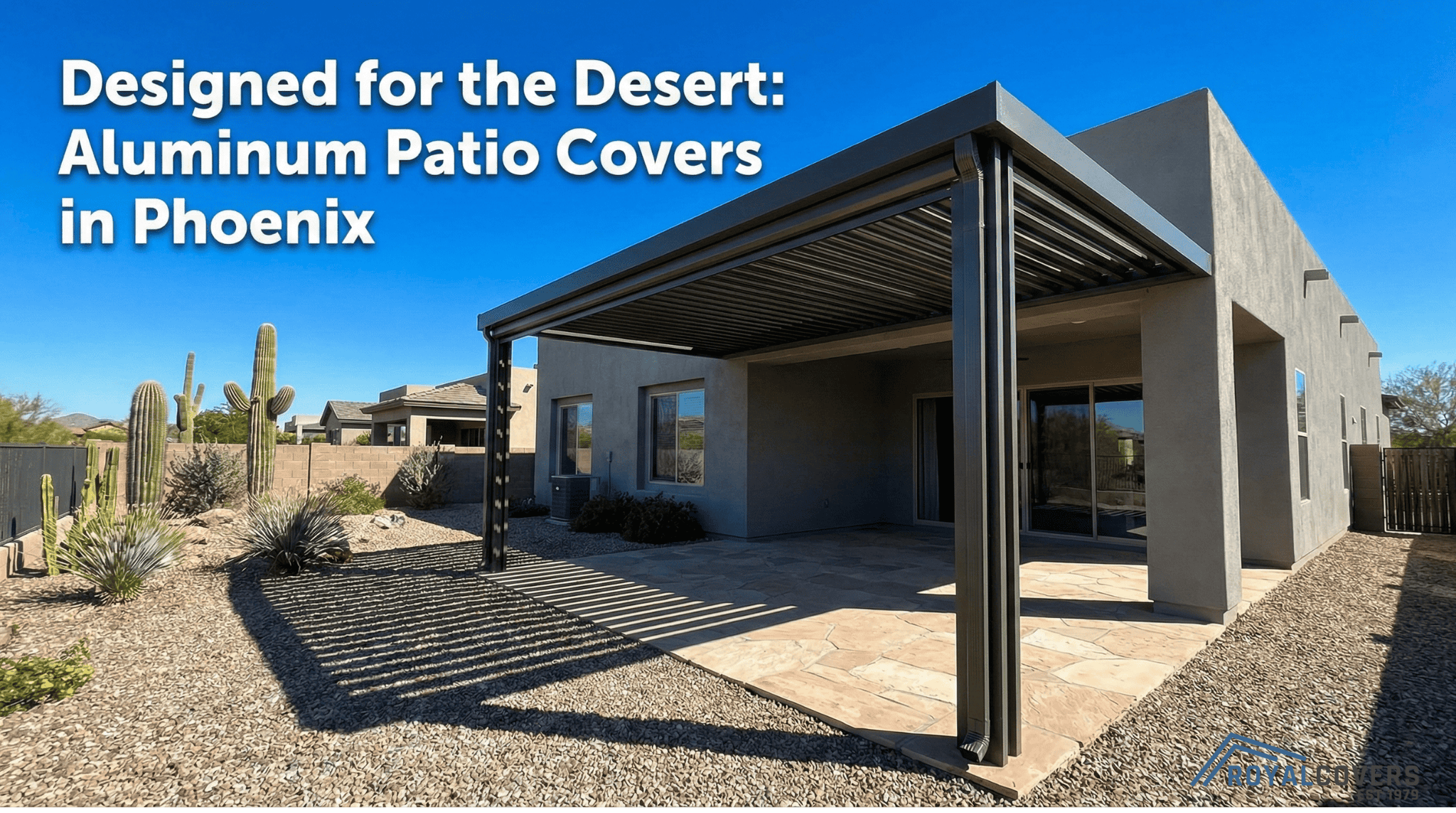
Phoenix homeowners choose aluminum patio covers because they withstand decades of desert sun without rotting, warping, or attracting termites, making them a practical alternative to wood. Royal Covers installs aluminum structures that avoid the common issues plaguing wood alternatives. The material’s lightweight properties enable faster installation compared to heavy timber frames.
Phoenix’s rapid suburban expansion drives demand for low-maintenance outdoor solutions. Aluminum patio covers require annual cleaning rather than regular staining or sealing, appealing to busy professionals and retirees alike. The material resists fading under intense UV exposure, maintaining appearance longer than painted wood surfaces in Arizona conditions.
How does aluminum perform in dry climates?
Desert environments favor aluminum’s corrosion resistance over materials susceptible to moisture damage. Unlike coastal regions where salt air accelerates metal degradation, Phoenix’s average annual rainfall of 8.03 inches according to NOAA data creates minimal oxidation risk. The material’s thermal expansion characteristics remain predictable in consistent dry heat, preventing warping issues common with composite materials.
Aluminum’s reflective properties initially seem advantageous for heat management. The material deflects solar radiation rather than absorbing it like dark-stained wood. However, this same characteristic creates glare issues and heat reflection problems discussed later. Phoenix’s low humidity levels prevent condensation that might otherwise collect on metal surfaces, eliminating one potential disadvantage present in more humid climates.
What are the main disadvantages of aluminum patio covers in Phoenix?
The disadvantages of aluminum patio covers in Phoenix include:
- Surface heat buildup reaching dangerous temperatures
- Excessive glare and sunlight reflection
- Noise during rain and high winds
- Vulnerability to denting and bending
- Limited design and aesthetic flexibility
- Hidden installation and upgrade costs
Are aluminum patio covers hot to the touch?
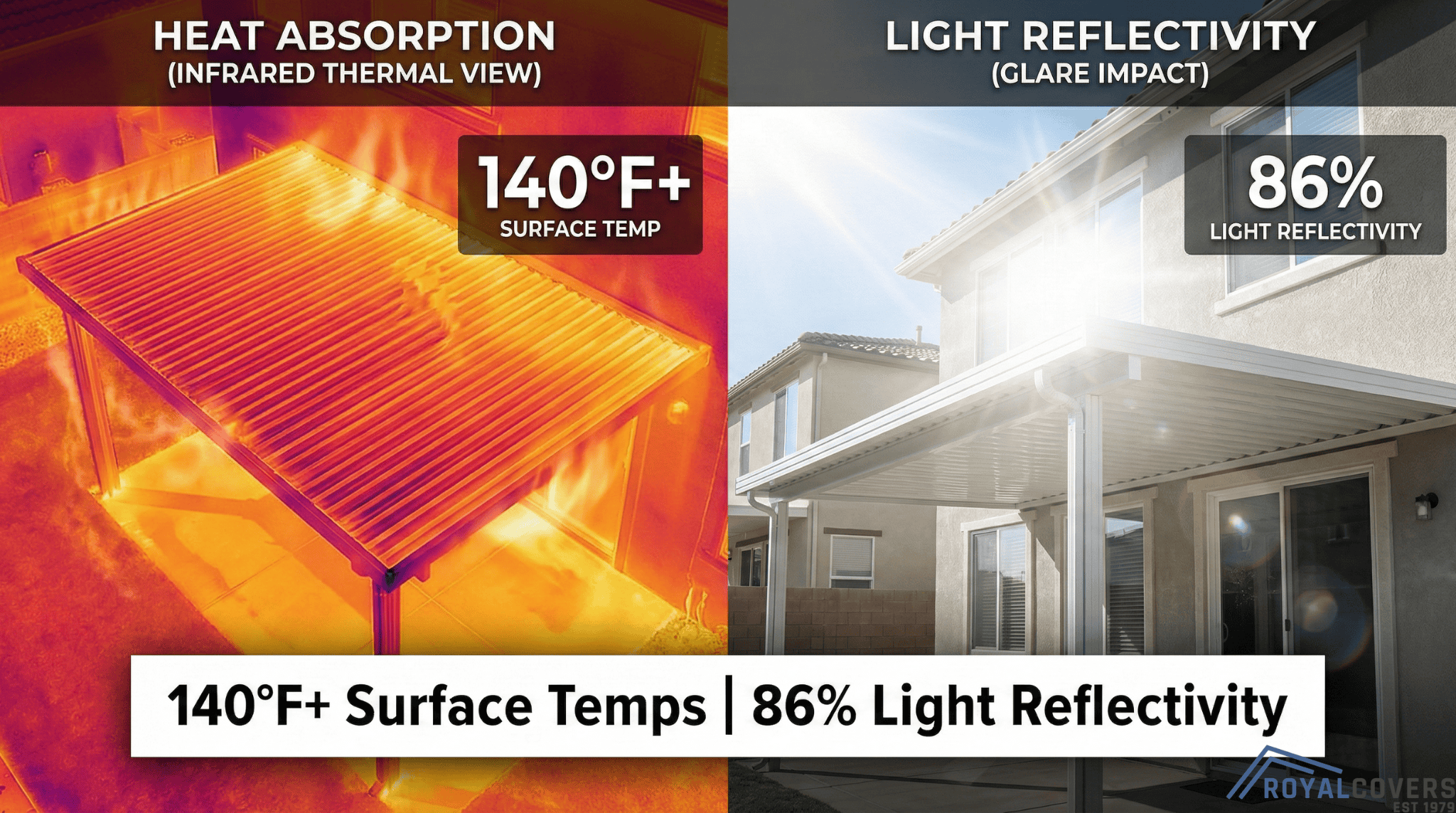
Aluminum patio covers become dangerously hot during Phoenix summers, with surface temperatures potentially exceeding 140°F on days when air temperature reaches 115°F. According to peer-reviewed research, metal surfaces in direct sunlight can reach temperatures approximately 50°F higher than ambient air. This creates safety hazards for children and pets who might accidentally touch support posts or low-hanging beams.
The material’s high thermal conductivity allows heat to spread quickly throughout the structure. Unlike wood, which offers some insulation, aluminum radiates stored heat well into the evening. Some homeowners add foam padding or decorative wraps to aluminum posts to reduce the risk of burns—an additional expense not always included in initial cost estimates.
Do they reflect too much sunlight?
Excessive light reflection from aluminum surfaces creates uncomfortable glare beneath and around patio covers. The material’s reflective finish bounces sunlight into windows, pools, and neighboring properties—potentially violating HOA regulations about nuisance lighting. Phoenix’s clear skies and intense sun angle between May and September amplify this effect, making outdoor spaces less usable during peak daylight hours.
Standard aluminum finishes reflect approximately 86% of visible light compared to wood’s 25–40%. Some homeowners report warmer indoor temperatures when sunlight reflects off patio covers and into glass windows or doors. This unintended effect can increase cooling costs by putting more strain on air conditioning systems.
Can aluminum covers be noisy in wind or rain?
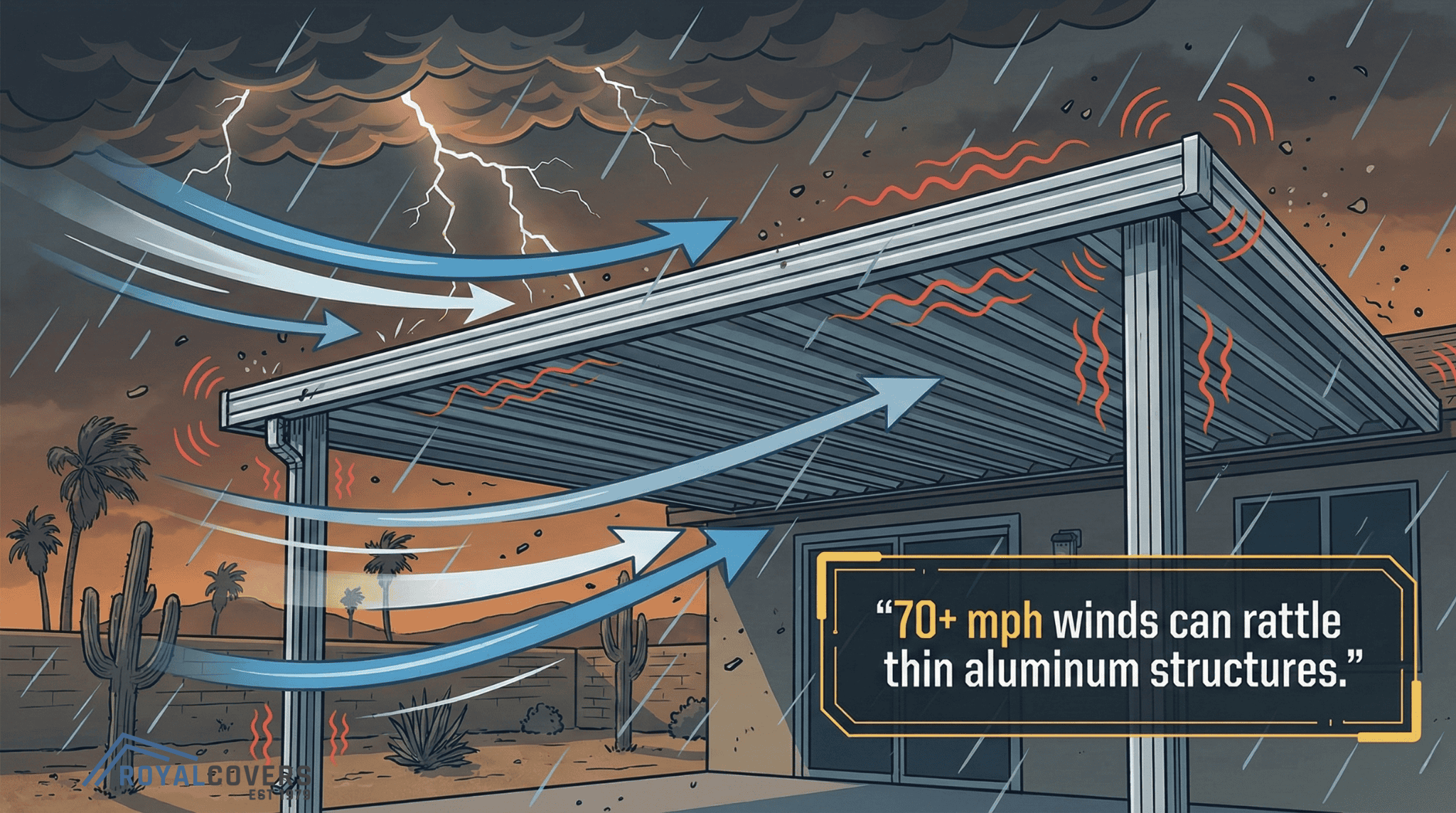
Aluminum patio covers generate noticeable noise during Arizona’s monsoon season, which typically brings 60+ mph wind gusts between July and September. The material’s hollow construction can amplify vibrations, creating rattling, creaking, and popping sounds that disturb both outdoor and indoor environments. According to National Weather Service data, central Arizona experiences up to 80 thunderstorm days annually, each presenting noise challenges for aluminum structures.
Rain striking aluminum surfaces is louder than on other materials, as confirmed by acoustic studies. Phoenix’s occasional hailstorms cause especially loud impacts on metal covers. Some homeowners add sound-dampening treatments to reduce the noise from weather events.
Are there aesthetic limitations to aluminum?
Aluminum’s industrial appearance does not blend well with architectural styles common in Phoenix, including Spanish Colonial, Southwestern Adobe, and Craftsman designs. The material lacks wood’s natural grain and warmth, which may not match organic landscaping like natural stone patios or xeriscaping.
Color choices are more limited than with wood stains. Powder coating is durable but often lacks the natural look many homeowners want. Faux-wood finishes on aluminum require special printing or texture treatments but may still appear artificial up close, disappointing those seeking authentic wood aesthetics.
Is aluminum vulnerable to denting or bending?
Lightweight aluminum is prone to denting from impacts like falling palm fronds or garden tools. During summer storms, native trees such as Palo Verde and Mesquite can drop heavy branches, causing more damage to thin-gauge aluminum than to thick wood beams.
Residential-grade aluminum patio covers often use 2–3 inch posts that can flex under pressure. High winds during dust storms may deform these posts if the structure lacks proper bracing. Dented aluminum sections usually require full replacement rather than localized repairs, which are possible with wood.
Do installation costs outweigh long-term benefits?
Aluminum patio covers may seem affordable initially but often require added upgrades for insulation, sound reduction, and appearance, increasing total costs. While base prices range from $18–$55 per square foot installed, enhancements for comfort and aesthetics can raise the final investment.
Long-term savings may fall short of expectations. Phoenix’s extreme heat causes fasteners to loosen over time, requiring periodic retightening. Expansion and contraction can stress joints, sometimes needing reinforcement after 10–15 years—issues that well-maintained wood structures may not encounter.
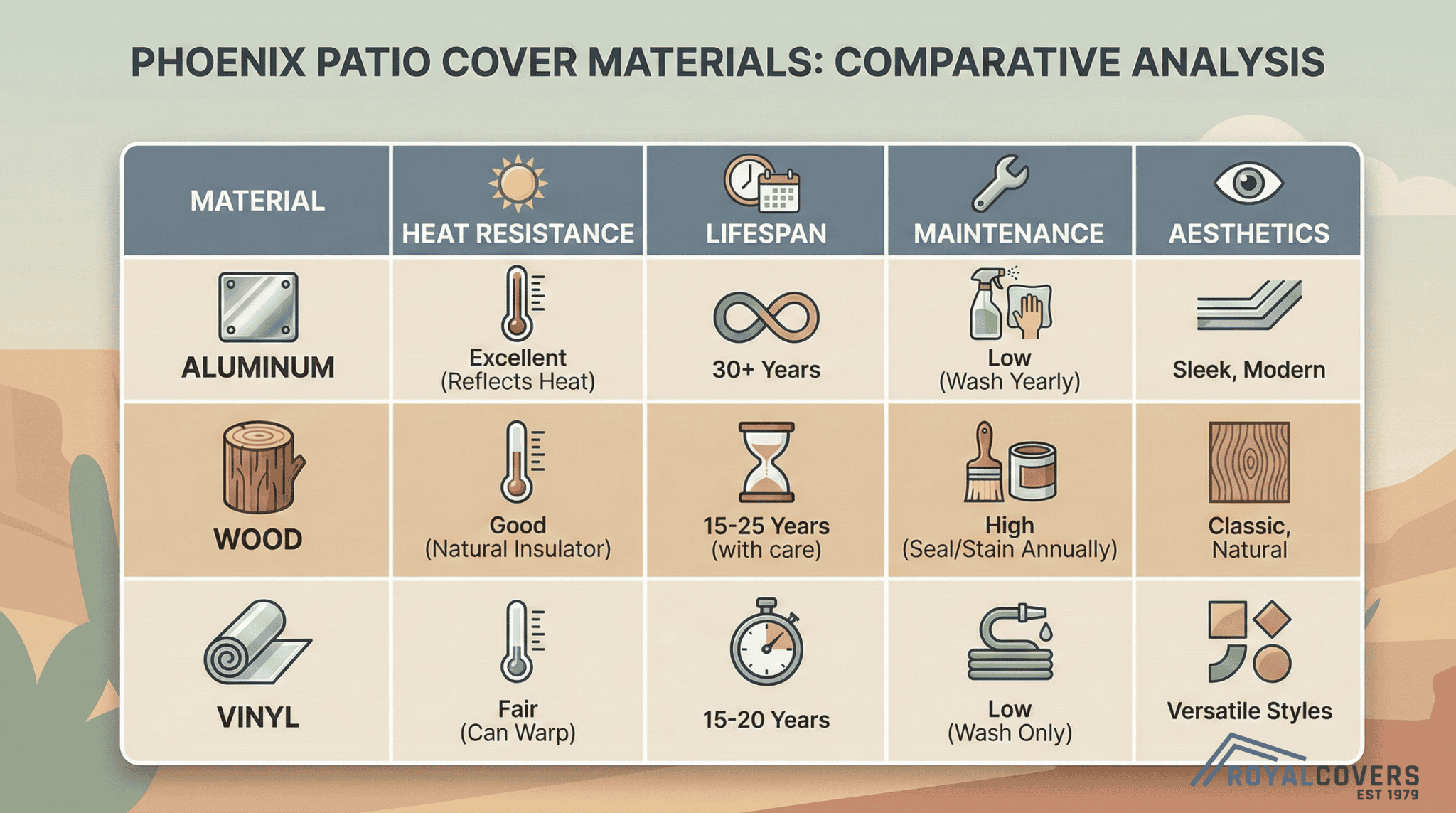
What are the key differences between aluminum, wood, and vinyl patio covers in Phoenix?
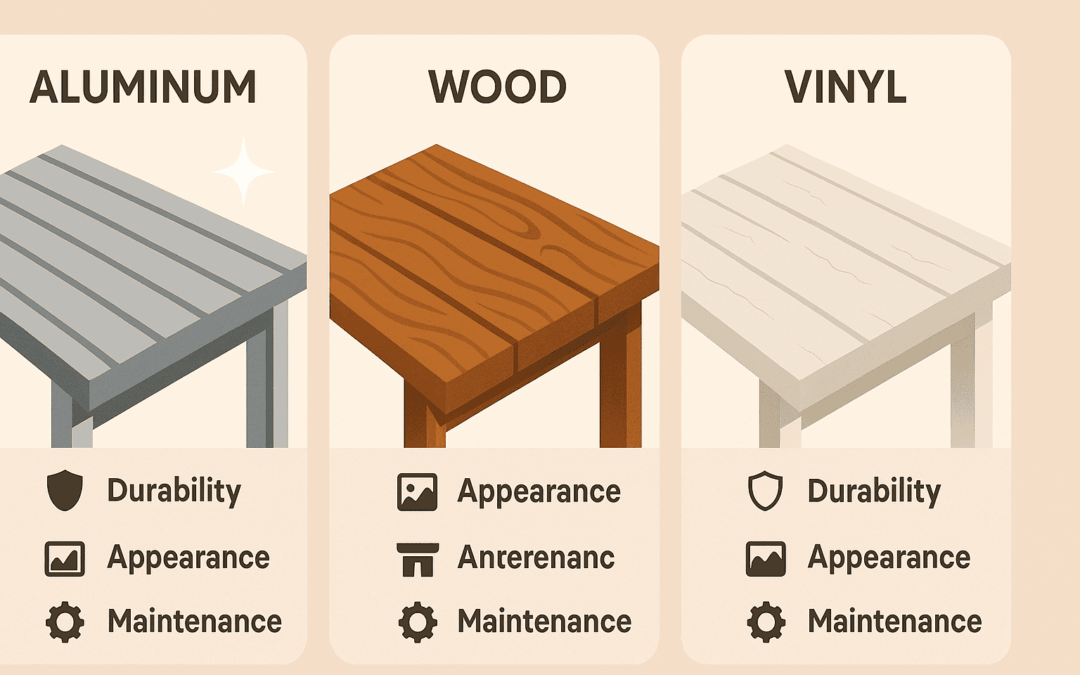
The key differences between aluminum, wood, and vinyl patio covers in Phoenix include lifespan, maintenance requirements, and appearance, all of which are influenced by the region’s extreme climate conditions.
| Material | Lifespan in Phoenix Climate | Maintenance Needs | Appearance Over Time |
| Aluminum | 20–30 years with upgrades | Occasional cleaning, possible refinishing | Maintains look but lacks warmth |
| Wood | 15–25 years with proper care | Annual sealing, termite treatments | Gains natural character, can warp |
| Vinyl | 10–15 years before brittleness | Minimal upkeep, may crack in sun | Yellows/chalks, plastic look |
How does Phoenix’s climate affect the performance of aluminum patio covers?
Phoenix’s hot, dry climate affects aluminum patio cover performance by causing significant expansion in summer temperatures and exposing weaknesses during monsoon storms.
| Climate Factor | Impact on Aluminum Patio Covers | Example Data |
| Heat expansion | Causes beam length changes, loosens fasteners | 20-ft beam expands ~0.2 in. from 50°F–115°F |
| Monsoon winds | Risk of uplift and structural damage | 70+ mph winds in severe storms |
| Rain & hail | Noise amplification, dent risk | Up to 80 thunderstorm days annually |
What customization options are available—and not available—for aluminum patio covers?
The customization options available for aluminum patio covers include powder coating, faux-wood finishes, and insulated panels, but the material lacks the flexibility and design versatility of wood.
Powder coating offers around 200 standard colors, but fully custom shades may require large orders that exceed the needs of most residential projects. Faux-wood finishes involve specialized printing or texturing. Insulated panels help with heat and noise. Royal Covers offers these upgrades, but total costs may approach premium wood builds.
What do Phoenix homeowners say about their experiences with aluminum patio covers?
Phoenix homeowners report mixed results with aluminum patio covers. Some appreciate the low maintenance, while others mention heat buildup, glare, and weather-related noise.
Residents in Sun City value the minimal upkeep, which suits retirement lifestyles. Families with small children often raise concerns about surface heat and limited shade during summer.
Noise is a common complaint, especially for covers installed near bedrooms. Some homeowners have tried spray foam, rubber washers, or adding fabric panels to reduce noise, but these solutions can void warranties and usually provide only limited improvement.
When is aluminum not the right choice for a patio cover in Phoenix?
Aluminum is not the best choice for homes in historic districts, those with traditional architectural features, or in HOA communities with strict design rules.
Neighborhoods like Willo, Encanto-Palmcroft, and Roosevelt enforce guidelines that may prohibit modern metal structures. Some HOAs restrict reflective finishes or require specific post styles, reducing the practicality of aluminum.
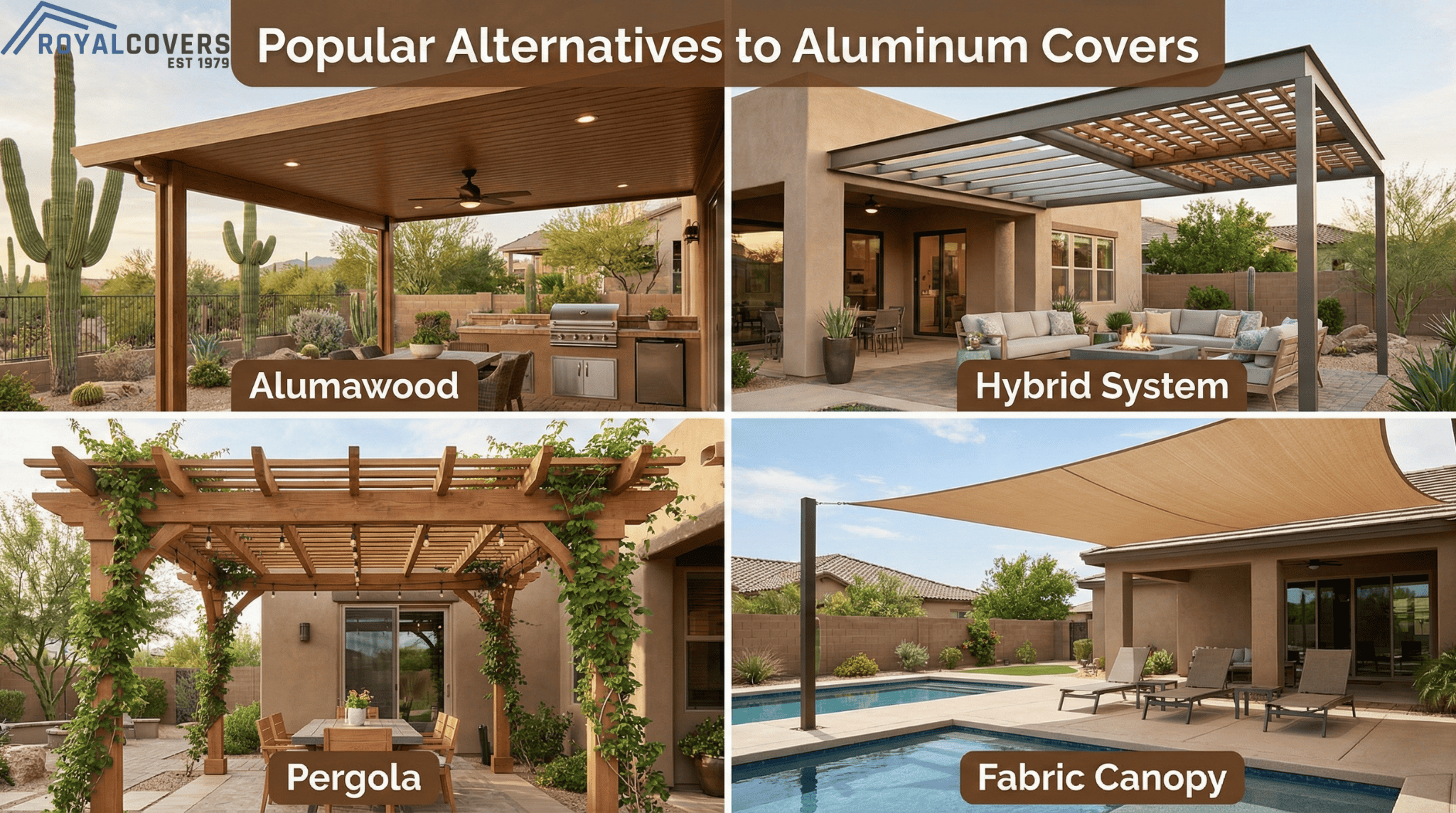
What alternatives to aluminum patio covers are popular among Phoenix homeowners?
Popular alternatives to aluminum patio covers in Phoenix include:
- Alumawood – Offers a wood-grain look with better durability
- Hybrid systems – Combine steel frames with wood or composite elements
- Pergolas – Provide adjustable louvers for flexible shade
- Fabric canopies – Retractable and budget-friendly
- Insulated patio rooms – Offer superior comfort and energy efficiency
How should Arizona homeowners select the right patio cover material?
Arizona homeowners should choose patio cover materials by balancing heat resistance, cost, maintenance, and visual appeal based on the desert climate.
Royal Covers offers thermal imaging to compare options. Long-term cost evaluations often show that wood or Alumawood can be more cost-effective when considering comfort and aesthetics. Aluminum usually requires additional upgrades to stay competitive.
Why should Phoenix homeowners work with a local expert like Royal Covers?
Working with a local expert like Royal Covers ensures your patio cover is built for Arizona’s heat, storms, and UV exposure.
Royal Covers uses climate-specific installation methods to reduce heat buildup and noise. Their consultants also match materials to HOA rules, architectural style, and lifestyle needs for a better overall fit.
Get Expert Patio Cover Solutions Designed for Phoenix Living
Understanding the drawbacks of aluminum patio covers helps Phoenix homeowners make informed outdoor design decisions. While aluminum offers durability and low maintenance, concerns like surface heat, glare, and noise may outweigh the benefits for some properties.
Royal Covers offers personalized evaluations and helps you choose the best material—whether that’s aluminum, wood, Alumawood, or a hybrid option—for your unique needs in Arizona’s demanding climate. Schedule your free consultation today.